CISF chief reviews North Sector security in Chandigarh amid border threats
Synopsis
CISF chief Praveer Ranjan's Chandigarh review reveals the force is racing to cover all 72 airports with battle-hardened QRTs by 2026, running a joint counter-drone programme with the Army, and pushing for a dedicated aviation security academy — all as border states from J&K to Gujarat face intensifying aerial and sabotage threats.
Key Takeaways
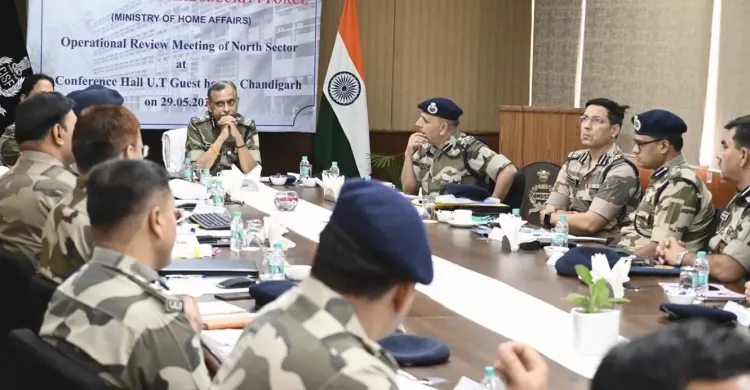
CISF DG Praveer Ranjan chaired an operational review in Chandigarh on 29 May 2025 covering the North Sector and Airport Sector.
The review flagged evolving threats in Jammu and Kashmir, Punjab, Rajasthan, Haryana, and Gujarat , with emphasis on drone threats and anti-sabotage measures.
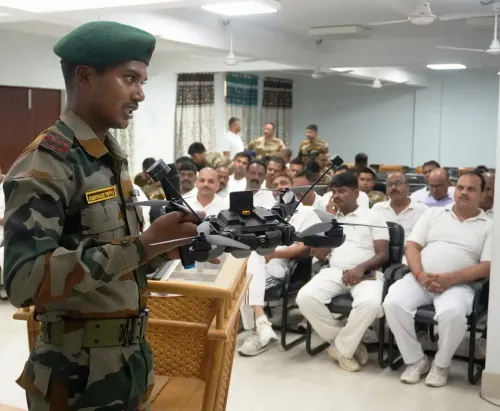
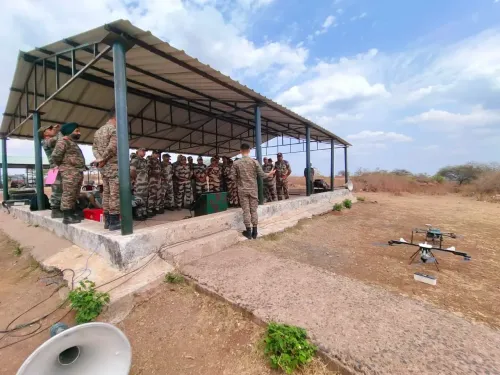
A phased Counter-Drone Training Programme is being run jointly with the Indian Army to detect, track, and neutralise hostile UAVs.
659 personnel from 49 aviation security groups have completed military-grade 'battle inoculation training'; QRT coverage to reach all 72 airports by end of 2026 .
A proposal for a CISF Aviation Security Academy (CASA) is under review with the Ministry of Home Affairs .
The 10th Reserve Battalion, Bengaluru has been designated a dedicated Mahila QRT/Commandos Training Centre .
Central Industrial Security Force (CISF) Director General Praveer Ranjan on Friday, 29 May chaired a high-level operational review meeting in Chandigarh to evaluate security preparedness across the North Sector and Airport Sector. The review, attended by senior officers and unit commanders, comes against the backdrop of heightened security concerns along India's western and northern borders.
Key Areas Under Review
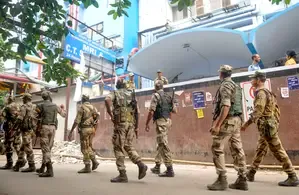
The meeting focused on strengthening security preparedness, improving inter-agency coordination, and deploying advanced technologies to safeguard critical infrastructure and civil aviation installations. Discussions specifically addressed evolving threats in border and strategically sensitive states — Jammu and Kashmir, Punjab, Rajasthan, Haryana, and Gujarat.
Particular emphasis was placed on countering drone-related threats, reinforcing anti-sabotage measures, and bolstering disaster response capabilities — areas that have gained urgency given recent cross-border aerial intrusions in the region.
Counter-Drone Programme and Army Collaboration
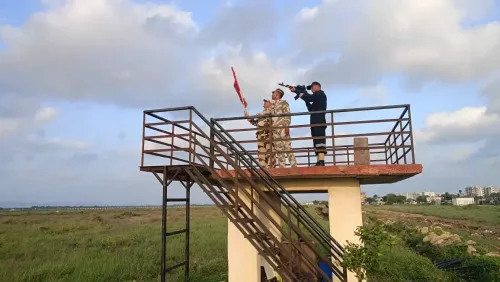
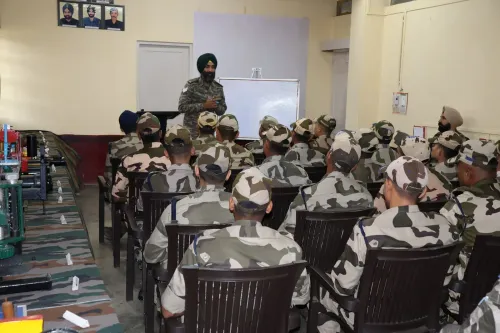
To address low-altitude aerial threats, the CISF has launched a phased Counter-Drone Training Programme in collaboration with the Indian Army. Conducted at multiple specialised locations, the programme trains CISF personnel to detect, track, and neutralise hostile unmanned aerial systems (UAVs). Joint exercises with the Army and other agencies covering counter-terrorism, quick-reaction response, and disaster management were also reviewed at the meeting.
CISF personnel have additionally undergone specialised training at various Army establishments and with the National Disaster Response Force (NDRF) to sharpen tactical and emergency-handling capabilities.
Aviation Security Upgrades
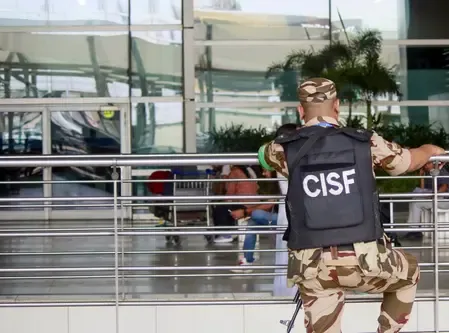
In the aviation domain, the review assessed technological and operational upgrades across commercial airports under CISF protection. Discussions covered reinforcing perimeter security, upgrading surveillance networks, and deploying next-generation screening tools to meet international aviation security standards.
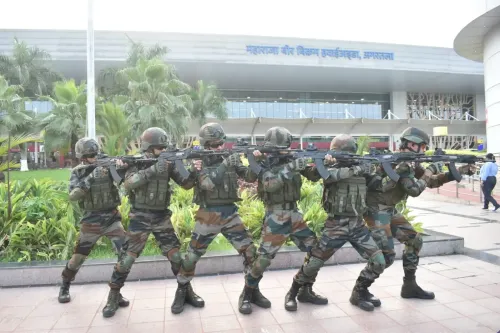
A dedicated drive to strengthen airport quick reaction teams (QRTs) is already under way. To date, 659 personnel from 49 aviation security groups have completed military-grade 'battle inoculation training'. The force aims to extend QRT coverage to all 72 airports under its security umbrella by the end of 2026.
CISF Aviation Security Academy and Women Commandos
A proposal for establishing a dedicated CISF Aviation Security Academy (CASA) is currently under consideration with the Ministry of Home Affairs, aimed at creating a specialised research and training institution for aviation security.
Separately, the 10th Reserve Battalion in Bengaluru has been designated as a dedicated Mahila QRT/Commandos Training Centre, signalling a structural push to deploy trained women personnel in critical front-line security roles. The CISF's next operational milestones will hinge on the pace of QRT expansion and the government's decision on the CASA proposal.
Point of View
Literally, with drones now driving joint Army training. The push to battle-inoculate QRTs at all 72 airports by 2026 is ambitious given the pace so far: 659 personnel across 49 groups covered, with the remaining airports still in the pipeline. The proposed CASA is overdue; India's aviation security has long lacked a dedicated research-and-training institution of the kind that peer nations take for granted. The Mahila QRT centre in Bengaluru is a structural step forward, but its real test will be whether women commandos are deployed to high-risk posts rather than ceremonial ones.
NationPress
16 Oct 2026
Frequently Asked Questions
Why did CISF DG Praveer Ranjan hold a security review in Chandigarh?
CISF Director General Praveer Ranjan convened the review on 29 May 2025 to assess operational preparedness across the North Sector and Airport Sector amid evolving security challenges in border-sensitive states including Jammu and Kashmir, Punjab, and Rajasthan. The meeting addressed drone threats, anti-sabotage measures, and inter-agency coordination.
What is the CISF Counter-Drone Training Programme?
It is a phased training initiative run jointly with the Indian Army to equip CISF personnel with skills to detect, track, and neutralise hostile unmanned aerial systems (UAVs). The programme is conducted at multiple specialised locations and forms part of a broader push to counter low-altitude aerial threats at critical installations.
How many airports does the CISF currently protect, and what is the QRT target?
The CISF provides security cover to 72 commercial airports across India. The force is working to extend military-grade 'battle inoculation' QRT training to personnel at all 72 airports by the end of 2026; 659 personnel from 49 aviation security groups have already completed the training.
What is the proposed CISF Aviation Security Academy (CASA)?
CASA is a proposed dedicated institution for specialised research and training in aviation security, currently under consideration with the Ministry of Home Affairs. If approved, it would be the first such standalone academy for the CISF's aviation security mandate.
What is the significance of the Mahila QRT Training Centre in Bengaluru?
The 10th Reserve Battalion in Bengaluru has been designated a dedicated Mahila QRT/Commandos Training Centre to train women CISF personnel for critical front-line security roles. It represents a formal institutional push to integrate women into the force's quick-reaction and commando functions.