BJP campaign hides SIR discrepancies, says Telangana Congress leader Kota Neelima
Synopsis
While Union Home Minister Amit Shah launched a counter-campaign in Hyderabad, Telangana Congress VP Dr Kota Neelima fired back — accusing the BJP of using intimidation to bury questions about the SIR process that opposition leaders say deleted over 13 crore voters. With 20-plus parties now aligned at Ramlila Maidan, the electoral rolls dispute is fast becoming a defining fault line in national politics.
Key Takeaways
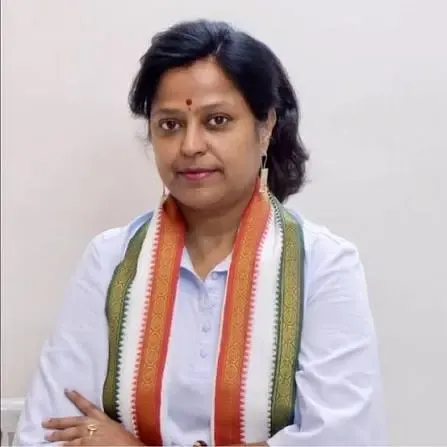
Dr Kota Neelima , TPCC Vice President, accused the BJP of using its 'Save Democracy, Remove Anarchy' campaign to deflect scrutiny from SIR electoral roll discrepancies.
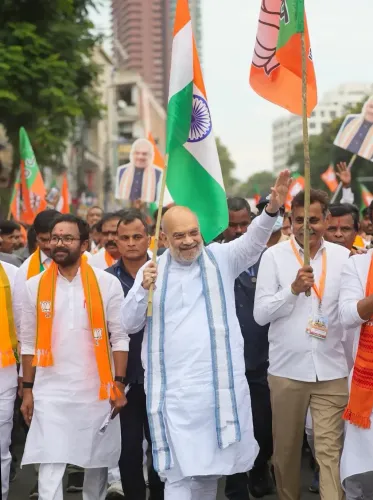
Union Home Minister Amit Shah launched the BJP campaign with a padyatra in Hyderabad on Monday, 3 November .
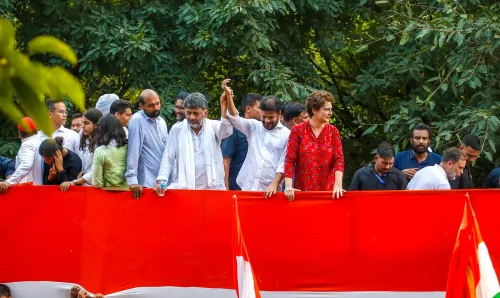
The opposition's 'Vote Bachao, Desh Bachao' rally at Ramlila Maidan, Delhi on 1 November drew participation from over 20 parties .
The rally was led by Mallikarjun Kharge , Sonia Gandhi , Rahul Gandhi , and Priyanka Gandhi , alongside INDIA bloc allies.
The united opposition claims the SIR process deleted over 13 crore voters — nearly 14% of the national electorate.
Dr Kota Neelima, Vice President of the Telangana Pradesh Congress Committee (TPCC), on 3 November 2026 accused the Bharatiya Janata Party (BJP) of launching a campaign in Hyderabad to deflect scrutiny from alleged discrepancies in the Special Intensive Revision (SIR) of electoral rolls, rather than address legitimate objections raised by citizens and opposition parties. Neelima alleged the BJP's approach brands dissenters as anti-national to intimidate them into silence.
The Campaign in Question
Neelima's remarks came in response to the 'Save Democracy, Remove Anarchy' campaign launched by Union Home Minister Amit Shah in Hyderabad on Monday. She argued that the campaign targets citizens who have raised evidence-based concerns about the SIR process rather than engaging with those concerns substantively.
'In its typical arrogant style, the BJP is trying to brand anyone who questions the SIR as anti-national. This is a deliberate attempt to intimidate citizens, political parties and leaders who have raised legitimate, evidence-based objections to the SIR process,' she said in a statement.
The Opposition's 'Vote Bachao, Desh Bachao' Rally
Neelima, who participated in the 'Vote Bachao, Desh Bachao' rally at Delhi's Ramlila Maidan on Sunday, 1 November, said the scale of the turnout had alarmed the ruling party. She described Shah's subsequent padyatra in Hyderabad as a reactive move to shift the narrative.
'Lakhs of people came to Delhi's Ramlila Maidan for this historic rally, and it has deeply worried the BJP. In response, Union Home Minister Amit Shah has staged a small padyatra in Hyderabad to blame the citizens of this country for fighting for their right to vote,' she said.
United Opposition Stance on Electoral Rolls
The rally on 1 November in Delhi was led by Congress president Mallikarjun Kharge, Sonia Gandhi, Leader of Opposition Rahul Gandhi, and Priyanka Gandhi, who shared the stage with INDIA bloc leaders from more than 20 opposition parties. These included the Samajwadi Party (SP), Rashtriya Janata Dal (RJD), All India Trinamool Congress (TMC), Nationalist Congress Party (Sharadchandra Pawar) (NCP-SP), Shiv Sena (UBT), Peoples Democratic Party (PDP), Jammu and Kashmir National Conference (JKNC), and Left formations.
The united opposition alleged that the SIR process has led to the deletion of over 13 crore voters — nearly 14% of the country's electorate — calling it a direct attack on democratic rights and citizens' right to vote.
What the SIR Controversy Is About
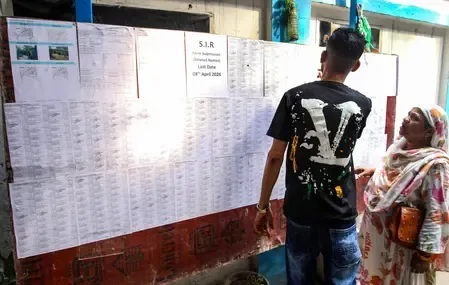
The Special Intensive Revision of electoral rolls has drawn sustained criticism from opposition parties who claim that the process, as conducted, has resulted in the large-scale removal of voter names without adequate verification or notice. The BJP and election authorities have not yet formally responded to the specific numerical claims cited by opposition leaders. Notably, this dispute comes amid heightened political tensions ahead of upcoming electoral cycles, making the integrity of voter rolls a flashpoint issue with consequences beyond any single state.
What Comes Next
With over 20 opposition parties now aligned on the issue, pressure is likely to mount on the Election Commission of India to provide a transparent accounting of deletions under the SIR. The BJP is expected to continue its counter-campaign in key states, while Congress is likely to escalate its outreach at the grassroots level. The credibility of the electoral roll revision process now sits at the centre of a national political debate.
Point of View
Not a counter-rally. What is striking is the breadth of the opposition coalition at Ramlila Maidan: when the SP, TMC, RJD, and Left stand on the same stage, the issue has clearly cut across ideological lines. The danger for the BJP is that the 'anti-national' framing, if overused on a civic rights issue, risks alienating the very undecided voters it needs in electoral swing states.
NationPress
3 Nov 2026
Frequently Asked Questions
What is the Special Intensive Revision (SIR) of electoral rolls?
The Special Intensive Revision (SIR) is a process conducted by election authorities to update and clean up voter rolls by verifying registered voters and removing ineligible entries. Opposition parties allege that the current SIR exercise has resulted in the deletion of over 13 crore voter names — nearly 14% of the national electorate — without adequate scrutiny or notification to those affected.
What is the BJP's 'Save Democracy, Remove Anarchy' campaign?
It is a campaign launched by Union Home Minister Amit Shah in Hyderabad on Monday, 3 November 2026. Congress leaders have characterised it as an attempt to shift the public narrative away from the SIR controversy by labelling critics of the process as anti-national.
What was the 'Vote Bachao, Desh Bachao' rally?
It was an opposition rally held at Ramlila Maidan in Delhi on 1 November 2026, led by Congress president Mallikarjun Kharge, Sonia Gandhi, Rahul Gandhi, and Priyanka Gandhi, alongside leaders from more than 20 parties in the INDIA bloc. The rally protested the SIR process and alleged large-scale voter deletion.
Which parties participated in the opposition rally against the SIR?
Over 20 opposition parties took part, including the SP, RJD, TMC, NCP (Sharadchandra Pawar), Shiv Sena (UBT), PDP, JKNC, and Left formations. The broad coalition signals that concerns over the SIR process have united opposition groups across ideological lines.
Who is Dr Kota Neelima and why is she significant in this controversy?
Dr Kota Neelima is the Vice President of the Telangana Pradesh Congress Committee (TPCC). She was a participant in the Ramlila Maidan rally and has been a vocal critic of the SIR process, accusing the BJP of intimidating citizens who raise evidence-based objections to voter roll deletions.