SIR notices: Congress urges ECI to act on mass voter deletion risk
Synopsis
Congress is calling the Election Commission's Special Intensive Revision a 'Method of Disenfranchising Indians' — and the numbers back the alarm: 5.43 crore voters across 14 states face notice-driven deletion, with Delhi showing a staggering 54% rate. With the ECI insisting safeguards exist but BJP states yet to publish at-risk voter lists, the battle over who stays on the roll is intensifying.
Key Takeaways
Congress on 21 September 2026 demanded the ECI address serious risks of mass voter deletion under the SIR process.
Jairam Ramesh said 5.43 crore Indians across 14 states and UTs have received notices demanding citizenship documentation.
In Delhi , 54% of voters have reportedly been deleted or face deletion risk — a figure Congress called 'absurdly high'.
Over 6 crore voter names were removed during the enumeration phase, with a further 5.4 crore now at risk, according to Congress.
Delhi CEO Ashok Kumar clarified that notices do not guarantee deletion; affected voters may file Form 6 until 30 September .
Congress alleged BJP-governed states have not released at-risk voter lists, calling it a 'lack of transparency'.
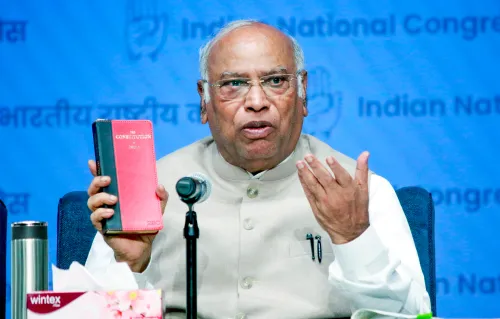
The Indian National Congress on Monday, 21 September 2026 demanded that the Election Commission of India (ECI) urgently address what it called a 'Method of Disenfranchising Indians' — the ongoing Special Intensive Revision (SIR) process, which it says puts crores of voters at risk of being struck off electoral rolls.
Congress Raises Alarm Over Scale of Deletions
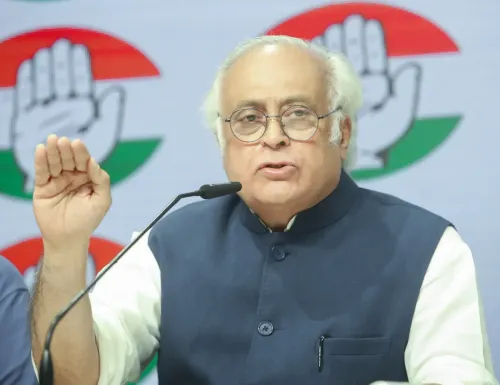
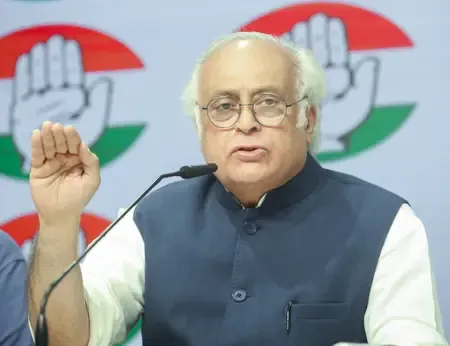
Jairam Ramesh, Congress General Secretary in-charge of communications, said in a post on X that the core issue was not about influential individuals who could navigate bureaucratic hurdles, but about ordinary voters who would struggle to do so. He cited figures indicating that in Delhi alone, 54 per cent of voters have either been deleted or face the risk of deletion — a share he described as 'absurdly high' and one that calls the entire voter roll into question.
Ramesh further stated that 5.43 crore Indians across 14 states and Union Territories have received notices demanding additional documentation to prove their citizenship. He argued there is 'abundant evidence' that such deletions disproportionately affect the most socially and economically marginalised groups, including slum dwellers, low-income individuals, and women.
Questions Over the Enumeration Phase
Ramesh pointed to a broader pattern of exclusion, noting that during the enumeration phase, names of over 6 crore voters were reportedly removed. He questioned why an additional 5.4 crore voters are now at risk of deletion in a subsequent step. He also alleged that several BJP-governed states have yet to release the list of voters facing deletion, calling it 'an appalling lack of transparency' and demanding that every state publish the list immediately.
'Unless voters provide adequate documentation to the satisfaction of the BLO/ERO, they can be struck off the final roll. So they remain at risk of deletion,' Ramesh said, urging the ECI to respond to what Congress characterises as systemic disenfranchisement.
What the Election Commission Said
Addressing concerns over notices sent to 31.63 lakh Delhi electors, Delhi Chief Electoral Officer Ashok Kumar on Monday clarified that receiving a notice does not automatically mean a voter's name will be deleted from the final electoral roll. He emphasised that any eligible person whose name is absent from the Draft Electoral Roll may file Form 6 with supporting documents during the claims and objections period, which runs until 30 September.
Forms can be submitted offline to the ERO/AERO/BLO or online via the official portal voters.eci.gov.in and the ECINET Mobile App. The CEO sought to assure voters that the process has safeguards against arbitrary deletion.
Why This Matters
The SIR process has triggered a sharp political debate over electoral integrity ahead of future state and national elections. Critics argue that documentation-heavy verification drives systematically exclude India's most vulnerable citizens, who may lack formal identity papers. This is not the first time the SIR has drawn fire — opposition parties have raised similar objections in previous revision cycles, warning that the process can be weaponised to alter electoral outcomes in marginal constituencies. The ECI's response and the final shape of the voter rolls will be closely watched by civil society groups and political parties alike.
Point of View
6 crore prior deletions, a 54% rate in Delhi — is extraordinary, and the ECI has not yet produced a granular rebuttal. The systemic pattern of deletions clustering among the poor, slum dwellers, and women is a documented risk in intensive revision exercises globally, and India's opposition has raised it repeatedly across cycles without a structural fix. The Commission's reassurance that notices don't equal deletion is technically accurate but misses the point: the burden of documentation falls hardest on those least able to bear it, and the refusal of several states to publish at-risk voter lists makes independent verification impossible.
NationPress
21 Sept 2026
Frequently Asked Questions
What is the SIR process and why is it controversial?
The Special Intensive Revision (SIR) is an ECI exercise to update electoral rolls by verifying voters' eligibility through documentation checks. It has become controversial because Congress and civil society groups argue it disproportionately results in the deletion of names of marginalised voters — including slum dwellers, low-income individuals, and women — who may not have the required documents.
How many voters are at risk of deletion under the current SIR?
According to Congress leader Jairam Ramesh, 5.43 crore Indians across 14 states and Union Territories have received notices demanding additional documentation. He also stated that over 6 crore names were removed during the earlier enumeration phase, bringing total deletions and at-risk numbers to a historically large figure.
What did Delhi's Chief Electoral Officer say about the notices?
Delhi CEO Ashok Kumar clarified on 21 September that receiving a SIR notice does not mean a voter's name will be deleted. Eligible voters whose names are missing from the Draft Electoral Roll can file Form 6 with supporting documents until 30 September, either offline at ERO/AERO/BLO offices or online at voters.eci.gov.in or via the ECINET Mobile App.
Why has Congress singled out BJP-governed states?
Congress alleged that several BJP-governed states have not released the lists of voters facing deletion risk under SIR, which it described as an 'appalling lack of transparency.' It demanded that every state immediately publish these lists so voters and civil society can independently verify who is at risk.
Who is most affected by voter deletions in the SIR process?
According to Congress, deletions disproportionately affect the most socially and economically marginalised groups, including slum dwellers, people with low incomes, and women. These groups are more likely to lack formal documentation and are therefore more vulnerable to failing the verification requirements set by the BLO/ERO.