Congress attacks Punjab's 'Sikhya Kranti' as AAP MLA flags teacher shortage
Synopsis
An AAP MLA publicly flagging teacher shortages in his own constituency — and then being suspended for it — has handed Congress a potent weapon against Punjab's 'Sikhya Kranti' narrative. The episode is less about one MLA's grievance and more about whether the Mann government's flagship education brand can survive scrutiny from within its own ranks.
Key Takeaways
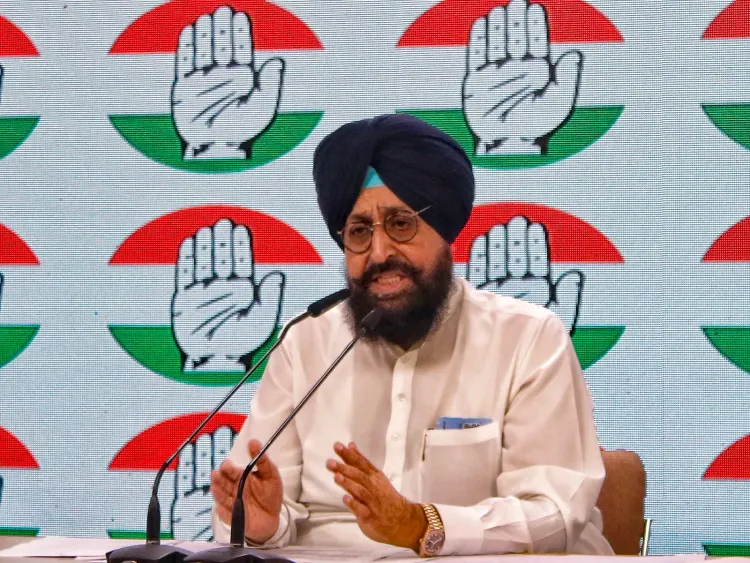
Congress Leader of Opposition Partap Singh Bajwa attacked the AAP Punjab government on 4 October 2026 over its 'Sikhya Kranti' education claims.
AAP MLA Sukhveer Singh Maiserkhana publicly raised concerns about teacher shortages in government schools, including a School of Eminence attended by his own son.
The AAP Punjab unit suspended Maiserkhana from primary party membership, citing 'anti-party activities and indiscipline.' Bajwa said the suspension amounted to 'acting against the messenger' rather than fixing a governance failure.
Chief Minister Bhagwant Mann 's repeated 'Sikhya Kranti' claims now face internal contradictions, with teacher vacancies emerging as the central challenge.
Leader of Opposition Partap Singh Bajwa on Sunday, 4 October 2026, launched a sharp attack on the Aam Aadmi Party (AAP) government in Punjab over its celebrated 'Sikhya Kranti' (Education Revolution) campaign, arguing that the claims have been undermined by a sitting AAP legislator who publicly flagged critical teacher shortages in government schools. Bajwa said the episode exposes the gap between the Mann government's publicity and ground reality.
What the AAP MLA Said
The controversy centres on AAP MLA Sukhveer Singh Maiserkhana, who went public with complaints about inadequate teaching staff in government schools within his own constituency. Maiserkhana stated that his children study in a government school — including a School of Eminence attended by his son — and that teacher shortages are directly affecting students. He reportedly raised the issue with senior AAP leaders and the government, but claimed his concerns went unaddressed.
Bajwa's Broadside on Chief Minister Mann
'Bhagwant Mann can continue to repeat the slogan of 'Sikhya Kranti', but the reality inside Punjab's government schools is increasingly difficult to hide. When a sitting AAP MLA goes public, says his own children study in a government school and raises concerns about a shortage of teachers affecting students, it exposes the widening gap between AAP's publicity and the reality on the ground,' Bajwa said in a statement.
He pressed further: 'If an elected MLA has to publicly raise the basic issue of having enough teachers in classrooms, what exactly is this 'Sikhya Kranti' that the Mann government keeps advertising? Education cannot be transformed through slogans, branding and publicity. It requires teachers in classrooms, functioning schools and accountability to parents and students.'
AAP Suspends the MLA — Bajwa Responds
Rather than addressing the substance of Maiserkhana's complaints, the AAP Punjab unit suspended the legislator from the party's primary membership, citing 'anti-party activities and indiscipline.' Bajwa was scathing in his response to that decision.
'The AAP leadership has chosen to act against the messenger instead of addressing the message. A shortage of teachers is a governance issue, not an anti-party activity. If an elected representative raises concerns about the education of children in his constituency, the government should listen, investigate and fix the problem, not silence him,' he said.
Broader Questions on Accountability
Bajwa framed the episode as symptomatic of what he described as AAP's intolerance of internal dissent. 'In a democracy, an MLA raising questions about the functioning of his own government should be seen as accountability, not indiscipline. The people of Punjab deserve answers on teacher shortages and the quality of education in government schools. They do not need another publicity campaign,' he said.
This comes amid sustained scrutiny of the AAP government's education narrative, which Chief Minister Bhagwant Mann and his party have positioned as a flagship achievement — one modelled partly on the Delhi school reform story. Critics argue that optics-heavy branding has outpaced actual structural improvements in staffing and infrastructure. Notably, teacher vacancies in Punjab's government schools have been a recurring concern raised by multiple stakeholders over successive governments.
Bajwa concluded: 'Punjab's children deserve teachers, not slogans; quality education, not publicity; and functioning schools, not political branding. The Mann government must stop hiding behind the slogan of 'Sikhya Kranti' and start answering the questions being raised from within its own ranks.'
Whether the Punjab government responds to the teacher-shortage allegations with concrete data or continues to contest Maiserkhana's account will likely determine how this episode shapes the education debate ahead of future electoral cycles.
Point of View
One whose children attend government schools, publicly challenge that narrative is damaging enough. Punishing him for speaking out makes it worse, reinforcing the very charge — intolerance of internal dissent — that Congress has been trying to make stick. The teacher-vacancy problem in Punjab predates AAP and won't be solved by either slogan or suspension; what's missing is a publicly verifiable staffing audit that separates fact from campaign imagery.
NationPress
4 Oct 2026
Frequently Asked Questions
What is the 'Sikhya Kranti' controversy in Punjab?
'Sikhya Kranti', meaning Education Revolution, is the AAP government's flagship campaign claiming a transformation of Punjab's government school system under Chief Minister Bhagwant Mann. The campaign is now under scrutiny after AAP MLA Sukhveer Singh Maiserkhana publicly raised concerns about teacher shortages in government schools, contradicting the government's claims of sweeping reform.
Why was AAP MLA Sukhveer Singh Maiserkhana suspended?
Maiserkhana was suspended from the AAP's primary membership by the Punjab unit for what the party described as 'anti-party activities and indiscipline.' The suspension followed his public complaints about inadequate teaching staff in government schools in his constituency, including a School of Eminence attended by his own son.
What did Congress's Partap Singh Bajwa say about the incident?
Bajwa said the AAP government chose to 'act against the messenger instead of addressing the message,' calling the teacher shortage a governance issue rather than an anti-party act. He argued that suspending an MLA for raising a legitimate education concern exposed AAP's intolerance of internal criticism and widened the gap between its publicity and ground reality.
Who is Sukhveer Singh Maiserkhana and what did he claim?
Sukhveer Singh Maiserkhana is a sitting AAP MLA who publicly stated that his children, including his son enrolled in a School of Eminence, study in government schools, and raised concerns about inadequate teaching staff affecting students. He reportedly brought the issue to senior AAP leaders and the government, but claimed it was not addressed before he went public.
Why does the teacher shortage matter for Punjab's government schools?
Teacher vacancies directly affect the quality of education in government schools — reducing per-student attention, disrupting curricula, and undermining any structural reform. Critics argue that without adequate staffing, infrastructure upgrades and branding campaigns like 'Sikhya Kranti' cannot translate into measurable improvements in learning outcomes.