Should MPs Face Consequences for Delaying Parliament?
Synopsis
The recent Budget Session of Parliament revealed startling productivity disparities between the Lok Sabha and Rajya Sabha. With the Lok Sabha achieving just 20% productivity compared to the Rajya Sabha's 89%, the question arises: should MPs be held accountable for their performance? This article delves into the implications of such low engagement and the political turmoil affecting legislative processes.
Key Takeaways
Lok Sabha productivity at just 20% compared to Rajya Sabha's 89%.
Political tensions are disrupting parliamentary proceedings.
Calls for accountability among MPs are increasing.
The ongoing deadlock may jeopardize the timely passage of the Union Budget.
MPs enjoy significant perks and privileges alongside their salaries.
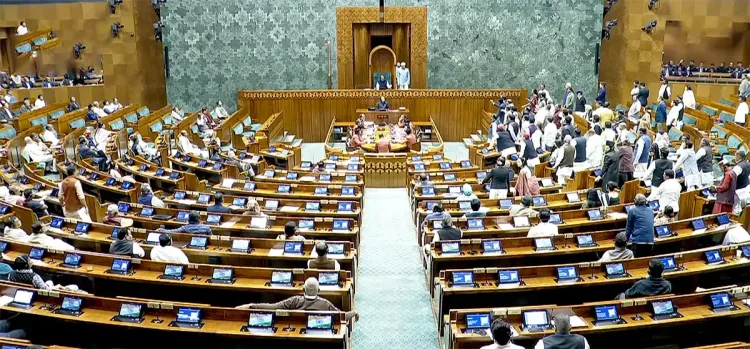
New Delhi, Feb 9 (NationPress) Since the commencement of the Budget Session of Parliament on January 28, up until February 6, the Lok Sabha recorded a productivity rate of 20 percent, while the Rajya Sabha achieved approximately 89 percent, according to a recent study.
During this timeframe, the Upper House operated for a total of 31.9 hours, in stark contrast to the Lower House, which managed only 7.7 hours, as detailed in a report by PRS Legislative Research.
Furthermore, the Rajya Sabha allocated 23.1 hours for non-legislative activities, that is, actions or decisions not executed through formal legislative processes, whereas the Lok Sabha recorded merely 2.9 hours.
In terms of other activities, the Rajya Sabha dedicated 5.9 hours for questions, 0.7 hours for legislation, and 2.1 hours for miscellaneous business; the Lok Sabha, however, only managed 2.3 hours for questions, 0 hours for legislation, and 1.1 hours for other business, as outlined in the report.
The only instance where the Lok Sabha spent more time was on financial matters, with 1.4 hours, compared to 0 hours in the Upper House. This is due to the Lok Sabha's exclusive authority to introduce Money Bills, where the Rajya Sabha's involvement is restricted to review and recommendations, which the Lower House can accept or dismiss.
The overall statistics highlight the current situation in this democratic institution, particularly in the Lok Sabha, where the Leader of the Opposition, Rahul Gandhi, has been adamant about referencing a yet-to-be-published, unverified work that allegedly contains the memoirs of a former Chief of the Indian Army.
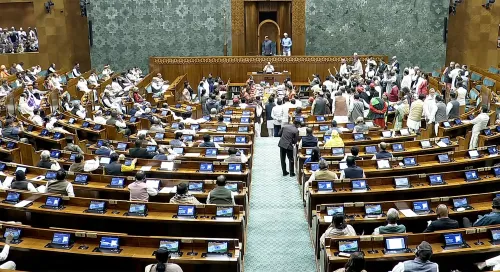
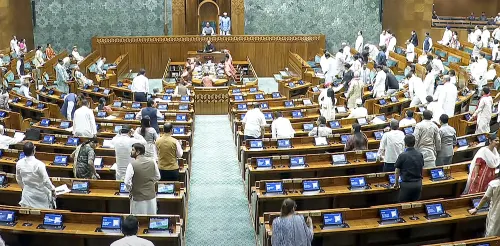
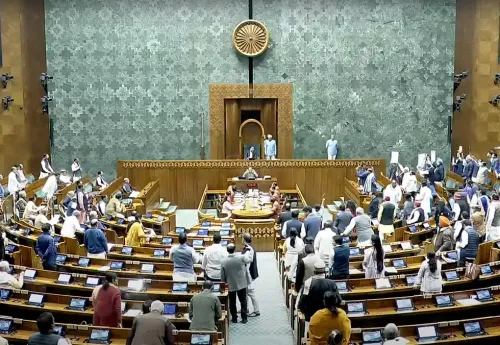
The situation has impacted the Lok Sabha's operations, with fervent members from the Opposition often rushing to the well of the House and even approaching the Prime Minister’s seat, vociferously chanting slogans, resulting in adjournments.
Recently, the Lower House encountered significant disruptions caused by the Opposition, who repeatedly interrupted proceedings concerning the India-United States bilateral trade agreement, claiming a lack of transparency.
In the meantime, discussions around Rahul Gandhi's ongoing references to former Army Chief General M.M. Naravane’s unpublished memoir on the 2020 Galwan clash with China continued until Monday.
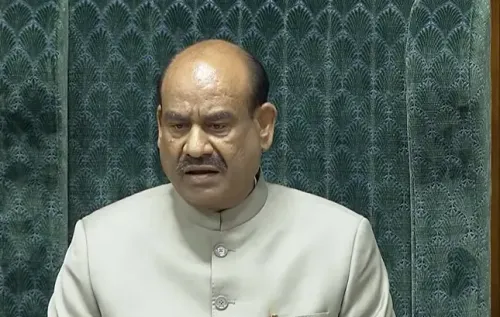
The Opposition has chosen to ignore the government’s persistent attempts to facilitate the continuation of the Budget session. Accusing Speaker Om Birla of biased behavior, particularly for denying Rahul Gandhi a chance to speak, the Congress is reportedly mobilizing the Opposition to propose a no-confidence motion against the Speaker.
This stalemate resulted in the Motion of Thanks to the President’s Address being passed by voice vote without the customary response from the Prime Minister, consequently delaying discussions on the Union Budget.
The ongoing deadlock could jeopardize the Budget session, as Parliament must approve the Finance Bill within 75 days post-introduction. This is essential for the government to execute proposals, collect taxes on schedule, and manage financial operations for the year.
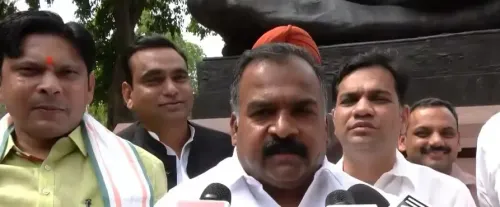
Once both Houses complete the legislative process and the President grants assent, the bill becomes the Finance Act. In 2018, BJP MP Manoj Tiwari requested Lok Sabha Speaker Sumitra Mahajan to implement a “no work, no pay” policy for Parliamentarians.
Tiwari's letter also recommended a reduction in salaries if MPs failed to participate in constructive activities. Last August, Independent MP from Daman and Diu, Umesh Patel, protested, calling for the suspension of Parliamentarians' salaries during the Monsoon Session, asserting they should cover the expenses for running the Houses.
Each MP receives a monthly salary of Rs. 1,24,000, supplemented by a daily allowance of Rs. 2,500 for attending Parliament. Upon retirement, the pension stands at Rs. 31,000 per month, with an additional Rs. 2,500 for every year of service beyond five years.
Besides their salary, MPs enjoy numerous benefits, including Rs. 70,000 as a Constituency Allowance and Rs. 60,000 as an office allowance monthly. In terms of privileges, MPs and their families are entitled to complimentary medical care, can utilize 34 domestic flights each year, and enjoy unlimited first-class train travel for both official and personal purposes.
Their communication expenses are covered through telephone benefits amounting to Rs. 1.5 lakh annually. Moreover, each MP is provided with rent-free housing in prime locations of Delhi, along with 50,000 units of free electricity and 4 lakh litres of complimentary water per year.
Point of View
It is paramount to uphold the integrity of democratic processes. The stark contrast in productivity levels between the Lok Sabha and Rajya Sabha underscores a pressing need for accountability among MPs. The current political climate, characterized by aggressive opposition tactics, hampers legislative efficiency. It is crucial for Parliamentarians to prioritize constructive dialogue over disruption to ensure the effective functioning of our democracy.
NationPress
17 Oct 2026
Frequently Asked Questions
What is the productivity rate of Lok Sabha and Rajya Sabha during the Budget Session?
The Lok Sabha achieved a productivity rate of 20%, while the Rajya Sabha recorded approximately 89% during the Budget Session.
What actions are being taken regarding the no-confidence motion against the Speaker?
The Congress party is reportedly organizing the Opposition to propose a no-confidence motion against Speaker Om Birla due to accusations of partisan conduct.
What impact does the ongoing deadlock have on the Union Budget?
The deadlock may delay the discussion and approval of the Union Budget, which is crucial for the government's financial operations.
What are some privileges enjoyed by MPs?
MPs receive a monthly salary, allowances, free medical care, and benefits like free electricity and water, among other perks.
Who raised the issue of 'no work, no pay' for MPs?
In 2018, BJP MP Manoj Tiwari suggested implementing a 'no work, no pay' rule for Parliamentarians.