Congress Critiques Government's Slow Reaction to West Asia Crisis
Synopsis
Political tensions rise as Congress and BJP leaders clash over the government's response to the Israel-Iran conflict. With inflation affecting citizens and maritime trade at stake, key politicians weigh in on India’s diplomatic approach during this crisis.
Key Takeaways
Political Reactions: Intensified responses from Congress and BJP leaders.
Government Criticism: Allegations of delayed action regarding the crisis.
Economic Impact: Rising inflation and trade disruptions affecting citizens.
Diplomatic Efforts: Ongoing engagement with global leaders to address tensions.
Future Outlook: Uncertain, with caution advised by political leaders.
New Delhi, March 25 (NationPress) Political reactions have surged regarding the government's management of the ongoing Israel-Iran conflict. Leaders from both the Congress and BJP are presenting sharply differing views on the nation's diplomatic approach and its repercussions on citizens.
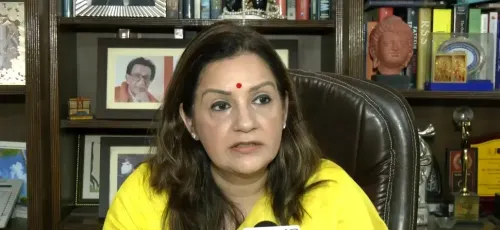
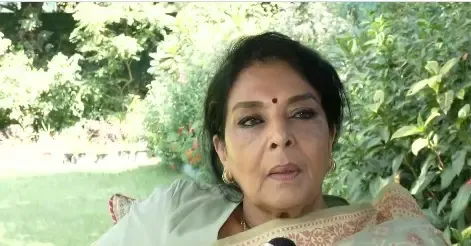
Congress MP Renuka Chowdhury criticized the Centre's response, implying that India was tardy in addressing the escalating crisis.
“What should have been done earlier is now being done after we finally woke up. Regardless, our government has done its part and is moving forward. We will see what unfolds next,” she told IANS.
Chowdhury cautioned that the situation could turn out to be a “costly deal” for India, emphasizing that the nation is navigating through a sensitive period.
She expressed hope that Prime Minister Narendra Modi and External Affairs Minister S. Jaishankar are fully cognizant of the complexities involved. “We are in a delicate phase. Let’s observe what happens as we proceed,” she added.
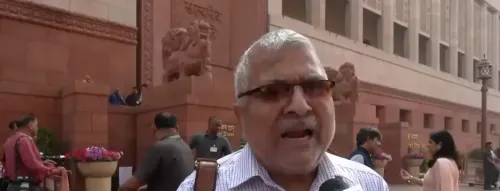
Agreeing on the domestic repercussions, Congress MP Ujjwal Raman Singh claimed that the conditions for ordinary citizens are worsening. “Inflation is continuously burdening the populace, and their troubles are escalating. What actions are being taken? Decisions are made quietly, but what are the outcomes? We are eager to know the results,” he stated.
Singh further expressed concerns regarding disruptions to maritime trade, especially through the Strait of Hormuz. “The citizens of India want clarity on when our ships will depart from the Strait of Hormuz, when stability will return, and when relief will arrive. It is the government's duty to alleviate these issues, which it has been failing to resolve,” he remarked.
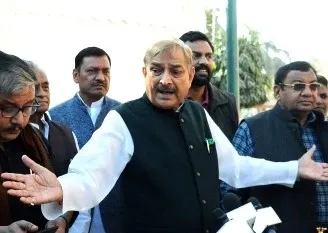
In response to the criticism, BJP MP Kamaljeet Sehrawat defended the government's position, asserting that India has upheld a balanced and diplomatic stance amid the crisis.
“In the context of the West Asia crisis, India's role has remained neutral. We have adopted a diplomatic approach, maintaining friendly relations with all parties involved,” she stated.
Sehrawat acknowledged that the conflict significantly impacts India, given its large population. However, she stressed that the government is actively engaging with global stakeholders to alleviate tensions.
“The Prime Minister is in continuous dialogue with all nations regarding how to stabilize the situation, and he has also communicated with US President Trump. It appears that a solution may be forthcoming,” she added.
Point of View
The situation reflects significant political discourse surrounding India's diplomatic strategy in a complex global scenario. Both Congress and BJP leaders highlight the urgency of effective governance amid international turmoil, with citizens' welfare at stake.
NationPress
23 Sept 2026
Frequently Asked Questions
What is the current situation regarding the Israel-Iran conflict?
The Israel-Iran conflict is ongoing, with increasing tensions impacting various countries, including India.
How has the Indian government responded to the crisis?
The Indian government has faced criticism for its delayed response, with leaders advocating for a more proactive diplomatic approach.
What are the economic implications for India?
The conflict has exacerbated inflation and disrupted maritime trade, affecting ordinary citizens significantly.
Who are the key political figures involved in the discussion?
Key figures include Congress MP Renuka Chowdhury, Ujjwal Raman Singh, and BJP MP Kamaljeet Sehrawat.
What future actions are expected from the Indian government?
The government is expected to engage in continuous dialogue with global stakeholders to stabilize the situation.