Opposition Challenges Government's Response to West Asia Crisis Following EAM's Statement
Synopsis
In a heated session, opposition leaders decried the government's lack of action regarding the West Asia crisis, emphasizing the need for urgent parliamentary discussion as tensions escalate.
Key Takeaways
Opposition leaders are demanding more accountability from the government regarding the West Asia crisis.
The conflict's impact on the Indian economy is evident, with stock markets declining.
Calls for parliamentary debate on national security and foreign affairs are increasing.
Jaishankar's statements indicate a government commitment to monitoring the situation closely.
Dialogue and diplomacy are emphasized as essential tools for de-escalation.
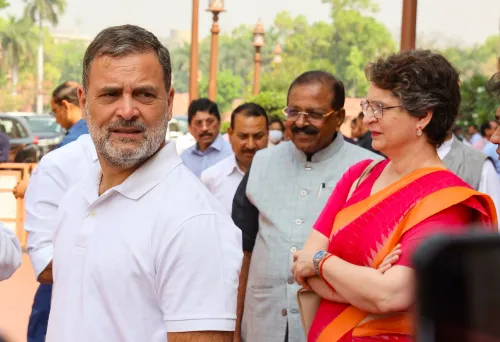
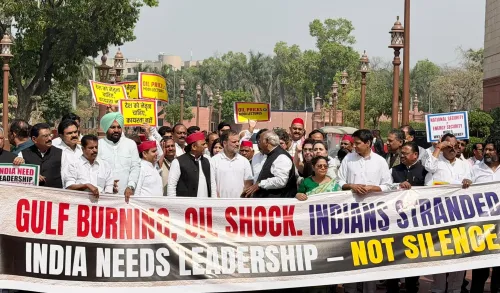
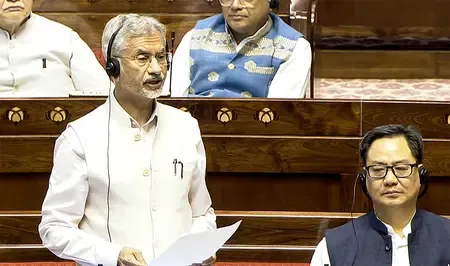
New Delhi, March 9 (NationPress) Opposition figures have voiced their discontent with the Union government’s handling of the intensifying crisis in West Asia, following External Affairs Minister S. Jaishankar's remarks made in the Rajya Sabha about the ongoing turmoil in the area.
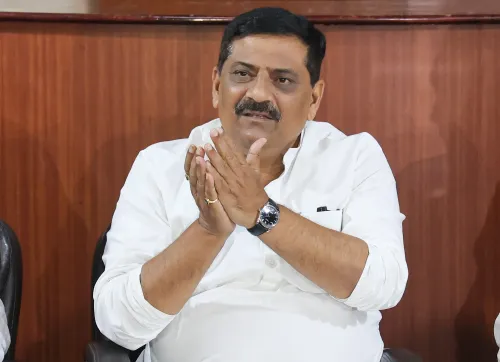
Congress MP J.B. Mather expressed that the international climate, especially in the Middle East, is exceedingly volatile and necessitates a thorough discussion in Parliament.
“The world is currently facing a highly precarious situation, particularly in the Middle East. The oil crisis and energy sector disruptions are significant. Their effects are being felt in India too, with the Sensex and Nifty declining, influencing the stock market. These critical issues warrant serious consideration and debate in the Parliament session. It is inadequate for a minister to merely issue statements on such significant matters...” Mather remarked to IANS.
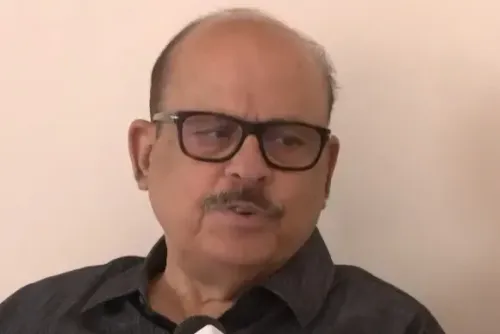
Adding to these concerns, CPI(M) MP John Brittas vehemently condemned the government's approach to the crisis, accusing it of silence during a pivotal geopolitical juncture.
“What purpose does his statement serve after bringing shame to an entire nation, composed of 140 crore people, in the face of unilateral aggression against a sovereign state? India's silence has been characterized as criminal negligence, sacrificing the substantial goodwill this nation has built,” Brittas asserted.
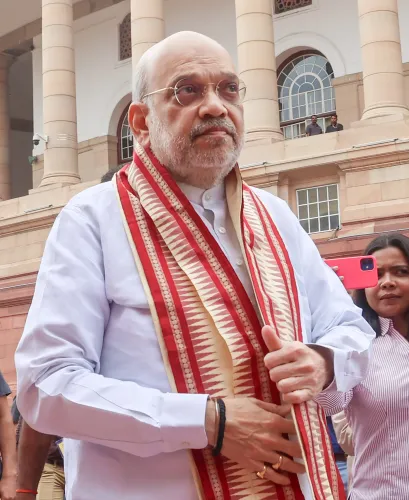
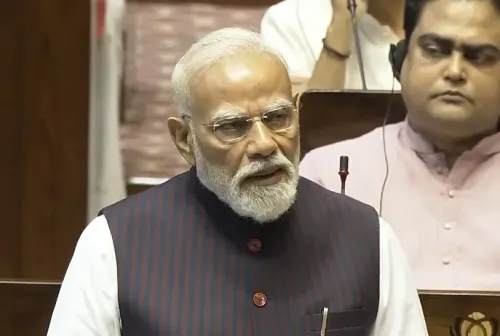
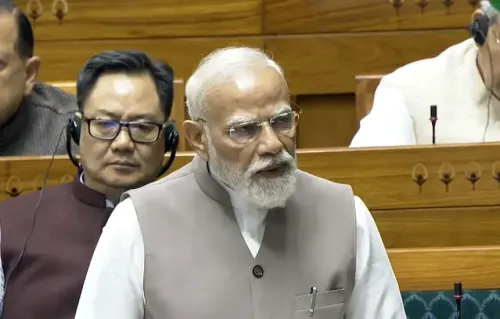
Earlier, Jaishankar informed the House that Prime Minister Narendra Modi is diligently monitoring the developing situation in West Asia. He underscored that these events are particularly concerning for India, given the substantial number of Indian citizens residing and working in the Gulf region.
At the beginning of the session, Leader of Opposition Mallikarjun Kharge sought to address the fatalities of Indian nationals amid the ongoing conflict. His statements prompted protests from Treasury Bench members, leading Rajya Sabha Chairman C.P. Radhakrishnan to urge Kharge to conclude his remarks and allow the External Affairs Minister to deliver the government’s statement.
While opposition members chanted slogans, Jaishankar outlined that the conflict was ignited by US–Israeli strikes on Iran, which reportedly resulted in significant destruction and the loss of several prominent leaders of the Islamic regime. He noted that tensions have since escalated and extended across various countries in the region.
“Our government had issued a statement on February 20 expressing grave concerns and calling for restraint from all parties, avoiding escalation, and prioritizing civilian safety. We maintain that dialogue and diplomacy should be the path forward to de-escalate tensions,” Jaishankar stated.
“It is also crucial that the sovereignty and territorial integrity of all regional states be respected,” he added.
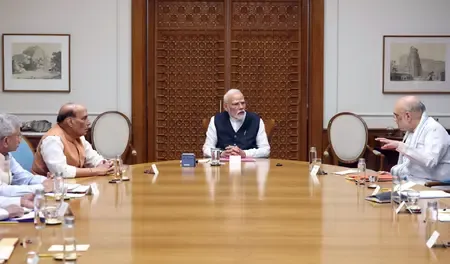
The minister also briefed the House that the Cabinet Committee on Security, chaired by Prime Minister Modi, had evaluated the situation and acknowledged the challenges faced by Indians living in the area and those traveling through it.
Point of View
The opposition's criticism highlights the pressing need for government accountability in foreign affairs. As geopolitical tensions rise, the safety of Indian citizens abroad becomes paramount, and the government's response must reflect a commitment to their welfare while navigating complex international dynamics.
NationPress
22 Sept 2026
Frequently Asked Questions
What prompted the opposition's criticism of the government?
The opposition criticized the government for its inadequate response to the escalating crisis in West Asia, particularly following External Affairs Minister S. Jaishankar's remarks in Rajya Sabha.
What concerns did Congress MP J.B. Mather raise?
Mather highlighted the tense situation in the Middle East and its impact on India, including the declining stock market, arguing for serious parliamentary discussions.
How did CPI(M) MP John Brittas respond to the government's stance?
Brittas condemned the government's silence during the crisis, referring to it as criminal negligence and a dishonor to the nation's goodwill.
What measures did Jaishankar mention regarding the situation?
Jaishankar indicated that Prime Minister Modi is closely monitoring the situation and emphasized the importance of dialogue to de-escalate tensions.
Why is the situation in West Asia significant for India?
Due to a large number of Indian citizens residing and working in the Gulf region, the developments in West Asia pose direct concerns for their safety and well-being.