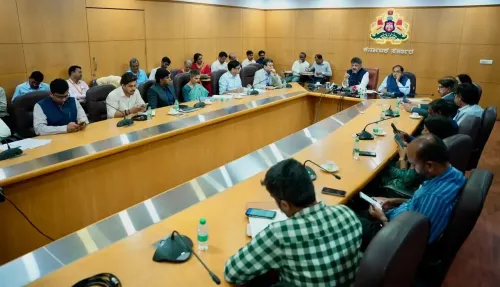
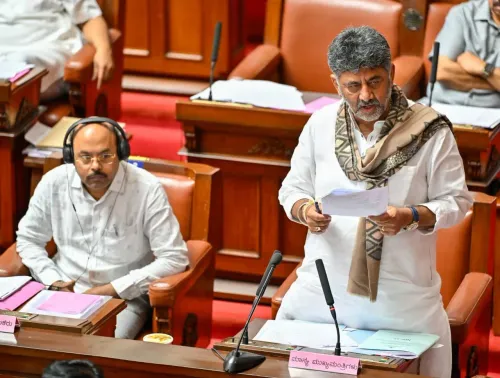
Karnataka Cabinet clears ₹20,000 crore road infrastructure push

Synopsis
The Karnataka Cabinet has approved ₹20,000 crore in road infrastructure projects covering state highway upgrades, district-taluk connectivity, and major road works in and around Bengaluru, aiming to boost regional development and ease movement of people and goods.
Key Takeaways
The Karnataka Cabinet approved road infrastructure projects worth ₹20,000 crore on 6 November 2026 .
The package covers state highway development , road connectivity between district and taluk headquarters , and major works in and around Bengaluru .
The government stated the initiative aims to support balanced regional development across Karnataka.
Karnataka's highway upgrade history traces back to the KSHIP programme launched in 2001 with World Bank support.
Future milestones to track include the tendering process , project timelines, and potential integration with the central Bharatmala Pariyojana .
A single Cabinet sitting has just committed ₹20,000 crore to reshape how Karnataka moves — from state highways to the last-mile lanes connecting district headquarters to their taluks. The Chief Minister's Office of Karnataka announced the approvals on Friday, 6 November 2026, framing the package as the government's highest infrastructure priority for the state.
What the ₹20,000 crore covers
The Cabinet-approved package spans three broad verticals: state highway development, improved road connectivity between district and taluk headquarters, and major road infrastructure works in and around Bengaluru. The government described the bundle as designed to 'strengthen connectivity, facilitate smoother movement of people and goods, and support balanced regional development.'
That last phrase — balanced regional development — carries deliberate political weight. Bengaluru has long absorbed a disproportionate share of Karnataka's infrastructure spending, leaving districts in the northern and coastal belts starved of comparable road quality. Routing a chunk of this package specifically toward district-taluk links signals an attempt to address that long-standing gap.
KSHIP's lineage and what this package adds
Karnataka's highway upgrade story did not begin here. The Karnataka State Highways Improvement Project (KSHIP), launched in phases from 2001 with World Bank support, laid the template for state-level highway upgrades that successive administrations have followed. The current approval fits squarely into that lineage — but at a scale that makes it one of the larger single-cabinet road clearances in recent state history.
Successive Karnataka governments have used multi-thousand-crore road packages as both economic stimulus and electoral signalling. The pattern is consistent: announce a large headline figure, attach it to highway and connectivity components, and let implementation — tenders, land acquisition, contractor timelines — play out over the following budget cycles.
Bengaluru's congestion problem and the broader stakes
Bengaluru, India's IT capital, has ranked among the world's most congested cities for several consecutive years, making road infrastructure investment in and around the city both economically urgent and politically popular. For businesses that move goods across Karnataka, the district-taluk connectivity piece matters just as much — poor last-mile roads inflate logistics costs and slow supply chains that feed into Bengaluru's export-oriented economy.
The government's statement points to integration with the state's broader growth agenda, though the precise project list, tendering schedule, and alignment with central programmes like Bharatmala Pariyojana will determine whether the ₹20,000 crore translates into tarmac or stays a Cabinet resolution.
The money is approved. Now comes the harder part — getting it onto the ground before the next election cycle does.
Point of View
000 crore single-cabinet road approval is one of Karnataka's larger infrastructure commitments in recent memory, and its explicit nod to district-taluk connectivity suggests the government is trying to blunt criticism that development remains Bengaluru-centric. Historically, such headline packages have strong announcement value but uneven delivery — the real test will be how quickly tenders are floated and whether land acquisition bottlenecks are pre-empted. The timing, with the state mid-term into its current legislative cycle, also fits a familiar political pattern of infrastructure pushes designed to show governance momentum ahead of the next electoral season.
NationPress
7 Nov 2026
Frequently Asked Questions
What projects did the Karnataka Cabinet approve worth ₹20,000 crore?
The Karnataka Cabinet approved a ₹20,000 crore road infrastructure package covering state highway development, improved road connectivity between district and taluk headquarters, and major road works in and around Bengaluru.
How will the ₹20,000 crore road package benefit Karnataka districts?
A key component targets improved connectivity between district and taluk headquarters, which is intended to reduce regional imbalances and lower logistics costs for businesses outside Bengaluru.
What is the Karnataka State Highways Improvement Project (KSHIP)?
KSHIP is a phased highway upgrade programme launched in 2001 with World Bank support, and has been Karnataka's primary vehicle for state highway development across successive administrations.
Will the Karnataka road projects connect with Bharatmala Pariyojana?
Integration with the central Bharatmala Pariyojana is listed as a key factor to watch, though no formal linkage has been confirmed in the Cabinet announcement.
Why is road infrastructure investment around Bengaluru important?
Bengaluru is India's leading IT and economic hub and consistently ranks among the world's most congested cities; improved road infrastructure directly supports business logistics, commuter mobility, and the city's export-oriented economy.