Karnataka CM charts ₹4,291 cr plan to end regional inequality
Synopsis
The Chief Minister's Office of Karnataka announced a ₹4,291 crore allocation for 2026-27, backed by the Prof. Govindarao Committee's study of all 236 taluks, alongside a special industrial incentive package to draw investment and jobs to the state's most backward regions.
Key Takeaways
The Chief Minister's Office of Karnataka announced the initiative on Independence Day, 15 August 2026 .
Govindarao Committee conducted a comprehensive study of all 236 taluks in Karnataka to assess regional development gaps.
The government has earmarked ₹4,291 crore for balanced regional development in the 2026-27 fiscal year.
A transparent fund-utilisation mechanism is being put in place to ensure accountable deployment of the allocation.
A special industrial concession package is being prepared to attract new industries specifically to industrially backward taluks.
The move follows a long policy lineage, including the 2002 Nanjundappa Committee report that identified 114 backward taluks .
On Independence Day, 15 August 2026, the Chief Minister's Office of Karnataka announced what it called a historic step toward a balanced state — a ₹4,291 crore allocation for 2026-27, guided by the findings of the Prof. Govindarao Committee, which studied all 236 taluks of Karnataka to map and address deep-rooted regional disparities.
The Govindarao Committee and its 236-taluk mandate
The post, written in Kannada, declares: 'ಸಮತೋಲಿತ ಕರ್ನಾಟಕದತ್ತ ಹೆಜ್ಜೆ' — 'Steps toward a balanced Karnataka.' The Prof. Govindarao Committee was tasked with a comprehensive study of all 236 taluks across the state, producing the recommendations that now underpin the government's regional development push. Karnataka has a long institutional memory on this question: the landmark Nanjundappa Committee report of 2002 had earlier identified 114 backward taluks and prescribed targeted investments to counter the gravitational pull of Bengaluru. The Govindarao exercise is the latest chapter in that continuing effort.
₹4,291 crore and a 'transparent mechanism' for deployment
The government says it has designed a transparent system to ensure the ₹4,291 crore is 'used appropriately' — signalling an intent to move beyond allocation on paper toward accountable disbursement. The announcement comes as part of a thread (marked 9/20), suggesting it is one plank of a wider Independence Day policy address. The framing of a 'transparent mechanism' is notable: past rounds of backward-area funding in Karnataka have drawn scrutiny over whether money reached the intended taluks or was absorbed by better-connected districts.
Special incentive package to pull industry into lagging taluks
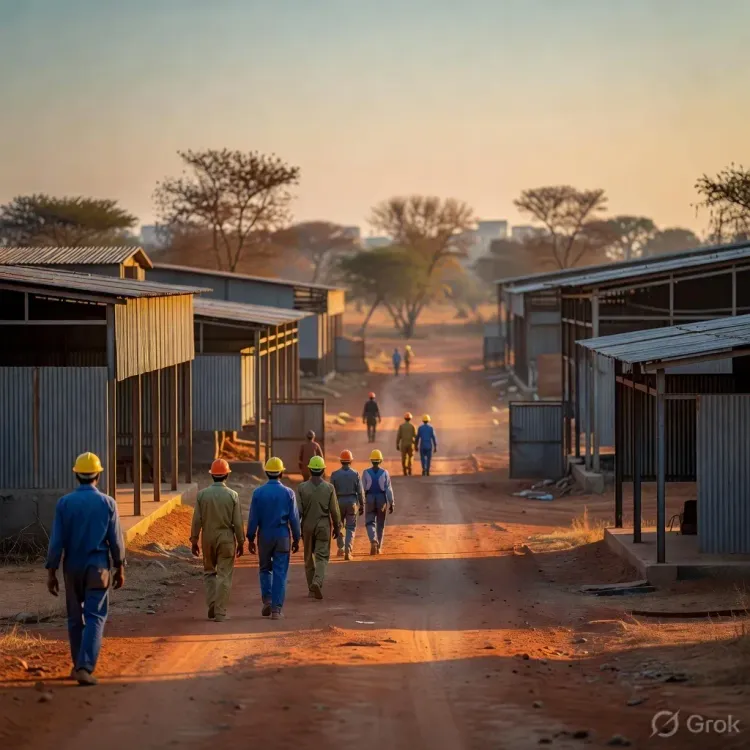
The most concrete forward-looking element is a special concession package being readied to attract new industries specifically to industrially backward taluks. The CMO says this will generate employment in regions that have historically been left out of Karnataka's manufacturing and services boom. The state's growth story has long been concentrated in the Bengaluru tech corridor and select coastal and northern pockets; the incentive package is an explicit attempt to rewire that geography. Residents of backward taluks, local workforces, and industrial investors are the direct stakeholders — and the design of those incentives will determine whether the intent translates into factory floors and jobs.
Karnataka governments have repeatedly reached for expert committee findings and fiscal transfers to address intra-state inequality. Whether the Govindarao framework delivers more durable results than its predecessors will depend on the granularity of the incentive package and the robustness of the fund-utilisation mechanism — both of which are still being finalised.
The details that will matter most are now in the pipeline. Watch for the fine print.
Point of View
Particularly ahead of budget cycles. The Govindarao initiative echoes the 2002 Nanjundappa framework, suggesting the underlying structural imbalance — Bengaluru's dominance versus the rest of the state — remains unresolved after two decades of interventions. The credibility of this round will hinge on the 'transparent mechanism' the government promises, since previous allocations have faced questions about actual delivery. Announcing it on Independence Day gives the policy symbolic weight, but the industrial incentive package details will be the real test of political will.
NationPress
29 Sept 2026
Frequently Asked Questions
What is the Prof. Govindarao Committee in Karnataka?
The Prof. Govindarao Committee is an expert panel appointed by the Karnataka government to conduct a comprehensive study of all 236 taluks in the state and recommend measures to reduce regional development disparities.
How much money has Karnataka allocated for regional development in 2026-27?
The Karnataka government has allocated ₹4,291 crore for balanced regional development in the 2026-27 fiscal year, to be deployed through a transparent fund-utilisation mechanism.
What is Karnataka's special industrial incentive package for backward taluks?
The Karnataka government is preparing a special concession package to attract new industries to industrially backward taluks, with the aim of generating employment in regions left out of the state's mainstream economic growth.
What was the Nanjundappa Committee report on Karnataka?
The Nanjundappa Committee report, released in 2002 , identified 114 backward taluks in Karnataka and recommended targeted investments to reduce regional disparities — a precedent the current Govindarao framework builds upon.
Why does Karnataka have regional inequality between districts?
Karnataka's growth has historically been concentrated in the Bengaluru technology corridor, leaving many northern, eastern, and coastal taluks with lower industrial activity, employment, and public investment — a gap successive state governments have tried to address through expert committees and fiscal transfers.