Karnataka Cabinet clears ₹20,000 cr road upgrade package

Synopsis
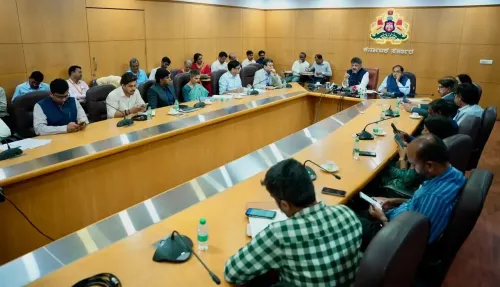
The Karnataka Cabinet has approved ₹20,000 crore for Public Works Department road projects, targeting state highway upgrades, district-taluk connectivity, bridge construction, and priority road works around Bengaluru — the state's largest single-cabinet infrastructure commitment in recent years.
Key Takeaways
The Karnataka Cabinet approved ₹20,000 crore for road and infrastructure development works under the Public Works Department .
Priority areas include state highway upgrades , improved district and taluk connectivity , new roads, bridges and buildings , and Bengaluru peripheral road development .
The approval effectively doubles the previously benchmarked annual PWD-related road allocation of roughly ₹10,000 crore .
The move follows the long-standing KSHIP template of phased, corridor-by-corridor upgrades that began with World Bank support from 2001 .
Key milestones to watch: tender issuance, work-order allocations across PWD circles, and mid-term utilisation reports.
Twenty thousand crore rupees. That is the figure the Karnataka Cabinet has just put behind the state's road network — a sweeping approval covering state highway upgrades, district and taluk connectivity, new bridges and buildings, and a focused push on roads ringing Bengaluru. The Chief Minister's Office of Karnataka announced the decision on 6 November 2026, framing it as a foundational bet on infrastructure-led growth.
The Kannada-language post reads: 'Moolasaukaryakke bala — Karnatakada pragatige vega' ('Strength to infrastructure — speed to Karnataka's progress'). The cabinet has approved works under the Public Works Department (PWD) at a total outlay of ₹20,000 crore, prioritising state highway upgrades, improved links between district and taluk headquarters, construction of roads, bridges and government buildings, and targeted road development in and around Bengaluru.What ₹20,000 crore buys Karnataka's roads
The package is structured around four distinct pillars. First, state highway upgrades — the arterial routes that knit Karnataka's 31 districts into a single economic unit. Second, improved connectivity between district headquarters and taluk centres, addressing the last-mile problem that has long hampered rural commerce and public services. Third, fresh construction of roads, bridges and government buildings. Fourth — and arguably most urgently felt — road development in the Bengaluru periphery, where explosive urban growth has chronically outpaced infrastructure capacity.
The PWD is the executing arm for all four pillars, coordinating procurement, tendering, and quality monitoring across a project portfolio of this scale.
KSHIP lineage and the pattern of big cabinet approvals
This approval sits inside a decades-long Karnataka tradition of deploying large cabinet-cleared road packages as both physical infrastructure and political signal. The Karnataka State Highways Improvement Project (KSHIP), launched from 2001 onward with World Bank assistance, set the template: multi-phase, corridor-by-corridor upgrades anchored by institutional project management. State budgets since 2018-19 have consistently pushed combined PWD and allied allocations past the ₹10,000 crore mark annually. The ₹20,000 crore single-cabinet approval effectively doubles that prior annual benchmark in one decision.
The strategic logic is consistent across administrations: a well-connected Karnataka is a more competitive Karnataka. Bengaluru's IT economy needs smooth logistics corridors to its manufacturing and agricultural hinterland. District towns need fast links to the capital to attract investment. Infrastructure spending, in this reading, is not a cost — it is a multiplier.
Bengaluru's ring roads and the congestion equation
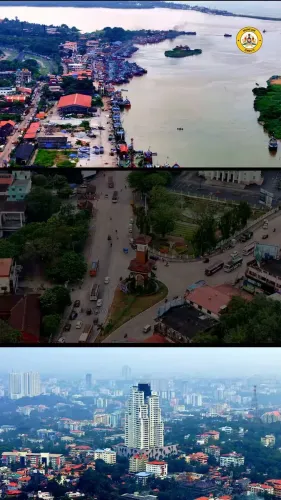
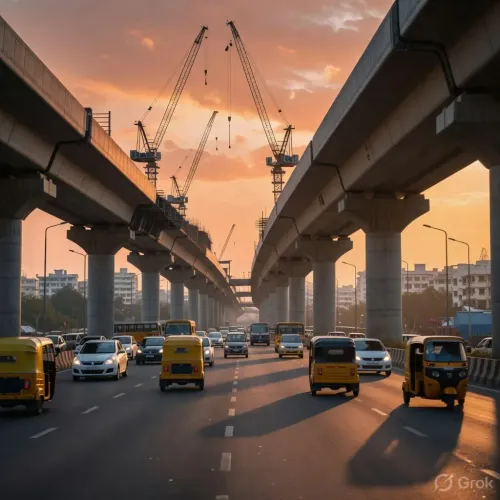
The specific call-out of Bengaluru's surrounding roads in the cabinet approval reflects a well-documented pressure point. The city's peripheral road network — connecting satellite towns like Tumakuru, Ramanagara, Hosur road corridors and the northern tech corridors — has struggled to absorb traffic generated by the city's expansion. Cabinet-level prioritisation of peri-urban roads signals an intent to get ahead of that curve, though the real test will be in tender timelines and construction pace.
Watchers will now track issuance of tenders, work-order allocations across PWD circles, and whether the approved outlay is released in full or phased across budget years. Mid-term utilisation reviews will be the first checkpoint for whether this ₹20,000 crore commitment translates into tarmac.
Point of View
000 crore for road works is a consequential capex signal — it anchors the Congress government's infrastructure credibility heading into the second half of its term. The deliberate emphasis on Bengaluru's periphery addresses a real and politically visible pain point, while the district-taluk connectivity strand speaks to the rural and semi-urban voter base. The larger test is execution speed: Karnataka has a history of large approvals that move slowly through tendering, so the gap between cabinet approval and ground-level progress will determine whether this becomes a governance achievement or a talking point for the opposition.
NationPress
7 Nov 2026
Frequently Asked Questions
What did the Karnataka Cabinet approve for roads in 2026?
The Karnataka Cabinet approved development works worth ₹20,000 crore under the Public Works Department, covering state highway upgrades, district and taluk connectivity, construction of roads, bridges and buildings, and road development around Bengaluru .
Which department will execute the ₹20,000 crore road works in Karnataka?
The Public Works Department (PWD) of Karnataka is the nodal executing agency for all projects under this cabinet-approved package.
What is KSHIP and how does it relate to this approval?
The Karnataka State Highways Improvement Project (KSHIP) , launched from 2001 with World Bank support, established the model for large-scale corridor-by-corridor highway upgrades in the state. The current ₹20,000 crore approval follows that institutional tradition of phased state highway investments.
Why is Bengaluru's peripheral road network being prioritised?
Bengaluru's surrounding road network has struggled to keep pace with the city's rapid urban expansion, causing chronic congestion on routes linking satellite towns and tech corridors. The cabinet's specific inclusion of peri-urban road development is intended to address this long-standing bottleneck.
How does this ₹20,000 crore compare to Karnataka's previous road spending?
Karnataka's annual combined PWD and allied road allocations in state budgets since 2018-19 have typically exceeded ₹10,000 crore . The single-cabinet approval of ₹20,000 crore effectively consolidates and doubles that benchmark in one decision.