How has CWRC rescued over 7,300 animals in Kaziranga since 2002, including the translocation of two rehabilitated rhinos?
Synopsis
Discover the remarkable achievements of CWRC in rescuing over 7,300 animals in Kaziranga National Park. This initiative not only aids flood-distressed wildlife but also highlights the success of translocating rehabilitated rhinos back to their natural habitat, showcasing effective conservation efforts.
Key Takeaways
CWRC has rescued over 7,397 wild animals since 2002 .
Approximately 65% of rescued animals have been successfully rehabilitated and released.
The recent translocation of rhinos showcases effective conservation practices.
Kaziranga is recognized as a UNESCO World Heritage Site .
The park is home to the celebrated ‘Big Five’ wildlife species.
Guwahati, Jan 20 (NationPress) The Centre for Wildlife Rehabilitation and Conservation (CWRC) has successfully rescued and managed a total of 7,397 wild animals from 357 different species in Assam’s Kaziranga National Park and Tiger Reserve (KNPTR), as reported by officials on Tuesday.
The CWRC was founded in 2002 as a joint effort between the Assam Forest Department, the Wildlife Trust of India (WTI), and the International Fund for Animal Welfare (IFAW).
KNPTR Field Director Sonali Ghosh stated that CWRC’s main objective is to rescue wild animals affected by floods and those that are orphaned, particularly during the annual monsoon floods that inundate large areas of Kaziranga for four months.
The center provides urgent veterinary assistance, hand-raises orphaned animals when necessary, and rehabilitates healthy individuals back into their natural environment using scientifically backed methods, which include the utilization of pre-release enclosures.
Out of the 7,397 animals rescued and cared for, around 4,490, or about 65%, have been successfully returned to their forest habitats post-treatment. This includes 25 hand-reared greater one-horned rhinoceroses, with 23 released in Manas National Park and two in Kaziranga. Currently, CWRC is caring for three rhino calves.
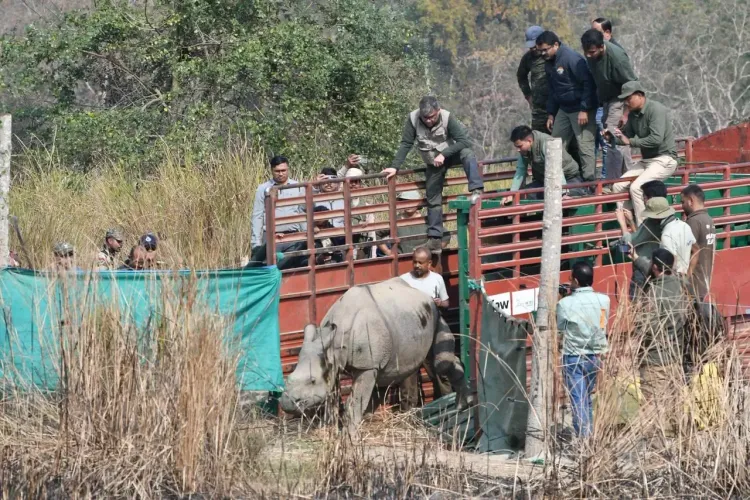
Recently, two male rhinos aged approximately four to five years were successfully translocated to Kaziranga National Park. This operation adhered to internationally recognized conservation protocols.
After receiving the necessary permissions from the Chief Wildlife Warden of Assam, under the Wildlife (Protection) Act, a site selection committee was formed to determine appropriate locations for the pre-release enclosures.
The rhinos were moved to these enclosures, allowing them to acclimatize to the wild before their final release into the park. The translocation was overseen by a team of veterinarians, while Kaziranga National Park officials, led by Field Director Sonali Ghosh, monitored various aspects of the process.
This rhino transfer exemplifies the scientific wildlife management and established rehabilitation protocols practiced at KNPTR, ensuring that rescued animals, especially the iconic greater one-horned rhinoceros, can return to their natural habitats even after enduring significant stress from disasters such as floods.
Kaziranga National Park and Tiger Reserve, recognized as India’s seventh UNESCO World Heritage Site, is home to the celebrated ‘Big Five’.
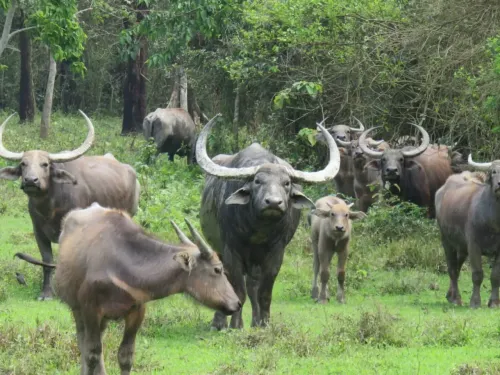
According to the latest statistics, the park hosts 2,613 greater one-horned rhinoceroses (2022 census), 104 Bengal tigers (2022), 1,228 Asian elephants (2024), 2,565 wild water buffaloes (2022), and 1,129 eastern swamp deer (2022).
Covering the districts of Golaghat, Nagaon, Sonitpur, and Biswanath, the park generated over Rs 10.90 crore in revenue in 2024-25 and more than Rs 8.81 crore in 2023-24.
KNPTR consists of three forest divisions - Eastern Assam Wildlife Division (Bokakhat), Biswanath Wildlife Division (Biswanath Chariali), and Nagaon Wildlife Division (Nagaon).
Point of View
Particularly in flood-prone regions. Their work not only aids in restoring animal populations but also reinforces conservation protocols that can serve as a model for similar initiatives worldwide. This approach ensures that even after experiencing distressing events, wildlife can return to their habitats, emphasizing the importance of sustained conservation practices.
NationPress
3 Oct 2026
Frequently Asked Questions
How many animals has CWRC rescued?
CWRC has rescued and managed 7,397 animals across 357 species since its establishment.
What kind of animals does CWRC primarily focus on?
CWRC mainly focuses on rescuing flood-distressed and orphaned wild animals, particularly during the monsoon floods in Kaziranga.
What happens to the animals after rescue?
After rescue, CWRC provides veterinary care, rehabilitates the animals, and releases those that are fit back into the wild.
What is significant about the recent rhino translocation?
The recent translocation of two male rhinos back to Kaziranga exemplifies successful wildlife management and adherence to conservation protocols.