Assam CM Office marks World Environment Day with bear cub release
Synopsis
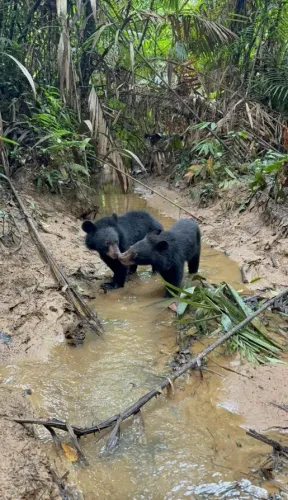
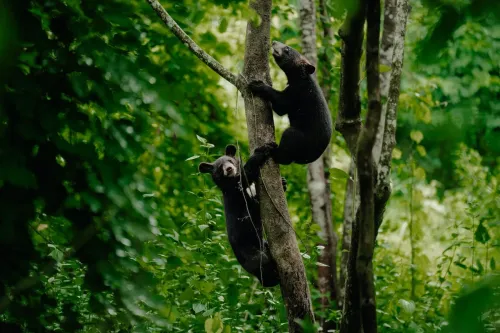
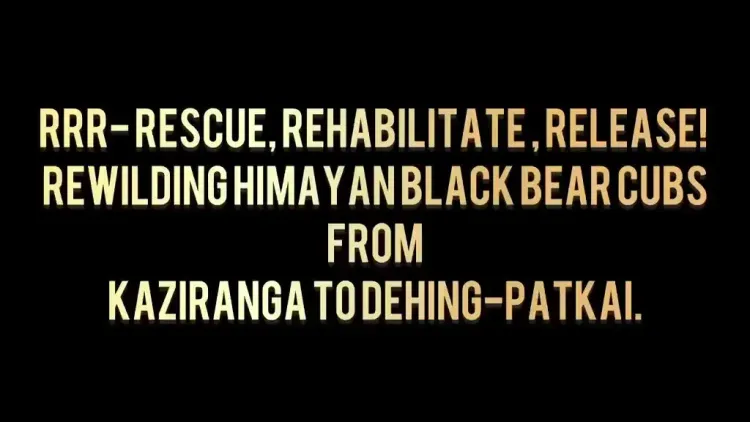
On World Environment Day 2026, the Chief Minister's Office of Assam announced the successful release of two orphaned Asiatic black bear cubs into Dehing Patkai National Park after months of rehabilitation at CWRC, Kaziranga — spotlighting Assam's active rescue-and-release conservation model under CM Himanta Biswa Sarma.
Key Takeaways
The Chief Minister's Office of Assam announced the milestone on World Environment Day, 5 June 2026 .
Two orphaned Asiatic black bear cubs were rehabilitated at the Centre for Wildlife Rehabilitation and Conservation (CWRC) near Kaziranga National Park.
The cubs were released into Dehing Patkai National Park , a lowland rainforest upgraded to national park status in 2021 .
The achievement is attributed to the conservation direction of Chief Minister Dr.
Himanta Biswa Sarma .
The Asiatic black bear is listed as 'Vulnerable' on the IUCN Red List and protected under Schedule II of the Wildlife Protection Act, 1972 .
Post-release monitoring will determine the long-term success of the rehabilitation and reintegration effort.
The Chief Minister's Office of Assam on Friday, 5 June 2026, marked World Environment Day by highlighting a conservation milestone: two orphaned Asiatic black bear cubs, rehabilitated at the Centre for Wildlife Rehabilitation and Conservation (CWRC) near Kaziranga National Park, have been successfully released into Dehing Patkai National Park in eastern Assam.
Context
The post, shared on the official CMO Assam account, credits the achievement to the leadership of Chief Minister Dr. Himanta Biswa Sarma. The two cubs, described as orphaned, underwent 'months of dedicated care and rehabilitation' at CWRC before being deemed fit for release. Dehing Patkai, a lowland tropical rainforest in eastern Assam, was chosen as the release site, giving the animals, in the CMO's words, 'a second chance to thrive in the wild.'
Policy Backdrop
Dehing Patkai was upgraded from a wildlife sanctuary to a full national park in 2021, the same year Dr. Sarma assumed office, strengthening legal protections for one of India's last stretches of lowland rainforest in the Northeast. The CWRC, operating adjacent to Kaziranga National Park — a UNESCO World Heritage Site — has functioned since the early 2000s as Assam's primary facility for rescuing and rearing orphaned large mammals, including elephants, rhinos, and bears. The Assam government has periodically announced rescue-rehabilitation-release cycles for conflict-affected or orphaned species as part of its broader in-situ conservation strategy under the Wildlife Protection Act, 1972.
The Asiatic black bear (Ursus thibetanus) is listed as 'Vulnerable' on the IUCN Red List and is protected under Schedule II of the Wildlife Protection Act. Human-wildlife conflict and habitat loss remain the primary threats to the species across its range in Northeast India.
Stakeholders and Impact
The Assam Forest Department and CWRC veterinary and field staff are central to the operation, having managed the cubs through the full arc of rescue, medical care, and behavioural conditioning required before any release into the wild. Conservation organisations working in the Northeast have long advocated for exactly this kind of structured rehabilitation pipeline, arguing it reduces pressure on wild populations while demonstrating that conflict-rescued animals can be successfully reintegrated.
Local communities around Dehing Patkai are key long-term stakeholders: successful reintegration of rehabilitated animals depends in part on sustained low-conflict coexistence at the forest fringe. The release also carries symbolic weight on World Environment Day, reinforcing Assam's positioning as a conservation-active state within India's Northeast biodiversity corridor.
What's Next
Post-release monitoring of the two cubs will be critical to assessing the success of the rehabilitation protocol. Wildlife managers typically track movement, foraging behaviour, and survival rates in the months following release to refine future interventions. Any formal monitoring report from the Assam Forest Department or CWRC would provide the clearest measure of this outcome. Further rehabilitation announcements are likely to be timed to upcoming environment observances or new park management plan milestones, as the state continues to scale its rescue-and-release programme across protected areas.
Point of View
Positioning Assam as a proactive wildlife steward at a moment when Northeast India's biodiversity corridors face mounting pressure from infrastructure expansion and human-wildlife conflict. Choosing Dehing Patkai — a park that only gained full national park status in 2021 under the current administration — as the release site is not incidental; it reinforces the government's narrative of institutional progress in forest governance. The rescue-rehabilitation-release model, long championed by field conservationists, gains political visibility here, which could translate into sustained budgetary and administrative support for CWRC's operations. Broader success will hinge on whether post-release monitoring is formalised and made public, turning a symbolic gesture into a measurable conservation outcome.
NationPress
19 Sept 2026
Frequently Asked Questions
Where were the two Asiatic black bear cubs released in Assam?
The two rehabilitated Asiatic black bear cubs were released into Dehing Patkai National Park , a lowland rainforest protected area in eastern Assam.
What is the Centre for Wildlife Rehabilitation and Conservation (CWRC)?
CWRC is a wildlife rescue and rehabilitation facility located near Kaziranga National Park in Assam. It has operated since the early 2000s, caring for orphaned and conflict-affected large mammals including elephants, rhinos, and bears before releasing them into the wild.
Why is Dehing Patkai significant for wildlife in Assam?
Dehing Patkai is one of India's last stretches of lowland tropical rainforest and was upgraded from a wildlife sanctuary to a national park in 2021 , giving it stronger legal protections and making it a suitable habitat for released wildlife.
What is the conservation status of the Asiatic black bear in India?
The Asiatic black bear is listed as 'Vulnerable' on the IUCN Red List and is protected under Schedule II of India's Wildlife Protection Act, 1972, which prohibits hunting and trade of the species.
What role did CM Himanta Biswa Sarma play in this bear release?
The Chief Minister's Office credited the conservation achievement to the leadership of Chief Minister Dr. Himanta Biswa Sarma , who has overseen Assam's forest and wildlife policy since taking office in May 2021 , including the elevation of Dehing Patkai to national park status.