DCW seeks JNU report in 3 days over sexual harassment complaint against professor
Synopsis
The Delhi Commission for Women has given JNU just three days to explain why a sexual harassment complaint filed by female students against a professor in May 2026 remains unresolved — raising sharp questions about whether the university's Internal Complaints Committee was ever activated as required under the POSH Act.
Key Takeaways
DCW Chairperson Lata Gupta issued a notice to JNU on 14 September 2026 , seeking a report within three days .
Female students alleged they filed a sexual harassment complaint before Vice Chancellor Santishree Dhulipudi Pandit in May 2026 but received no response.
The DCW asked whether the complaint was referred to JNU's Internal Complaints Committee (ICC) under the POSH Act .
JNU has been asked to submit a full Action Taken Report (ATR) with relevant details to the Commission.
DCW stated it will take further legal action based on the university's response.
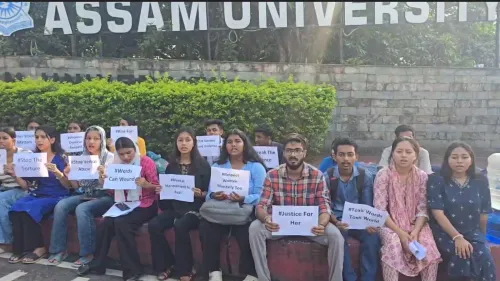
The Delhi Commission for Women (DCW) on Monday, 14 September 2026, issued a formal notice to Jawaharlal Nehru University (JNU), seeking a detailed report within three days on allegations of sexual harassment levelled by female students against a professor. DCW Chairperson Lata Gupta took suo motu cognisance of a video circulating on social media in which the students claimed they had filed a complaint before JNU Vice Chancellor Santishree Dhulipudi Pandit as far back as May 2026, but alleged that no appropriate action had been taken since.
What the Students Alleged
In the widely circulated video, the students stated that they had formally approached the Vice Chancellor's office with a complaint of sexual harassment against the professor. According to their account, the complaint has remained unaddressed for over four months, with no referral to the university's Internal Complaints Committee (ICC) as mandated under the Prevention of Sexual Harassment (POSH) Act. The specific identity of the professor has not been disclosed in publicly available information.
What the DCW Notice Demands
The DCW's notice to the JNU administration poses pointed questions: whether the complaint submitted in May 2026 was acknowledged and formally referred to the ICC; if it was placed before the ICC, what action the Committee has taken so far; and if no action has been taken, the reasons must be clearly stated. The university has been asked to submit a full Action Taken Report (ATR) along with all relevant details before the Commission.
DCW Chairperson's Position
Gupta stated that whenever a woman or student raises a complaint of sexual harassment, it is essential that the matter be dealt with 'fairly, promptly and sensitively' in accordance with the law and prescribed procedure. She added that the Commission's objective is to ensure every complaint is properly examined through due process, and that the complainant is not deprived of access to justice because of administrative inaction or delay.
What Happens Next
The DCW has stated it will examine the report submitted by JNU and, based on the facts and findings available on record, take further necessary action in accordance with law. This comes amid broader scrutiny of how university administrations handle POSH complaints — a pattern that critics argue reflects institutional inertia rather than isolated lapses. Notably, JNU has faced prior controversies over campus safety and internal grievance redressal. The three-day deadline places the university under immediate pressure to respond before the end of the week.
Point of View
And if JNU bypassed that, it faces potential statutory liability. What mainstream coverage may miss is that the DCW's three-day deadline is itself a signal — it reflects distrust in the university's willingness to self-correct without compulsion.
NationPress
15 Sept 2026
Frequently Asked Questions
Why did the DCW issue a notice to JNU?
The DCW issued a notice to JNU after taking suo motu cognisance of a social media video in which female students alleged that a sexual harassment complaint filed before the Vice Chancellor in May 2026 had gone unaddressed for over four months. The Commission asked the university to explain what action, if any, was taken under the POSH Act.
What is the three-day deadline about?
DCW Chairperson Lata Gupta has given JNU three days from 14 September 2026 to submit an Action Taken Report detailing whether the complaint was referred to the Internal Complaints Committee, what steps were taken, and if no action was taken, the reasons for the same.
What is the POSH Act and what does it require universities to do?
The Prevention of Sexual Harassment (POSH) Act mandates that every workplace and educational institution constitute an Internal Complaints Committee (ICC) to receive and adjudicate sexual harassment complaints in a time-bound manner. Universities are required to refer complaints formally to the ICC and cannot leave them unaddressed without statutory justification.
Who is involved in the JNU sexual harassment complaint?
The complaint was made by female students of JNU against a professor, and was reportedly submitted to Vice Chancellor Santishree Dhulipudi Pandit in May 2026. The specific identity of the professor has not been publicly disclosed. The DCW, chaired by Lata Gupta, has now intervened following a video the students circulated on social media.
What action can the DCW take after receiving JNU's report?
After reviewing JNU's Action Taken Report, the DCW has stated it will take further necessary action in accordance with law. This could include summoning university officials, recommending action to higher authorities, or escalating the matter to relevant statutory bodies if the university's response is found inadequate.