ABVP protests at JNU over delayed sexual harassment case against Congress MP professor
Synopsis
ABVP's JNU unit took to the campus on Monday, burning effigies of the university's Internal Committee and a professor — reportedly a sitting Congress MP — accused of sexual harassment. The student body alleges political interference is stalling the inquiry, putting the spotlight on whether institutional processes at one of India's most politically charged universities can function free of factional pressure.
Key Takeaways
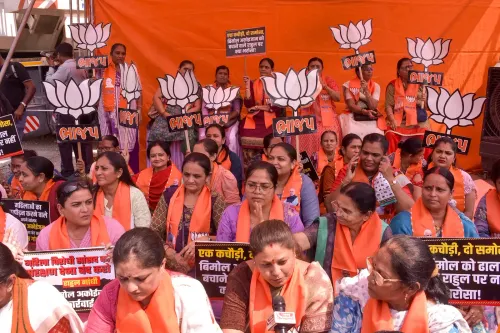
ABVP's JNU unit staged a protest and burnt effigies on Monday, 8 September over an allegedly delayed sexual harassment case.
The accused professor is reportedly a Congress Member of Parliament; complaints have been filed with the university's Internal Committee .
ABVP JNU President Mayank Panchal alleged the Left-dominated IC was shielding the accused due to political affiliation.
ABVP JNU Minister Praveen Kumar Piyush demanded the immediate resignation of leftist IC representatives, calling them 'incapable.' He alleged leftist IC members skipped hearings in a separate case involving an AISF cadre.
The POSH Act mandates inquiry completion within 90 days ; whether this deadline has been breached has not been independently confirmed.
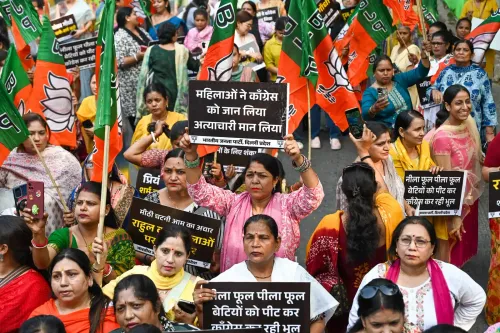
The Akhil Bharatiya Vidyarthi Parishad (ABVP)'s Jawaharlal Nehru University (JNU) unit on Monday, 8 September staged a campus protest and burnt effigies of the university's Internal Committee (IC) and a professor facing sexual harassment allegations, claiming the case was being stalled due to political interference. The professor in question is also reportedly a Congress Member of Parliament.
Nature of the Allegations
According to an ABVP press release, several female students have filed serious sexual harassment complaints against the JNU professor with the university's Internal Committee. The organisation alleged that despite the gravity of these complaints, no concrete action had been taken as of the date of the protest.
ABVP contended that the accused professor's political affiliation — his status as a Congress MP — was shielding him from disciplinary proceedings. The organisation further alleged that leftist representatives on the IC were delaying hearings under pressure from their political leadership.
What ABVP Leaders Said
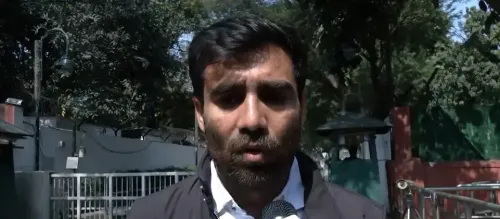
ABVP JNU President Mayank Panchal said the absence of timely action on complaints filed by female students exposed what he called the 'true face' of the Left-dominated Internal Committee and leftist organisations on campus. He also claimed that several activists associated with leftist groups had faced sexual harassment allegations in the past yet continued to remain active within those organisations.
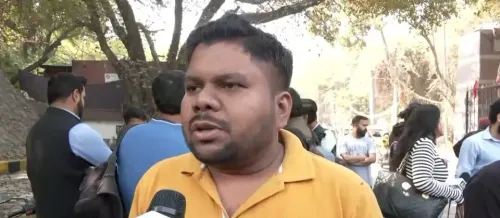
ABVP JNU Minister Praveen Kumar Piyush demanded the immediate resignation of leftist representatives elected to the Internal Committee, describing them as 'incapable.' He alleged that in a recent case involving a complaint against an All India Students Federation (AISF) cadre, the leftist IC members had not attended any of the hearings — a pattern he said reflected insensitivity towards women's issues.
The Broader Concern Raised
ABVP stated that if the investigation or hearing of such complaints was being influenced or delayed due to any individual, organisation, or political pressure, it constituted a matter of serious concern. The organisation maintained that leftist IC representatives, who publicly claim to champion women's rights, were in practice failing to protect the complainants in this case.
Notably, JNU has been a recurring site of ideological contestation between ABVP and left-aligned student groups, and allegations of politically motivated delays in institutional processes have been raised by multiple sides in the past. The university administration and the accused professor had not issued a public response to the allegations as of the time of reporting.
What Happens Next
The Internal Committee's proceedings are governed by the Sexual Harassment of Women at Workplace (Prevention, Prohibition and Redressal) Act, 2013, commonly known as the POSH Act, which mandates completion of inquiries within 90 days. Whether the committee's timeline has breached this statutory limit has not been independently confirmed. ABVP has indicated it will continue to press for swift action and accountability from the university administration.
Point of View
But so does the fact that the protest itself is a political act by an organisation aligned with the ruling party at the Centre. The POSH Act exists to insulate harassment inquiries from exactly this kind of pressure — from any direction. What is missing from this episode is the voice of the complainants themselves, the university administration's position, and an independent verification of whether the IC's timeline has actually violated the 90-day statutory mandate. Until those facts are on the table, the risk is that a genuine grievance about institutional failure gets consumed by the campus culture war.
NationPress
24 Oct 2026
Frequently Asked Questions
What is the ABVP protest at JNU about?
The ABVP's JNU unit staged a campus protest on 8 September, burning effigies of the university's Internal Committee and a professor accused of sexual harassment. The student body alleged that the case was being deliberately delayed due to the professor's political affiliation as a Congress MP.
Who is the professor accused of sexual harassment at JNU?
The professor has not been named in the ABVP press release reviewed by NationPress. According to the organisation, the individual is a JNU professor who also serves as a Congress Member of Parliament; the university and the accused had not issued a public response as of the time of reporting.
What does the POSH Act say about inquiry timelines?
The Sexual Harassment of Women at Workplace (Prevention, Prohibition and Redressal) Act, 2013 — commonly called the POSH Act — requires an Internal Committee to complete its inquiry within 90 days of receiving a complaint. Whether the JNU IC has breached this deadline in this case has not been independently confirmed.
What did ABVP demand from the JNU Internal Committee?
ABVP demanded the immediate resignation of leftist representatives on the Internal Committee, calling them 'incapable.' The organisation also alleged that these members had failed to attend hearings in a separate case involving an AISF cadre, and called for swift, unimpeded action on all pending complaints.
Is this the first time ABVP and left-aligned groups have clashed over campus issues at JNU?
No. JNU has been a longstanding site of ideological contestation between ABVP and left-aligned student organisations, with both sides having previously raised allegations of politically motivated institutional delays. This protest is the latest episode in a pattern of factional conflict over campus governance.