Did the BJP Accuse Congress of Vote Chori Since 1947?
Synopsis
The Lok Sabha debate on election reforms sees BJP's Sanjay Jaiswal and Congress's Manish Tewari clashing over historical electoral practices. Jaiswal accuses Congress of 'vote chori' dating back to 1947, while Tewari raises concerns over public funding and electoral integrity.
Key Takeaways
The debate highlighted significant political tensions over electoral integrity.
Concerns over public funding misuse were raised.
Historical claims of electoral manipulation were discussed.
Calls for reform in the Election Commission's operations were made.
The need for transparency in electoral processes was emphasized.
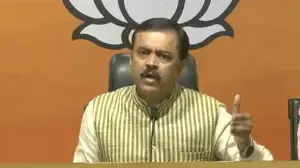
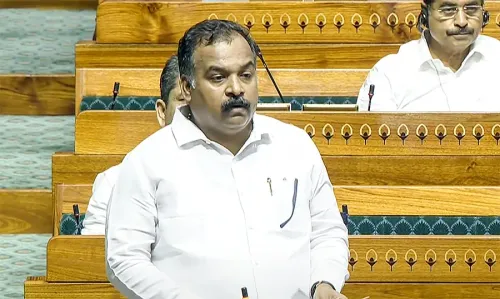
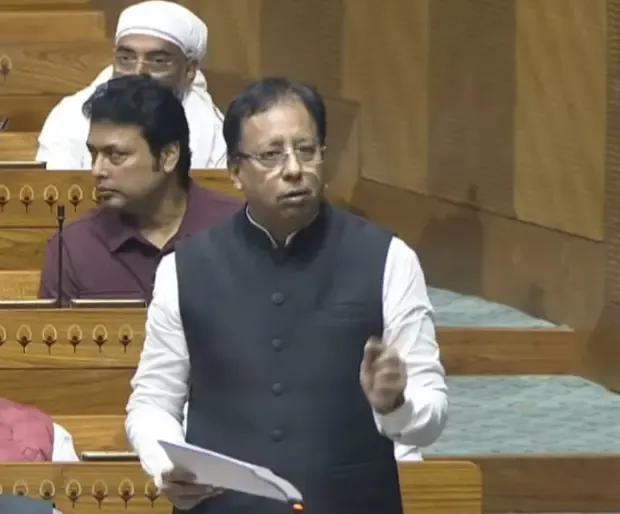
New Delhi, Dec 9 (NationPress) The Lok Sabha witnessed intense discussions on Tuesday regarding electoral reforms, with Congress MP Manish Tewari and BJP MP Sanjay Jaiswal trading sharp criticisms about the integrity of electoral systems and the historical context of political strategies in India. Jaiswal asserted that the first occurrence of “vote chori” took place in 1947, when Jawaharlal Nehru became Prime Minister despite the majority of the Congress Working Committee favoring Sardar Vallabhbhai Patel for the role.
Tewari opened the debate by expressing his worries regarding the allocation of public funds in the lead-up to elections. He challenged the practice of cash transfers to voters, stating, “Winning elections at the expense of the national or state treasury is financially crippling for our democracy and our nation.” He cautioned that such practices compromise the integrity of the electoral process.
Furthermore, he contended that the Election Commission of India (ECI) lacks the legal authority to conduct Special Intensive Reviews (SIR) and called for greater transparency, questioning why machine-readable voter lists are not made available to political parties.
Tewari laid out a three-point demand: amend the law governing the selection of Election Commission officers, include the Chief Justice of India and the Leader of the Opposition in the selection panel, and impose an immediate ban on direct cash transfers before elections, which he labeled as undemocratic.
In response, BJP MP Sanjay Jaiswal accused the Opposition of raising the SIR and “vote chori” issues merely to distract from their significant losses in the recent Bihar elections.
He further provoked the discussion by claiming that the first instance of “vote chori” occurred in 1947 when Jawaharlal Nehru was appointed Prime Minister against the will of the Congress Working Committee.
Jaiswal expanded his argument by referring to additional instances he labeled as Congress-led “vote chori,” including the imposition of the Emergency in 1975 and the contentious elections in Jammu and Kashmir in 1987.
His comments elicited vigorous responses from the Opposition, with members accusing the BJP of attempting to rewrite history and divert from pressing electoral challenges.
This debate underscored the profound rifts between the ruling and opposition parties regarding electoral conduct and the institutions tasked with protecting democracy.
While Tewari advocated for reforms to enhance transparency and accountability, Jaiswal's remarks reinforced the BJP's stance that the Congress party has a history of manipulating electoral results.
He concluded by emphasizing that the Prime Minister and Home Minister exert every effort and work diligently during elections, contrasting them with the leisurely pursuits of opposition leaders.
Point of View
Our allegiance lies with fostering democratic values. The heated exchanges in the Lok Sabha reflect the ongoing struggle for electoral integrity and accountability. While historical grievances are significant, our focus must remain on ensuring transparent and fair electoral practices in the present and future.
NationPress
27 Sept 2026
Frequently Asked Questions
What is 'vote chori'?
Vote chori refers to electoral manipulation or fraudulent practices aimed at altering the outcome of elections.
Who were the key figures in the Lok Sabha debate?
The debate featured Congress MP Manish Tewari and BJP MP Sanjay Jaiswal discussing electoral reforms.
What reforms did Manish Tewari propose?
Tewari called for amending the selection process for Election Commission officers and banning cash transfers before elections.
What historical events did Jaiswal reference?
Jaiswal mentioned the 1947 appointment of Nehru as PM against Patel's support, the Emergency in 1975, and the 1987 Jammu and Kashmir elections.
How did the Opposition react to Jaiswal's comments?
Opposition members accused the BJP of trying to rewrite history and deflect from current electoral issues.