Is the Call for Paper Ballots Indicating the Opposition's Regressive Stance?
Synopsis
In the ongoing Lok Sabha debate on electoral reforms, the Opposition is pushing for a return to outdated voting methods. This article explores the implications of their stance, the rationale behind the Special Intensive Revision of electoral rolls, and the ongoing debate surrounding electronic voting machines.
Key Takeaways
Special Intensive Revision (SIR) is critical for maintaining electoral integrity.
The Opposition's call for paper ballots raises questions about modernization in electoral processes.
Population size plays a significant role in the feasibility of voting methods.
Concerns over EVM tamperability persist among political parties.
Historical context is essential in understanding current electoral challenges.
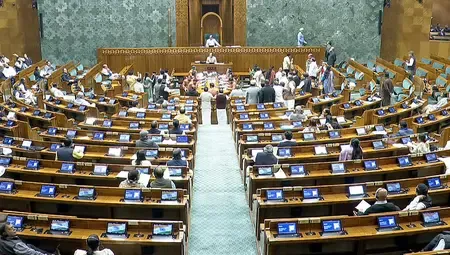
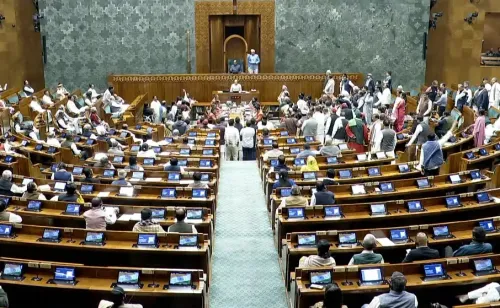
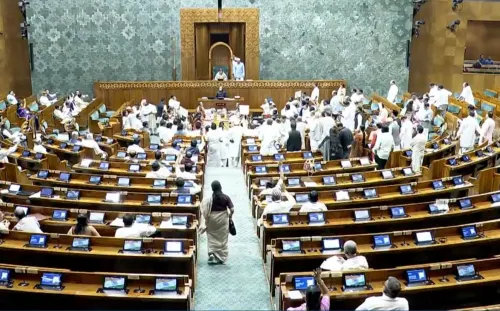
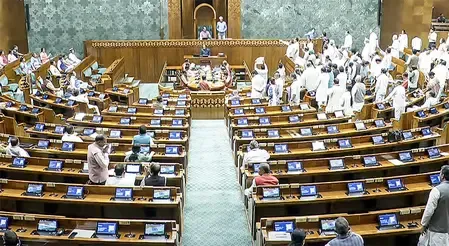
New Delhi, Dec 9 (NationPress) During a pivotal discussion in the Lok Sabha regarding electoral reforms, the Opposition reverted to predictable arguments, advocating for a halt to the Special Intensive Revision (SIR) of India’s electoral rolls and a shift back to paper ballots.
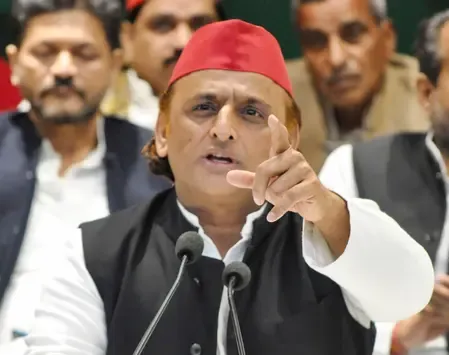
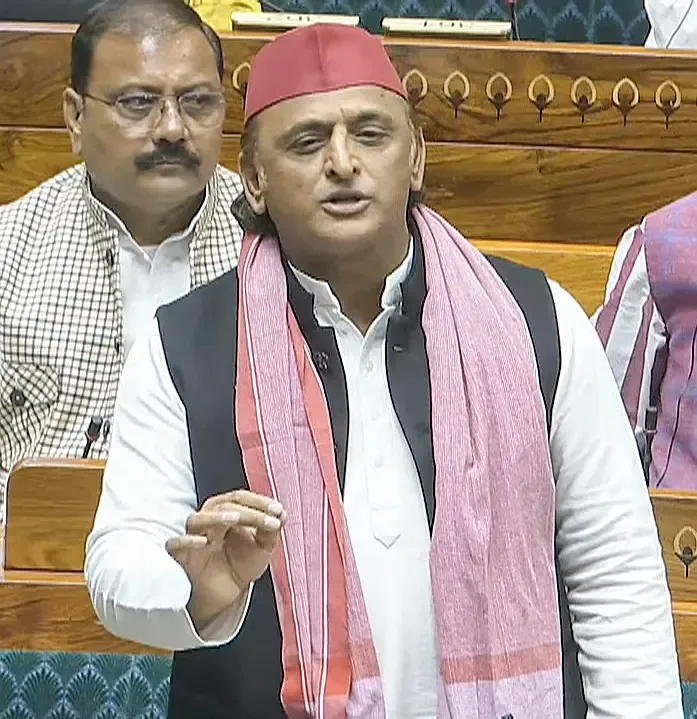
Opening the debate for the Opposition, Congress MP Manish Tewari highlighted both concerns, supported by other allies from the INDIA bloc, including Akhilesh Yadav of the Samajwadi Party. They referenced practices in countries like the USA and Germany.
However, by 2024, India's population far exceeds that of the United States, being more than four times larger, while Germany’s population, at over 70 lakh, is even less than that of West Bengal.
When the Leader of the Opposition, Rahul Gandhi, contributed to the debate, he reiterated his familiar “vote chori” slogan. What the Opposition overlooked is that SIR is a well-established process, conducted meticulously since India’s inaugural general election, having been executed eight times to purify the electoral rolls of ineligible, duplicate, or deceased voters.
According to Section 21(2) of The Representation of the People Act, 1950, the electoral roll “should be revised in the prescribed manner” before elections, directed by the Election Commission of India (ECI). Additionally, it states that the roll “shall be revised in any year in the prescribed manner by reference to the qualifying date if such revision has been directed by the ECI…”.
Section 21(3) permits the ECI to “direct a special revision of the electoral roll for any constituency or part of a constituency as deemed necessary, ensuring the electoral roll remains in place until the process concludes.
On the matter of EVMs, when the former Chief Election Commissioner S. L. Shakdhar approached the Electronics Corporation of India Limited (ECIL) in 1977 to explore the feasibility of such a machine, the Bharatiya Janata Party (BJP) had not yet been established in its current form. The prototype emerged in 1979, before the BJP's official inception.
Since their phased introduction across elections, except in some local body polls, the EVMs have often been the target of skepticism, typically from the losing party.
A well-known excerpt from former CEC S. Y. Quraishi in his book ‘India’s Experiment with Democracy: The Life of a Nation Through Its Elections’ asserts, “The issue of ‘tamperability’ of EVMs has been discussed since their inception. Each time a political entity loses an election, it blames the machines. However, none has provided proof against the credibility of EVMs, nor do they apologize when they win elections using the same EVMs.”
Former CEC Navin Chawla also commented, “The EVM continues to be buffeted in stormy seas…” in his book ‘Every Vote Counts: The Story of India’s Elections’. In comparing democracies that reverted to paper ballots, countries like the Netherlands have populations far less than Delhi, and Ireland has a population less than a quarter of the National Capital. Consequently, counting ballots physically in India could take days, potentially weeks in certain instances.
Point of View
I believe the Opposition's call for a return to paper ballots reflects a reluctance to embrace modern electoral processes. While the concerns raised are valid, it is essential to recognize the effectiveness of current systems in maintaining electoral integrity. Ongoing dialogue is crucial to ensure that democracy evolves while upholding its core values.
NationPress
18 Oct 2026
Frequently Asked Questions
What is the Special Intensive Revision (SIR)?
SIR is a systematic process undertaken to clean up the electoral rolls by removing ineligible, duplicate, or deceased voters, conducted periodically.
Why does the Opposition want to revert to paper ballots?
The Opposition argues that paper ballots are more reliable and less prone to tampering compared to electronic voting machines (EVMs).
How has the public reacted to the use of EVMs?
Public opinion is divided; while many support the efficiency of EVMs, there are concerns over their tamperability and integrity during elections.
What does the law say about electoral roll revisions?
According to Section 21 of The Representation of the People Act, electoral rolls must be revised in a prescribed manner before elections, as directed by the Election Commission.
How does India's population compare to other countries in this context?
India's population is significantly larger than that of the USA and Germany, making the management of electoral processes more complex.