Political Debate Intensifies Over Women’s Reservation Bill Delay

Synopsis
As the Prime Minister announces an extension of Parliament's Budget Session to facilitate the Women’s Reservation Bill, political leaders express support, while opposition parties demand clarity on the timeline. This legislation aims for 33% women’s representation in legislatures by 2029, but concerns over implementation persist.
Key Takeaways
The Women’s Reservation Bill ensures 33% reservation for women in legislative bodies.
Implementation is linked to delimitation and is expected by 2029.
Political leaders from various parties have expressed support for the bill.
Opposition parties are concerned about the delays and lack of clarity on timelines.
The bill addresses the need for greater women’s representation in politics.
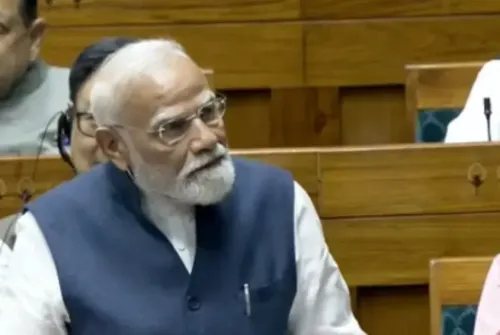
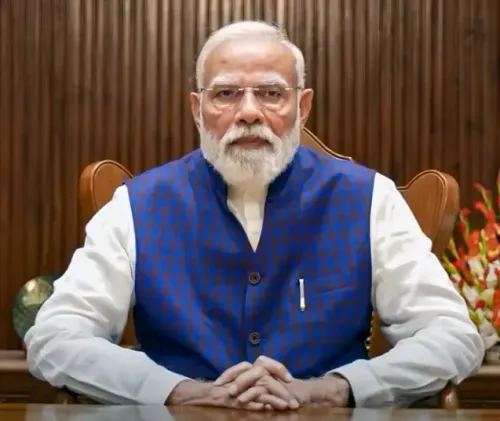
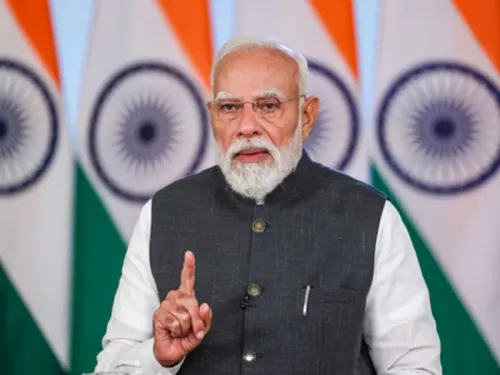
New Delhi, April 6 (NationPress) A new political discussion has surfaced regarding the execution of the Women’s Reservation Bill following Prime Minister Narendra Modi's announcement that the Budget Session of Parliament has been prolonged to aid its implementation. The legislation, passed in 2023, mandates a 33 percent reservation for women in legislative bodies, but its activation is presently contingent upon delimitation and is anticipated to be effective by 2029.
On Monday, leaders from Shiv Sena and Shiv Sena (UBT) endorsed the initiative, urging the government to hasten its execution. Opposition parties, including Congress and the Rashtriya Janata Dal, however, expressed concerns over the delays and sought clarification on the timelines.
In an interview with IANS, Shiv Sena leader Shaina NC commended the government's intentions, asserting that the Prime Minister has shown commitment towards the Nari Shakti Vandan Adhiniyam.
“This is not just a symbolic action. For many years, women have frequently been nominated as substitutes. Authentic representation is crucial, and all parties need to step up to guarantee its successful execution,” she remarked.
Stressing the need for greater involvement, she pointed out that nearly 50 percent of the electorate are women, and their representation in Parliament and state Assemblies must significantly increase. She also highlighted the necessity of confronting the deeply rooted male-centric attitudes in politics.
RLD leader Upendra Kushwaha mentioned that the concept of women’s reservation has historically received bipartisan support.
“Although differing opinions exist regarding its implementation, there is a general agreement that women should be allotted reservations,” he stated.
Similarly, BJD Rajya Sabha MP Sulata Deo characterized women's reservation as a long-overdue demand.
“Women MPs have been consistently advocating for this Bill, which has garnered unanimous backing from them. Women already possess 33 percent representation in panchayats and urban local bodies, so the focus must now shift to efficient implementation of the law,” she emphasized.
However, members of the opposition raised alarms regarding the delay and the conditions tied to its execution.
Congress spokesperson Udit Raj raised procedural issues, noting that delimitation cannot proceed without a Census.
“If the government was earnest, it could have conducted the Census earlier. Without it, delimitation is unfeasible. The government needs to clarify its plan for moving forward,” he asserted.
Congress leader Ajay Kumar Lallu also questioned whether provisions for OBC women would be included in the reservation framework. “This is a critical topic that warrants discussion. The government must clarify its stance,” he stated.
Shiv Sena (UBT) MP Priyanka Chaturvedi emphasized that the Bill, which was previously passed, should have been executed immediately.
“It was linked to the Census, which will take time, postponing implementation until 2029. The government now seems to be addressing the flaws in the earlier version. Although I support the Bill, it should be put into action sooner,” she remarked.
RJD MP Manoj Kumar Jha was more critical, questioning the delay.
“Was this not approved earlier? Will there be accountability for the 30-month delay? We had advocated for a ‘quota within quota’ provision. The worry persists that policy decisions are being influenced by optics rather than genuine substance,” he criticized.
The Women’s Reservation Act signifies a crucial advancement toward improving political representation for women in India.
Point of View
The opposition's concerns regarding implementation processes highlight the complexity of political reforms in the country.
NationPress
7 Oct 2026
Frequently Asked Questions
What is the Women’s Reservation Bill?
The Women’s Reservation Bill mandates 33% reservation for women in legislatures, aimed at improving women's representation in politics.
When was the Women’s Reservation Bill enacted?
The bill was enacted in 2023.
Why is the implementation of the bill delayed?
The implementation is currently linked to delimitation, which cannot proceed without a Census.
What do opposition parties say about the bill?
Opposition parties have raised concerns over delays and demand clarity on the timelines for implementation.
How does this bill impact women in India?
The bill aims to enhance political representation for women, which has been historically low in the country.