Will Delhi Embrace 112 as Its Sole Emergency Helpline?
Synopsis
Delhi is set to revolutionize its emergency response by adopting 112 as the exclusive helpline. This move, announced by Chief Minister Rekha Gupta, aims to streamline assistance during crises, ultimately enhancing safety for all citizens. With modern technology, help is just one call away.
Key Takeaways
Citizens can now call 112 for all emergencies, simplifying the process.
Automatic location detection enhances response time.
The system will integrate multiple existing helplines.
Public awareness campaigns will promote the new helpline.
Real-time monitoring will ensure accountability in emergency response.
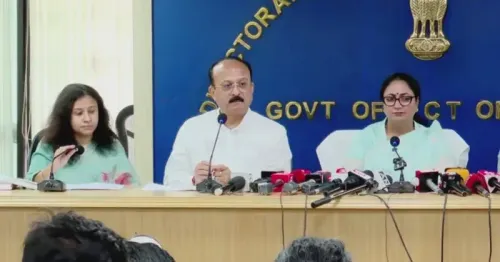
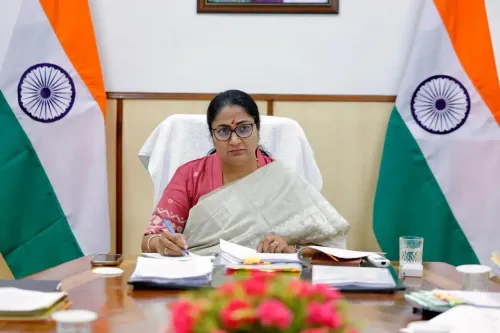
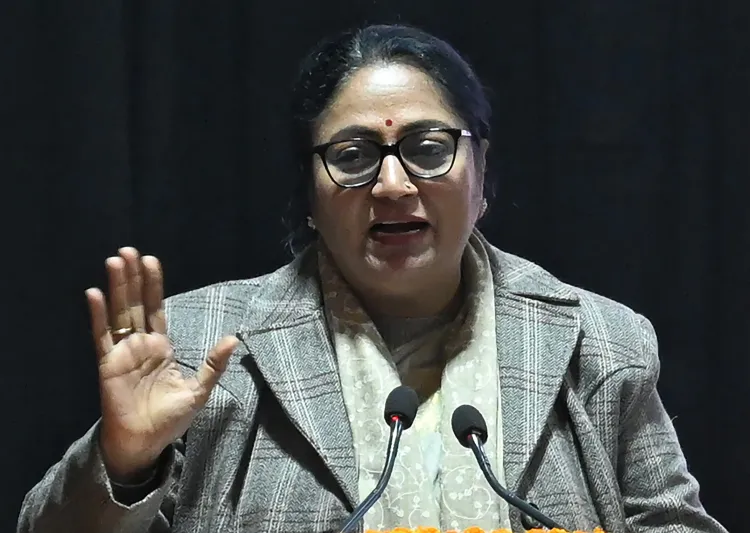
New Delhi, Jan 19 (NationPress) The Chief Minister of Delhi, Rekha Gupta, announced on Monday that residents will no longer need to remember multiple emergency helpline numbers during crises. By dialing just 112, they can receive quick assistance.
This initiative is part of the Emergency Response Support System (ERSS) 2.0.
“Our aim is to relieve citizens from the stress of recalling various numbers in emergencies, ensuring prompt help when it is critically needed,” she stated.
Gupta emphasized that this plan seeks to simplify, expedite, and enhance the emergency response framework in the Capital, ultimately safeguarding lives and property while transforming Delhi into a safer, smarter, and more responsive city.
The Chief Minister outlined that currently, various emergency services utilize distinct helpline numbers such as Police (100), Fire Services (101), Ambulance/Health Services (108), Women’s Helpline (181), and several others.
This multitude often causes confusion and delays when urgent help is required. With the implementation of ERSS 2.0, citizens will only need to dial 112 for all types of emergencies.
As per the Chief Minister, the Ministry of Home Affairs has designated 112 as the national emergency number, and Delhi is aligning with this directive.
ERSS 2.0 is a sophisticated, integrated signal-handling system that will manage all emergency calls, mobile app alerts, panic button activations, SMS, and web notifications at a single Public Safety Answering Point (PSAP).
This setup allows for simultaneous alerts to police, fire services, ambulances, and disaster management teams, ensuring that citizens can seek help not just via phone, but also through a mobile app, emergency buttons, SMS, and online platforms. This feature is particularly beneficial for individuals who may be unable to speak during emergencies.
The Chief Minister highlighted that a significant feature of ERSS 2.0 is its automatic location detection. Upon receiving a call or emergency alert, the system instantly identifies the caller’s location, minimizing the need for the victim to specify their whereabouts.
Once the location is established, the nearest police unit, ambulance, or fire truck is immediately dispatched from the control center, which is crucial during the 'golden hour' (the first 60 minutes) for faster assistance. This new system enables a single call to alert police, fire, and medical services at once, drastically reducing response delays.
According to the Chief Minister, ERSS 2.0 will feature a modern monitoring dashboard in the control room, allowing real-time oversight of incident locations, dispatched vehicles, and estimated arrival times. Should there be any delays, alternative vehicles can be deployed without hesitation.
This mechanism ensures continuous supervision and bolsters accountability. She added that the entire initiative will be rolled out in stages. Initially, all existing emergency numbers will be consolidated into 112.
This will be succeeded by technical enhancements, public awareness initiatives, training for call-takers, and an eventual system evaluation.
Additionally, the CM revealed that a comprehensive public awareness campaign will be initiated to encourage the use of 112.
Signage will be placed in government buildings, public areas, Metro stations, and buses to promote the number. Regular mock drills and outreach initiatives will also be conducted to evaluate readiness across departments.
Point of View
Delhi's decision to consolidate helplines under 112 signifies a commitment to public safety. This initiative not only simplifies access but also enhances response efficiency, crucial during times of crisis. As news progresses, it reflects a larger trend towards modernization in urban governance, ensuring that cities remain responsive to the needs of their citizens.
NationPress
30 Sept 2026
Frequently Asked Questions
What is the new emergency helpline number in Delhi?
The new emergency helpline number in Delhi is 112 , which will connect citizens to all emergency services.
Why was the change made to adopt 112?
This change was made to simplify the emergency response process, eliminating the need to remember multiple numbers and ensuring quicker assistance.
What services can be accessed by calling 112?
By calling 112 , citizens can access police, fire services, ambulance, and disaster management assistance.
How does the automatic location detection work?
The system automatically detects the caller’s location upon receiving an emergency alert, facilitating immediate dispatch of help.
When will the new system be implemented?
The implementation of the new system will occur in phases, with integration of existing numbers into 112 starting first.