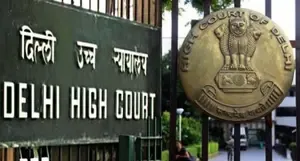
Delhi HC upholds ECI's SIR process, directs voters who shifted home to use Form 6
Synopsis
The Delhi High Court has backed the Election Commission's stance that voters deleted from rolls during an SIR for shifting residence must re-register via Form 6 — not seek a simpler transposition via Form 8. For thousands of mobile urban voters in Delhi, this ruling means a full re-registration process every time an SIR catches them mid-move.
Key Takeaways
The Delhi High Court upheld the ECI 's procedure on 14 October 2026 , ruling voters removed during an SIR must use Form 6 for re-registration.
Petitioner Nilotpal Datt and others sought to use Form 8 (transposition/correction) instead of Form 6 (fresh registration) — a plea the court rejected.
The bench of Justice Dinesh Mehta and Justice Aditi Choudhary closed the writ proceedings after the ECI assured no false-declaration charge would follow Form 6 filing.
ECI Standing Counsel Sanjay Vashishtha confirmed the Electoral Registration Officer would assist petitioners in completing Form 6 .
The ruling affirms the distinction between Form 6 (new elector registration) and Form 8 (address shift/correction for existing electors) under the Registration of Electors Rules, 1960 .
The Delhi High Court on 14 October 2026 upheld the Election Commission of India (ECI)'s existing voter registration procedure, ruling that electors whose names were removed from electoral rolls during a Special Intensive Revision (SIR) — due to shifting residence — must file Form 6 for fresh inclusion rather than Form 8, which is designated for address corrections and transpositions. The bench, comprising Justice Dinesh Mehta and Justice Aditi Choudhary, dismissed a petition filed by Nilotpal Datt and others seeking a procedural overhaul of the ECI's re-enrolment framework.
Background: How the Dispute Arose
The petitioners, all residents of the National Capital, found themselves struck off electoral rolls after they could not be enumerated during the SIR — primarily because they had shifted to new premises before the enumeration exercise was conducted. Under the ECI's current rules, failing to appear during an SIR results in deletion from the roll, requiring the affected individual to register afresh as a new elector through Form 6, prescribed under Rule 25(2) read with Rule 13(1)(a) of the Registration of Electors Rules, 1960.
The petitioners argued that since they were already registered electors — merely relocated — they should be entitled to use Form 8, which allows for transposition and correction of existing electoral entries without requiring fresh registration. They contended that compelling them to use Form 6 was inconsistent with the Representation of the People Act, 1950 and the Registration of Electors Rules, 1960.
What the Court Ruled
The bench declined to accept the petitioners' case. Justice Mehta and Justice Choudhary took on record the ECI's assurance, communicated through its Standing Counsel Sanjay Vashishtha, that petitioner Nilotpal Datt would not be accused of furnishing a false declaration if he used Form 6 for fresh inclusion. The court held that Datt's apprehension of being penalised for filing Form 6 was 'misplaced' given that the suggestion came directly from the ECI's standing counsel acting on instructions from the Electoral Registration Officer.
In its order, the court stated: 'Having heard learned counsel for the parties, we are of the considered opinion that when the suggestion is coming from the learned standing counsel appearing for ECI, that too as per the instructions of the Electoral Registration Officer, petitioner no.1's apprehension that he would be accused of furnishing a false declaration is misplaced.'
The court closed the writ proceedings, noting: 'Petitioners, if so desire, may fill Form 6, which shall be processed in accordance with law.'
ECI's Position and Procedural Details
Counsel Vashishtha pointed out that the ECI had, on a previous date of hearing, already offered assistance to Datt to fill the form, with the Electoral Registration Officer promising to extend support. He noted that despite this assurance, the petitioners had chosen not to comply — the reasons for which, he submitted, were 'best known to them.'
Notably, Form 6 is the standard application for registering as a new elector, while Form 8 is meant for voters already on the roll who wish to shift their registration address or correct entries. The distinction matters because it determines whether an individual's electoral history and prior registration details are carried forward or reset.
Implications for Voters Affected by SIR
The ruling effectively affirms the ECI's long-standing stance that voters removed from rolls during an SIR cannot use the simpler Form 8 transposition route; they must go through the full Form 6 re-registration process. This has significant implications for the large number of urban electors in Delhi — and potentially across India — who frequently shift residence and may find themselves removed from rolls without their knowledge during enumeration drives.
Critics argue this procedural rigidity places an undue burden on genuine voters, particularly renters and those in high-mobility urban areas who may not be aware an SIR is underway. The decision is likely to prompt renewed calls for procedural reform to prevent bona fide electors from being disenfranchised on technical grounds.
With assembly elections in several states on the horizon, the ruling is expected to inform how electoral registration officers across the country handle similar disputes arising from SIR-related deletions.
Point of View
Despite never having intended to de-register. The ECI's SIR process, designed to clean up rolls, ends up removing genuine voters who are simply mobile — a pattern disproportionately affecting renters in urban India. The court's deference to the ECI's procedural assurances is pragmatic, but it sidesteps the deeper question of whether the law adequately protects bona fide electors caught between an SIR and a house move. With urban voter mobility rising, this won't be the last such petition.
NationPress
18 Oct 2026
Frequently Asked Questions
What did the Delhi High Court rule on ECI voter registration?
The Delhi High Court ruled on 14 October 2026 that electors whose names were removed from electoral rolls during a Special Intensive Revision (SIR) — because they had shifted residence — must re-register using Form 6 (fresh elector registration) and cannot use Form 8 (address transposition for existing electors). The writ petition filed by Nilotpal Datt and others was dismissed.
What is the difference between Form 6 and Form 8 in voter registration?
Form 6 is used to register as a new elector, while Form 8 is used by existing registered voters to shift their registration address or correct entries in the electoral roll. The distinction matters because Form 6 initiates a fresh registration, whereas Form 8 preserves the existing electoral entry with an updated address.
Why were the petitioners removed from Delhi's electoral rolls?
The petitioners were removed because they had shifted to new premises before the SIR enumeration exercise was conducted and were consequently not found at their registered address. Under current rules, electors who cannot be enumerated during an SIR are deleted from the roll.
Will using Form 6 mean the petitioners are making a false declaration?
No. The ECI's Standing Counsel Sanjay Vashishtha assured the court that petitioner Nilotpal Datt would not be accused of furnishing a false declaration by filing Form 6. The Delhi High Court took this assurance on record and held that the petitioner's apprehension on this point was 'misplaced'.
What does this ruling mean for other voters deleted during an SIR?
The ruling confirms that voters removed from electoral rolls during an SIR for shifting address must go through the full Form 6 re-registration process rather than the simpler Form 8 transposition route. This affects a significant number of urban electors — particularly renters in high-mobility cities — who may be unaware their names have been deleted during an enumeration drive.