ECI restores Form 6 to original format in states where SIR is complete
Synopsis
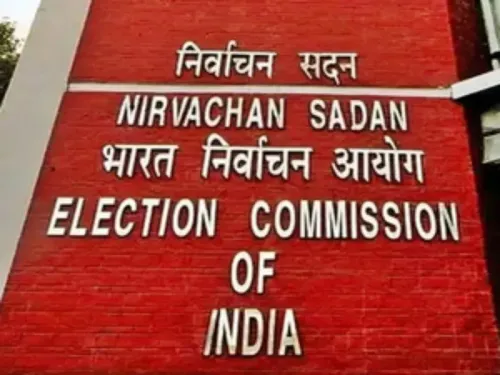
The Election Commission of India has quietly rolled back a controversial addition to Form 6 — the voter enrolment form — in states where the Special Intensive Revision is done. The move follows rare on-record dissent by two sitting Election Commissioners who argued the change exceeded the ECI's legal mandate, exposing an unusual fault line at the apex of India's electoral machinery.
Key Takeaways
The Election Commission of India restored Form 6 to its standard format on ECINET from 30 September in all states where the Special Intensive Revision (SIR) has concluded.
The additional Annexure-D declaration — requiring historical family electoral roll mapping — is no longer mandatory for voters in non-SIR states.
The declaration remains in force for 13 states where the SIR exercise is still ongoing.
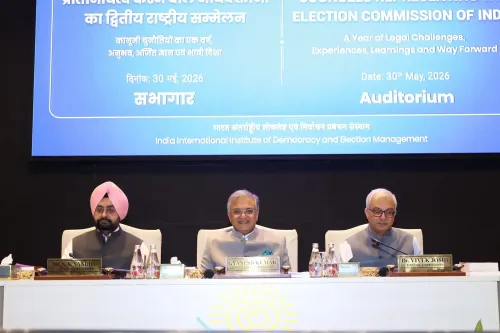
Election Commissioners Vivek Joshi and Sukhbir Singh Sandhu reportedly dissented, arguing the change exceeded the ECI's mandate under the Registration of Electors Rules, 1960 .
The ECI maintains that Form 6 was never amended and that its authority to attach the declaration was upheld by the Supreme Court on 27 May .
The Election Commission of India (ECI) on 30 September reverted Form 6 — the voter enrolment form — to its standard format on the ECINET application portal for all states where the Special Intensive Revision (SIR) exercise has concluded. The rollback means prospective voters in non-SIR states are no longer required to submit the additional declaration that had been attached to the form during the revision process.
The additional declaration, however, continues to remain in effect for the 13 states where the SIR exercise is still ongoing, according to the ECI portal.
What Form 6 Is and Why It Matters
Form 6 is the prescribed statutory form used for new voter registrations, both during the SIR process and for re-enlisting individuals whose names were removed during the enumeration phase. During the SIR, a separate Annexure-D was appended to the form, requiring applicants to furnish information that mapped them to their family's previous electoral roll entries — including details linked to parents or grandparents.
With the restoration of the standard format in concluded-SIR states, first-time voters can now register by submitting only their personal details and documents establishing age and residence — without providing historical family mapping information.
The Controversy That Forced a Rethink
The additional declaration triggered a significant internal dispute within the Election Commission. Election Commissioners Vivek Joshi and Sukhbir Singh Sandhu reportedly raised formal objections to making the declaration mandatory alongside Form 6. In their dissent, the two Commissioners contended that modifying the form prescribed under the Registration of Electors Rules, 1960, fell outside the ECI's mandate and that only the Law Ministry was empowered to suggest or effect such changes.
This is a rare instance of sitting Election Commissioners placing dissent on record over a procedural decision — underscoring the depth of the institutional disagreement.
ECI's Official Position
The Commission, in a statement issued on 26 September, maintained that Form 6 itself was never amended. It clarified that Annexure-D was merely attached to the form as a supplementary document during the SIR period — and was not a modification of the statutory form. The ECI further stated that its authority to add such a declaration was upheld by the Supreme Court in its judgment of 27 May.
The Commission also asserted that all orders relating to the SIR process had received the unanimous approval of all three Election Commissioners — a claim that sits in tension with the reported dissent by two of the three.
What Changes for Voters Now
In practical terms, the withdrawal of the SIR-linked declaration simplifies the enrolment process for citizens in states where the revision exercise is over. First-time voters are no longer required to produce historical family electoral roll data, removing what critics argued was an onerous and legally questionable requirement.
For the 13 states still under the SIR process, the declaration remains mandatory for the time being. As those exercises conclude, the ECI is expected to progressively restore the standard Form 6 format across those jurisdictions as well.
Point of View
Yet the Commission's public statement insists all SIR orders had unanimous approval; that contradiction has not been explained. The deeper question is whether the ECI has the unilateral power to attach supplementary declarations to a statutory form, or whether that requires a rule amendment by the Law Ministry — a boundary the Supreme Court's May judgment addressed but that remains contested in practice. India's voter roll integrity is a legitimate goal; the method used to pursue it here may have cost the Commission credibility it can ill afford ahead of a busy election cycle.
NationPress
30 Sept 2026
Frequently Asked Questions
What is Form 6 and why was it changed?
Form 6 is the statutory voter enrolment form used for new registrations and re-enlistments under Indian electoral law. During the Special Intensive Revision process, the Election Commission attached an additional declaration — Annexure-D — requiring applicants to map themselves to their family's previous electoral roll entries, which triggered legal and procedural controversy.
Why did Election Commissioners Vivek Joshi and Sukhbir Singh Sandhu dissent?
The two Commissioners reportedly objected to making Annexure-D mandatory alongside Form 6, arguing that any modification to a form prescribed under the Registration of Electors Rules, 1960 required a formal rule amendment — a power vested in the Law Ministry, not the ECI. Their dissent is considered unusual given the collegial nature of the Commission's decision-making.
Which states are still required to use the additional declaration?
As of 30 September, the additional SIR-linked declaration remains mandatory in 13 states where the Special Intensive Revision exercise is still underway. The ECI is expected to withdraw it progressively as those exercises conclude.
Did the ECI legally have the power to attach Annexure-D to Form 6?
The ECI maintains that it did not amend Form 6 itself — it only attached a supplementary declaration — and that this authority was upheld by the Supreme Court in its judgment of 27 May. Critics, including the two dissenting Commissioners, argue the distinction is procedurally insufficient and that any addition affecting enrolment requirements required a statutory rule change.
What does the Form 6 restoration mean for first-time voters?
In states where the SIR is complete, first-time voters can now register using the standard Form 6 by submitting personal details and documents for age and residence only. They are no longer required to provide historical family electoral roll mapping data linked to previous SIR records.