MP CM Mohan Yadav Announces Food Park for Badnagar, Ujjain
Synopsis
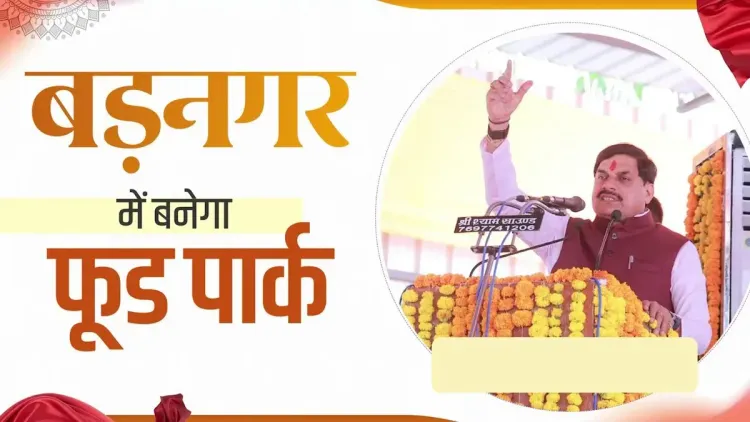
Chief Minister Dr. Mohan Yadav announced plans to develop a food park in Badnagar, Ujjain district, to promote agro-based industries and create local jobs, part of MP's push to raise farmer incomes through dairy and value-added agriculture.
Key Takeaways
Mohan Yadav announced a food park to be developed in Badnagar, Ujjain district on 18 October 2026 .
The initiative aims to raise farmers' incomes by promoting dairy production alongside conventional crop farming.
The food park is intended to promote agriculture-based industries and generate local employment opportunities.
Ujjain district already has an established base in both crop farming and dairy activity, making it a strategic choice for agro-processing infrastructure.
The announcement aligns with Madhya Pradesh's broader rural economic diversification strategy under Dr.
Yadav's government, which began in December 2023 .
Exact timeline, funding source, and scale of the Badnagar food park remain to be confirmed publicly.
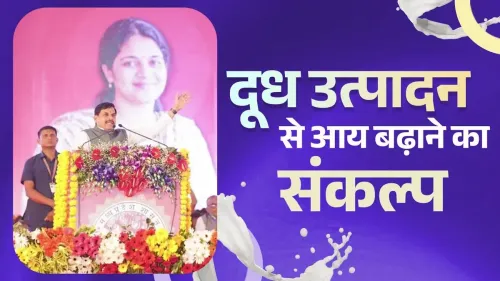
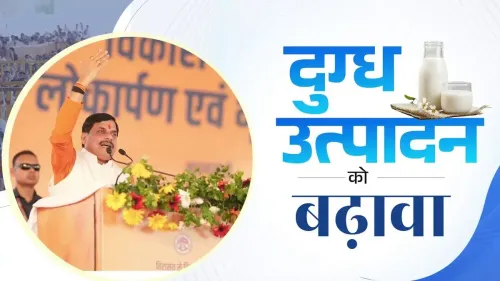
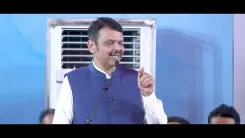
A food park is coming to Badnagar — and for the farmers and rural youth of Ujjain district, that announcement carries real weight. Chief Minister Dr. Mohan Yadav on Sunday, 18 October 2026, declared that the state government is actively working to raise farmers' incomes by promoting dairy production alongside conventional farming, with the proposed food park in Badnagar set to catalyse agro-based industries and create local employment.
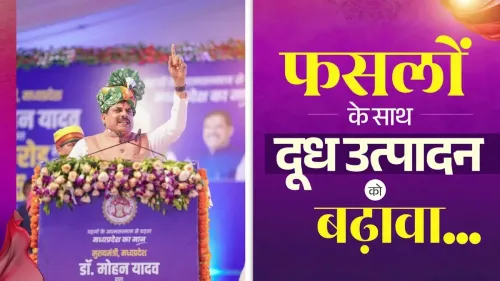
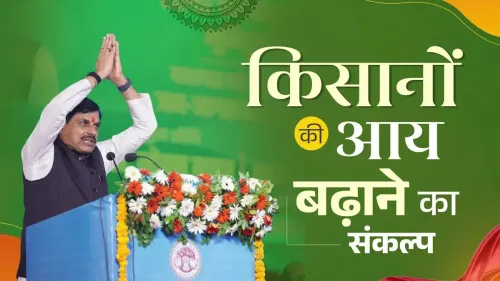
Posting from the official Chief Minister's Office handle, Dr. Yadav stated: 'प्रदेश में खेती के साथ दुग्ध उत्पादन को प्रोत्साहित कर किसानों की आय बढ़ाने के लिए कार्य किए जा रहे हैं' — 'Work is being done to increase farmers' incomes by encouraging dairy production alongside farming in the state.' The Badnagar food park, he added, will promote agriculture-based industries and generate employment opportunities at the local level.
Why Badnagar, and Why Now
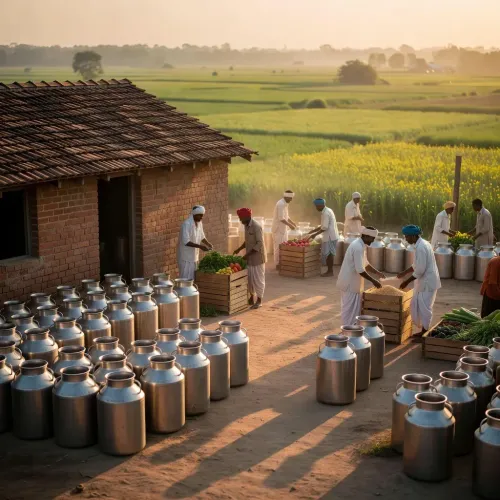
Badnagar is a town in Ujjain district, a region in western Madhya Pradesh with an established base in both crop farming and dairy activity. Selecting it as the site for a food park fits a deliberate logic: agro-processing infrastructure works best where raw material — milk, grain, horticulture produce — is already flowing. A food park concentrates cold-chain logistics, processing units, and packaging facilities in one place, letting small producers access markets they could never reach alone.
Dr. Mohan Yadav, who took charge as Chief Minister in December 2023, has consistently framed rural income diversification as a policy priority. Dairy has long been positioned in Madhya Pradesh as a supplementary income stream for crop farmers, supported through state dairy federations and central government schemes over the past decade. The Badnagar announcement extends that logic into value-addition territory — moving beyond raw milk or grain to processed, packaged goods that command higher margins.
The Agro-Industry and Jobs Equation
Food parks are not new to India's rural development playbook, but their local impact depends heavily on execution. When functional, they compress the distance between farm gate and consumer shelf — cutting wastage, lifting prices for primary producers, and pulling in ancillary businesses that create jobs for rural youth. That last point is significant in a district like Ujjain, where off-farm employment opportunities have historically been limited.
The broader pattern in Madhya Pradesh has been one of incremental rural economic diversification: linking dairy incentives to existing crop-farming households, then layering in processing infrastructure to capture more value within the state rather than exporting raw produce. The Badnagar food park, if it materialises on schedule, would represent the most visible expression of that strategy in the Ujjain belt to date.
The timelines, funding sources, and precise scale of the project are yet to be confirmed publicly. What to watch next: land acquisition progress, investment commitments from private food processors, and whether the next state budget rings-fences capital expenditure for the park's development.
For Madhya Pradesh's farm households, the promise is straightforward — more of the value chain stays local. Delivering on it is the harder half of the story.
Point of View
The Yadav government is attempting to keep more agricultural surplus within the state rather than losing it to out-of-state processors. The move also signals political intent ahead of potential budget cycles: rural income diversification has become a key metric for BJP-governed states seeking to demonstrate welfare delivery beyond headline farm-loan waivers. Whether the food park translates from announcement to operational reality will be the real test of this administration's infrastructure execution capacity.
NationPress
18 Oct 2026
Frequently Asked Questions
Where is the Badnagar food park being built in Madhya Pradesh?
Badnagar is a town in Ujjain district of western Madhya Pradesh. Chief Minister Dr. Mohan Yadav announced on 18 October 2026 that a food park will be developed there to support agro-based industries and local employment.
What is the purpose of the Badnagar food park announced by CM Mohan Yadav?
The food park aims to promote agriculture-based industries, create local employment opportunities, and help raise farmers' incomes by enabling value addition to farm produce, including dairy products.
How is Madhya Pradesh promoting dairy farming for farmer income?
The Madhya Pradesh government under CM Dr. Mohan Yadav is encouraging farmers to pursue dairy production alongside crop farming as a supplementary income source, supported by state dairy federations and central schemes. The Badnagar food park is the latest step in this strategy.
When did Dr. Mohan Yadav become Chief Minister of Madhya Pradesh?
Dr. Mohan Yadav became Chief Minister of Madhya Pradesh in December 2023 , with a stated focus on agriculture and rural development.
What is the current status of the Badnagar food park project?
As of 18 October 2026, the project has been announced by Chief Minister Dr. Mohan Yadav. The exact timeline, funding source, and scale of the food park are yet to be confirmed through official public records.