CM Mohan Yadav Pushes Jobs, Food Industry for Pandhurna District
Synopsis
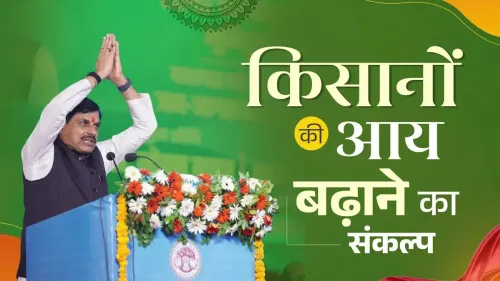
Chief Minister Dr. Mohan Yadav says the Madhya Pradesh government is continuously building resources for Pandhurna, the state's 55th district, with a focus on food parks, milk processing, animal husbandry, and local jobs for youth to raise farmers' incomes.
Key Takeaways
Pandhurna is Madhya Pradesh's 55th district , and the state government says development work has been ongoing since its formation.
Mohan Yadav announced focus on food industry and food parks within Pandhurna to create local employment for youth.
Milk processing and animal husbandry are being promoted to increase farmers' income in the district.
The strategy links agri-processing infrastructure directly to youth employment, aiming to curb talent migration from the new district.
The announcement reflects a broader BJP government push to make newly created districts economically self-sustaining.
A new district does not run itself — it needs roads, institutions, and, above all, livelihoods. Madhya Pradesh Chief Minister Dr. Mohan Yadav on Monday, 5 October 2026 outlined the state government's ongoing development push for Pandhurna, the state's 55th district, zeroing in on employment for youth and income growth for farmers through food processing and animal husbandry.
What the CM said about Pandhurna's development
Posting on X, Dr. Yadav stated: 'प्रदेश के 55वें जिले पांढुर्णा के गठन के बाद से ही हमारी सरकार जिले के लिए आवश्यक संसाधन और सुविधाएं उपलब्ध कराने के लिए सतत् कार्य कर रही है।' — 'Since the formation of Pandhurna, the state's 55th district, our government has been continuously working to provide the necessary resources and facilities for the district.'
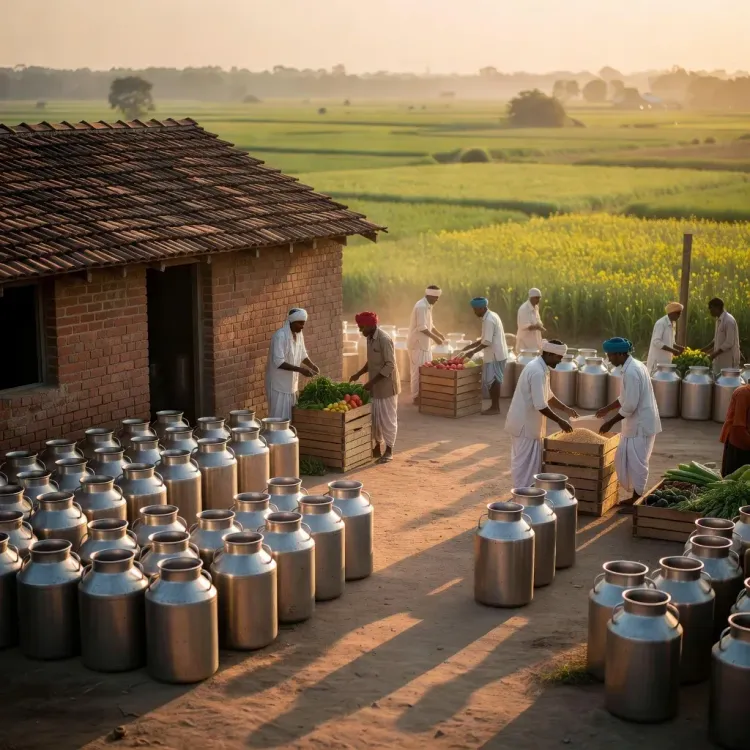
He further highlighted that efforts are underway to generate local employment opportunities for youth alongside promoting the food industry, food parks, milk processing, and animal husbandry to boost farmers' incomes in the region.
Pandhurna: MP's newest district and its economic bets
Pandhurna, carved out as Madhya Pradesh's 55th district, sits in the Chhindwara region of the state. Its creation was part of a broader administrative reorganisation drive under the BJP government aimed at bringing governance closer to citizens in areas that were previously attached to larger, harder-to-access district headquarters.
The CM's focus on food parks and milk processing signals a deliberate agri-industrial strategy — tying rural farming communities into value chains that go beyond raw produce, so income does not stop at the farm gate. Animal husbandry has historically been a secondary income backbone for farmers in this belt, and formal processing infrastructure can multiply those returns significantly.
Youth employment as the district's long-term anchor
The explicit call-out of local-level employment for youth is telling. Newly formed districts often struggle with a talent drain — young residents migrate to larger cities because the district itself lacks jobs. By anchoring food-sector industry within Pandhurna, the government is betting that agro-processing units can serve as the district's first real job-creation engine.
If the food park and dairy processing commitments translate into operational infrastructure, Pandhurna's agricultural surplus — rather than being shipped raw to processors elsewhere — could generate processing jobs, logistics roles, and ancillary businesses inside the district itself. That is the model. Whether the investment follows the announcement is the question every new district must answer.
Point of View
New municipal boundaries — as a visible governance dividend, then following up with economic messaging to justify the restructuring. Anchoring the pitch on food processing and dairy is strategically sound for a predominantly agrarian district: these sectors have low entry barriers for farmers yet offer meaningful income multiplication. The real test, however, is capital deployment — announcing food parks is a political act; building and commissioning them is a bureaucratic and fiscal one. If Pandhurna's agro-industrial vision materialises on the ground, it could become a replicable template for the state's other newly carved districts.
NationPress
5 Oct 2026
Frequently Asked Questions
Which district is Pandhurna in Madhya Pradesh?
Pandhurna is Madhya Pradesh's 55th district, located in the Chhindwara region of the state. It was carved out as part of the state government's administrative reorganisation drive.
What development plans has CM Mohan Yadav announced for Pandhurna?
CM Dr. Mohan Yadav announced plans for food industry units, food parks, milk processing facilities, and promotion of animal husbandry in Pandhurna, alongside efforts to create local employment opportunities for youth.
How will food parks in Pandhurna help farmers?
Food parks and milk processing units allow farmers to add value to their produce within the district rather than selling raw goods at lower prices, directly increasing agricultural income.
When was Pandhurna district formed?
Pandhurna was constituted as Madhya Pradesh's 55th district under the BJP state government. The exact formation date is linked to the state's recent administrative reorganisation; CM Yadav's post confirms development work has been underway since its creation.
What is Madhya Pradesh's total number of districts?
As of CM Mohan Yadav's statement, Madhya Pradesh has 55 districts , with Pandhurna being the most recently formed.