Delhi HC sets up fast-track court for paper leak cases after Modi order
Synopsis
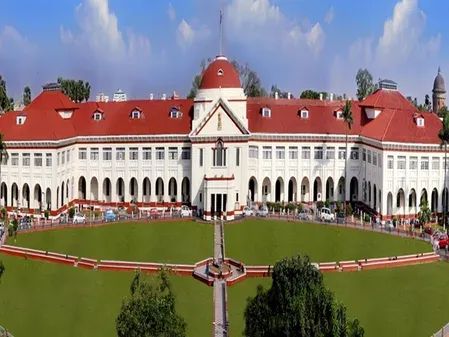
Within hours of PM Modi's public pledge on X, the Delhi High Court constituted a dedicated Fast Track Court at Rouse Avenue to try paper leak offences — with all pending cases transferred immediately. Three more courts are being set up under Bombay, Calcutta, and Madhya Pradesh High Courts, signalling the fastest judicial mobilisation on exam fraud India has seen.
Key Takeaways
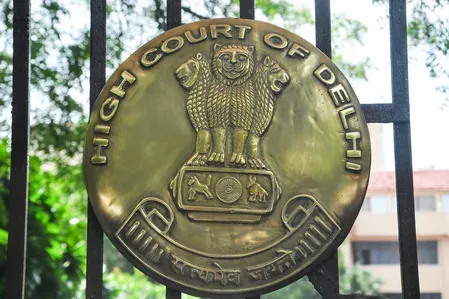
The Delhi High Court on 23 July constituted a Fast Track Court exclusively for cases under the Public Examinations (Prevention of Unfair Means) Act, 2024 .
Judicial officer Anu Grover Baliga has been posted as Special CBI Judge at the new court, located at Rouse Avenue Courts Complex .
All pending cases under the Act have been transferred to the new court with immediate effect .
Four fast-track courts are being set up on priority under the Bombay , Calcutta , Delhi , and Madhya Pradesh High Courts .
Conviction under the Act carries up to 5 years imprisonment and a fine of ₹10 lakh .
Government-student talks over the NEET paper leak remain deadlocked, with protests at Jantar Mantar entering their second month.
The Delhi High Court on Thursday, 23 July constituted a specially designated Fast Track Court to exclusively try offences under the Public Examinations (Prevention of Unfair Means) Act, 2024 — hours after Prime Minister Narendra Modi announced the Centre's decision to establish such courts for swift and stringent punishment in paper leak cases. The move marks the first concrete judicial step in a broader national push to crack down on examination fraud.
What the Delhi High Court Ordered
In an order issued by the Registrar General, the Delhi High Court stated that Chief Justice D.K. Upadhyaya has directed the posting of judicial officer Anu Grover Baliga as Special CBI Judge (Prevention of Corruption Act) at the newly created Fast Track Court, to be housed at the Rouse Avenue Courts Complex.
The court will operate under the administrative control of the Principal District and Sessions Judge-cum-Special CBI Judge (Prevention of Corruption Act) at Rouse Avenue. Crucially, all pending cases registered under the Public Examinations (Prevention of Unfair Means) Act, 2024 and connected offences have been transferred to the new court with immediate effect.
PM Modi's Announcement and X Post
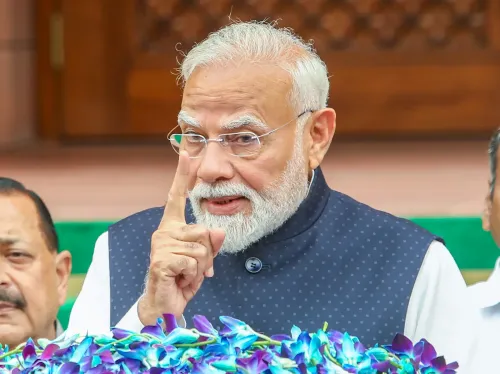
The judicial action followed directly from Prime Minister Modi's statement earlier on Thursday. In a post on social media platform X, the Prime Minister said: 'Nothing is more important than the welfare and future of our youth! We have decided to set up fast-track courts to ensure swift and stringent punishment for those involved in paper leaks. Have directed the concerned authorities and officials to take all necessary steps in this regard.'
Modi framed the measure as part of the Union government's commitment to safeguarding students' futures, warning that those attempting to harm the country's youth would not be spared.
Four More Courts Being Set Up Nationwide
The Centre has also initiated the process of establishing similar fast-track courts in other states, according to reports. On a priority basis, four fast-track courts are being constituted within the jurisdictions of the Bombay, Calcutta, Delhi, and Madhya Pradesh High Courts. The Centre is expected to formally request the concerned state governments and High Courts to constitute these courts, with a mandate for daily hearings and speedy disposal of cases.
Those accused in the NEET paper leak case will be prosecuted under the same anti-cheating law. Convictions under the Act carry imprisonment of up to five years and a fine of ₹10 lakh. The law also covers paper leaks and unfair means relating to examinations conducted by UPSC, SSC, RRB, IBPS, Central government ministries and departments, and all entrance and recruitment examinations conducted by the National Testing Agency (NTA).
Government-Student Dialogue at an Impasse
Minister of State in the Prime Minister's Office Jitendra Singh said the Union government had made four formal proposals for dialogue with protesting students over the preceding 24 hours, but they had remained, in his words, 'unresponsive and uncommunicative.' Singh said the government had approached protesters with 'utmost humility' and that its doors remained 'open 24x7' for talks on all issues, including NEET.
He added that Union Minister J.P. Nadda, designated as the government's interlocutor, was prepared to meet students at his office or residence at a time of their choosing. Protests led by students under the Cockroach Janta Party (CJP) banner have continued at Jantar Mantar for more than a month, with consultations so far failing to yield a breakthrough.
What Comes Next
With the Delhi fast-track court now operational and the Centre pushing for similar courts in three other High Court jurisdictions, the judicial framework for prosecuting paper leak cases is taking shape rapidly. The pace at which the first hearings are scheduled — and whether daily proceedings are enforced — will be the critical test of whether this institutional response translates into the 'swift justice' the Prime Minister has promised.
Point of View
And the NEET case involves multiple accused across states, which could bog down proceedings regardless of institutional intent. The government's parallel offer of dialogue with protesting students, made four times in 24 hours by its own account, sits awkwardly alongside the punitive framing of the fast-track push — it is simultaneously extending an olive branch and accelerating prosecution machinery. The real accountability question is whether the courts will move fast enough to restore student confidence before the next round of national examinations.
NationPress
7 Sept 2026
Frequently Asked Questions
What is the new Fast Track Court set up by the Delhi High Court?
It is a specially designated court constituted on 23 July to exclusively try offences under the Public Examinations (Prevention of Unfair Means) Act, 2024, and connected cases. The court is located at the Rouse Avenue Courts Complex in New Delhi and will be presided over by Special CBI Judge Anu Grover Baliga.
Why did PM Modi call for fast-track courts for paper leak cases?
Prime Minister Modi announced the decision as part of the Centre's commitment to ensuring swift and stringent punishment for those involved in paper leaks, particularly in the wake of the NEET examination controversy. He stated that safeguarding the future of India's youth was the government's top priority.
Which other states will get fast-track courts for paper leak cases?
According to reports, four fast-track courts are being set up on a priority basis within the jurisdictions of the Bombay, Calcutta, Delhi, and Madhya Pradesh High Courts. The Centre is expected to formally request the respective state governments and High Courts to constitute these courts.
What punishment does the Public Examinations Act 2024 prescribe?
Those convicted under the Public Examinations (Prevention of Unfair Means) Act, 2024 face imprisonment of up to five years and a fine of ₹10 lakh. The law covers paper leaks and unfair means across examinations conducted by UPSC, SSC, RRB, IBPS, NTA, and Central government ministries.
What is the current status of student protests over the NEET paper leak?
Protests led by students under the Cockroach Janta Party (CJP) banner have continued at Jantar Mantar for more than a month. The government reportedly made four formal dialogue proposals within 24 hours, but students have not responded, leaving talks at an impasse.