Delhi HC grants 30-day custody bail to ISIS case accused Farhan Ansar Suse for hernia surgery

Synopsis
The Delhi High Court has allowed an accused in an alleged ISIS conspiracy case to leave jail for up to 30 days — but only for surgery and under strict custody conditions. The court that denied him treatment in Mumbai, citing his alleged terror network links in Maharashtra, drew a careful line between medical rights and security risk.
Key Takeaways
The Delhi High Court granted 30-day custody bail to Farhan Ansar Suse , accused in an alleged ISIS conspiracy case , on 18 September 2026 .
Suse suffers from umbilical hernia , bronchial asthma , and Type-II diabetes ; doctors at Deen Dayal Upadhyay Hospital had recommended surgery.
The court rejected his request for treatment in Mumbai , citing his alleged terror network in Padgha, Maharashtra .
He is permitted to be accompanied by only two immediate family members and is barred from contacting any person named in the NIA chargesheet .
All medical expenses must be borne by Suse; he returns to jail once declared fit or after 30 days , whichever is earlier.
The NIA alleged Suse was a prime conspirator linked to co-accused Saquib Nachan and had spent two years and nine months in custody ahead of trial.
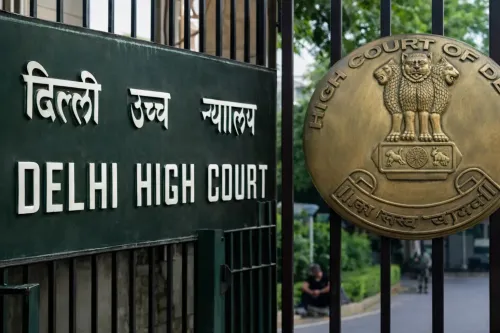
The Delhi High Court has granted 30-day custody bail to Farhan Ansar Suse, an accused in an alleged ISIS conspiracy case, allowing him to undergo surgery and medical treatment at a private hospital of his choice within Delhi-NCR. The order was passed on 18 September 2026 by a Division Bench comprising Justice Prathiba M. Singh and Justice Vikas Mahajan.
Background of the Case
Suse is currently facing trial in a case registered by the National Investigation Agency (NIA) under an FIR filed in 2023. The charges include Sections 120B and 387 of the Indian Penal Code (IPC) and multiple sections of the Unlawful Activities (Prevention) Act (UAPA), including Sections 13, 18, 18A, 20, 38, and 39. The NIA filed its chargesheet in March 2024, followed by a supplementary chargesheet in June 2024.
According to the NIA, Suse — allegedly one of the prime conspirators in a network operated by co-accused Saquib Nachan, who has since died — was involved in raising funds for ISIS through extortion and circulating the terror outfit's propaganda. The trial is currently at the stage of arguments on charge.
Why the Court Granted Relief
The court was hearing an appeal filed by Suse challenging the Special NIA Court at Patiala House Courts, which had earlier rejected his interim bail on medical grounds. The Division Bench recorded that Suse suffers from umbilical hernia, bronchial asthma, and Type-II diabetes, and that doctors at Deen Dayal Upadhyay Hospital had recommended surgery.
The court held that Suse, “being medically unwell, cannot be prevented from undergoing treatment at a private hospital at his own expense.” However, it rejected his request to receive treatment in Mumbai, citing concerns about “the network which the Appellant is alleged to have in Padgha and the neighbouring areas in Maharashtra.”
Conditions Imposed by the Court
The custody bail comes with strict conditions. Suse will remain in custody during the treatment period and may be accompanied only by two immediate family members — his spouse or any of his children — during hospitalisation. He has been prohibited from communicating with any other relatives, friends, acquaintances, or any person named in the chargesheet, directly or indirectly.
All expenses at the private hospital are to be borne by Suse himself. The court also clarified that if he is declared medically fit before the 30-day period expires, he will be returned to jail immediately. Any extension of the custody bail will be subject to fresh medical advice.
What the Defence and NIA Argued
Suse's counsel, senior advocate Satyakam, contended that the core allegation against his client was extortion and that the alleged ISIS linkage was yet to be established during trial. He noted that the case involves more than 500 witnesses and that Suse had already spent two years and nine months in custody.
The NIA opposed the plea, asserting that Suse was an active member of ISIS in India and that he was already receiving adequate medical treatment in Delhi. The agency also alleged that Suse had changed his position during the proceedings.
Scope and Limits of the Order
The court was explicit that its observations in this order would carry no bearing on Suse's other pending legal matters — including an appeal related to a pardon he has sought and a writ petition challenging his arrest. Notably, this is not a regular bail but a custody bail, meaning Suse remains under the legal custody of the state throughout the treatment period. Once the stipulated duration ends, he will be returned to jail.
Point of View
Even temporarily. With over 500 witnesses and trial still at the charge-framing stage after nearly three years of custody, the case raises uncomfortable questions about the pace of NIA prosecutions. Custody bail for medical reasons is legally distinct from regular bail, but the optics of allowing an alleged ISIS operative to choose his own hospital — even within Delhi-NCR — will invite scrutiny. The court's explicit rejection of the Mumbai request signals judicial awareness of network risk, but the broader issue of prolonged pre-trial detention in UAPA cases remains unaddressed.
NationPress
18 Sept 2026
Frequently Asked Questions
What is custody bail and how does it differ from regular bail?
Custody bail is a limited relief that allows an undertrial prisoner to leave jail for a specific purpose — in this case, medical treatment — while remaining under the legal custody of the state. Unlike regular bail, it does not suspend the accused's custody status; Farhan Ansar Suse must return to jail once the 30-day period ends or he is declared medically fit, whichever comes first.
Why did the Delhi High Court grant 30-day custody bail to Farhan Ansar Suse?
The court granted the relief because Suse suffers from umbilical hernia, bronchial asthma, and Type-II diabetes, and doctors at Deen Dayal Upadhyay Hospital had recommended surgery. The bench held that a medically unwell accused cannot be prevented from undergoing treatment at a private hospital at his own expense.
Why was Suse's request for treatment in Mumbai rejected?
The Delhi High Court declined his request to receive treatment in Mumbai, observing it was not feasible given the alleged network he has in Padgha and neighbouring areas in Maharashtra. The court instead permitted him to seek treatment at any private hospital within Delhi-NCR.
What are the charges against Farhan Ansar Suse in the NIA case?
Suse faces charges under Sections 120B and 387 of the IPC and multiple provisions of the UAPA. The NIA has alleged he was part of an ISIS-linked conspiracy, involved in raising funds through extortion and circulating the terror outfit's propaganda. The chargesheet was filed in March 2024, with a supplementary chargesheet following in June 2024.
What conditions did the court impose on the 30-day custody bail?
Suse must bear all medical expenses himself, may be accompanied only by his spouse or one of his children, and is prohibited from communicating — directly or indirectly — with any other relatives, friends, or persons named in the NIA chargesheet. He will be returned to jail immediately if declared fit before 30 days, and any extension requires fresh medical advice.