Delhi HC refuses PIL to reopen Kartarpur Corridor
Synopsis
The Delhi High Court has declined to force a reopening of the Kartarpur Sahib Corridor, treating the May 2025 shutdown after the Pahalgam attack and Operation Sindoor as a policy decision. The Bench still asked the government to consider a pending representation, leaving the faith crossing's future with the Centre, not the courts.
Key Takeaways
The Delhi High Court on Wednesday refused to entertain a PIL seeking reopening of the Kartarpur Sahib Corridor .
A Bench of Acting Chief Justice Nitin Wasudeo Sambre and Justice Sanjay Sharma called the shutdown a policy decision under Article 226 .
The Union Ministry of Home Affairs closed the corridor on 7 May 2025 after Operation Sindoor , launched following the 22 April Pahalgam attack that killed 26 .
The PIL was filed by NGO Paradarshita Public Welfare Foundation ; the court said the government should consider its pending representation.
Prime Minister Narendra Modi inaugurated the visa-free corridor on 9 November 2019 ; Gurdwara Darbar Sahib lies about 4.7 km inside Pakistan's Narowal district.
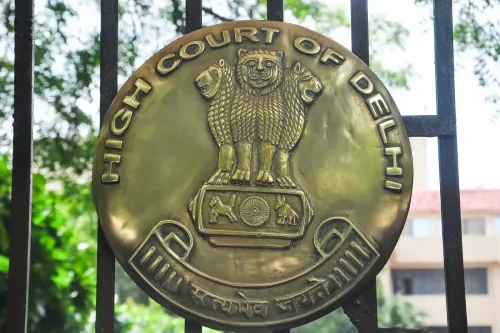
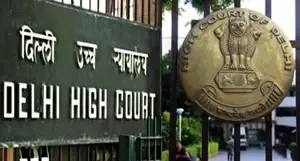
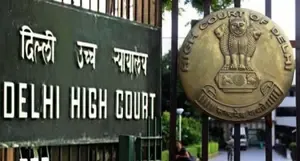
The Delhi High Court on Wednesday refused to entertain a Public Interest Litigation seeking directions to reopen the Kartarpur Sahib Corridor, observing that the shutdown after the Pahalgam terror attack was a policy decision taken in the interest of India's citizens. A Division Bench of Acting Chief Justice Nitin Wasudeo Sambre and Justice Sanjay Sharma held there was no reason to interfere with the Union government's decision in the exercise of writ jurisdiction under Article 226 of the Constitution.
Why the court declined to intervene
The Acting Chief Justice Sambre-led Bench treated the closure as a sovereign policy choice, not a question for routine writ scrutiny. The judges noted that the corridor had been shut in the interest of citizens and that judicial intervention was therefore not warranted on the material before them.
The Bench, however, recorded that the organisation which filed the PIL had already submitted a representation to the government seeking restoration of the corridor. It said the authorities should consider that representation. The court thus declined a binding direction while leaving an administrative window open for the executive to re-examine the issue.
What the PIL sought
The petition was filed by NGO Paradarshita Public Welfare Foundation. It sought court directions to reopen the corridor connecting Dera Baba Nanak in Punjab's Gurdaspur district with Gurdwara Darbar Sahib in Kartarpur, Pakistan.
In substance, the plea asked the High Court to compel the Centre to reverse a national security and foreign-policy decision. The Bench declined that invitation. Indian courts have long been reluctant to substitute their judgment for the executive on such questions unless a clear constitutional infraction is shown. No such infraction was found here, according to the oral observations.
How the corridor was shut after Pahalgam
The Union Ministry of Home Affairs closed the corridor on 7 May 2025, after India's military strikes on terrorist infrastructure in Pakistan and Pakistan-occupied Kashmir under Operation Sindoor. Those strikes followed the 22 April Pahalgam terror attack, which claimed 26 lives.
This was not a routine administrative pause. The shutdown sat inside a wider India-Pakistan crisis that followed the killing of tourists in Jammu and Kashmir. Notably, the corridor had continued as a rare visa-free religious access route even through earlier phases of strained bilateral ties, making the May closure a sharp break from that pattern.
Background of the Kartarpur Corridor
Prime Minister Narendra Modi inaugurated the corridor on 9 November 2019. It provides visa-free access to Indian citizens and Overseas Citizens of India (OCI) cardholders to Gurdwara Darbar Sahib in Pakistan's Narowal district, about 4.7 km from the international border.
The gurdwara holds deep religious significance for Sikhs. Guru Nanak Dev, the founder of Sikhism, spent the last 18 years of his life there. For pilgrims from Punjab and the Sikh diaspora, the short land crossing had reduced a journey that once required a full visa process or travel via a third country. The 2019 opening was widely framed as a people-to-people measure even as official diplomacy remained fraught.
That history is why the PIL reached Delhi. Devotees and civil-society groups have pressed for restoration of access, arguing that a faith corridor should not remain indefinitely sealed once immediate military operations recede. The Centre has treated the route as inseparable from the security environment across the border.
What happens next
The High Court's refusal ends the attempt to force a reopening through writ proceedings in Delhi, at least on the present petition. The live process is now the representation already pending with the government, which the Bench said should be considered.
Any reopening would still rest with the Union government, primarily the Ministry of Home Affairs, in consultation with security and external affairs agencies. No court-fixed deadline was indicated in the oral observations. For Sikh pilgrims who used the 4.7 km crossing from Dera Baba Nanak, the corridor remains closed until the executive reviews that representation and takes a fresh policy call. The episode underlines how quickly a flagship faith-and-diplomacy project can be frozen when terror and military response dominate the India-Pakistan calendar.
Point of View
And Article 226 is not a lever to reopen a border crossing sealed after a mass-casualty terror attack. What the mainstream misses is the incomplete door — by asking the government to consider a pending representation, the Bench avoided both a judicial takeover and a total freeze of the administrative process. Kartarpur was one of the few India-Pakistan confidence-building measures that actually moved people, not just paper; its prolonged closure after Operation Sindoor shows how quickly that architecture unravels. The accountability test now sits with the Centre: either set out a review timeline for pilgrims, or own an indefinite shutdown instead of leaving devotees in policy limbo.
NationPress
25 Nov 2026
Frequently Asked Questions
What did the Delhi High Court decide on the Kartarpur Corridor PIL?
The Delhi High Court refused to entertain a PIL seeking directions to reopen the Kartarpur Sahib Corridor, holding that the closure was a policy decision taken in the interest of citizens. A Bench of Acting Chief Justice Nitin Wasudeo Sambre and Justice Sanjay Sharma found no reason to interfere under Article 226.
Why was the Kartarpur Corridor closed?
The Union Ministry of Home Affairs closed the corridor on 7 May 2025 after India's military strikes on terrorist infrastructure in Pakistan and Pakistan-occupied Kashmir under Operation Sindoor. Those strikes followed the 22 April Pahalgam terror attack, which claimed 26 lives.
Who filed the PIL seeking reopening of the Kartarpur Corridor?
The PIL was filed by NGO Paradarshita Public Welfare Foundation. It sought court directions to reopen the corridor linking Dera Baba Nanak in Punjab's Gurdaspur district with Gurdwara Darbar Sahib in Kartarpur, Pakistan.
Will the Kartarpur Corridor reopen after the High Court order?
The High Court did not order a reopening and declined to issue writ directions to the government. It noted that a representation seeking restoration is already pending and said the authorities should consider it, so any change remains an executive decision.
When was the Kartarpur Corridor inaugurated and why does it matter?
Prime Minister Narendra Modi inaugurated the corridor on 9 November 2019, giving visa-free access to Indian citizens and OCI cardholders to Gurdwara Darbar Sahib in Pakistan's Narowal district, about 4.7 km from the border. The shrine is where Guru Nanak Dev spent the last 18 years of his life, making the route a major Sikh pilgrimage link.