SC upholds Delhi HC order quashing passport, visa tender for 4 Indian Missions
Synopsis
The Supreme Court has refused to rescue the Centre's flawed passport and visa tender process — leaving intact a Delhi High Court finding of arbitrariness and opacity — while giving the MEA three months to run a clean, constitutionally compliant fresh tender for four Indian Missions abroad. Services will continue uninterrupted under interim arrangements, but the government's original evaluation stands nullified.
Key Takeaways
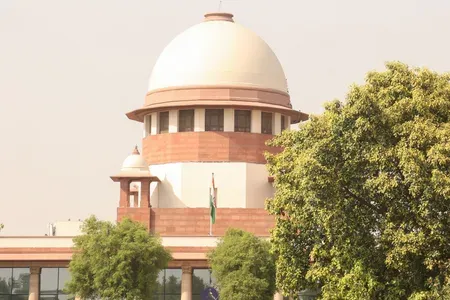
The Supreme Court on 20 July dismissed the Centre's SLP and upheld the Delhi High Court order quashing the CPV services tender for Indian Missions in Abu Dhabi, Kuwait, Singapore and Canberra .
The bench of CJI Surya Kant , Justice Joymalya Bagchi and Justice V.
Mohana rejected arguments by Solicitor General Tushar Mehta defending the original evaluation.
The MEA must complete a fresh RFP process within three months in compliance with the High Court's directions.
Existing service providers may continue on a temporary basis; interim arrangements create no special equities for any party.
The Delhi HC had found the tender evaluation vitiated by 'arbitrariness, irrationality and lack of transparency' , in violation of Article 14 of the Constitution.
Petitioners E Trav Tech Limited and Verasys Limited had successfully challenged their disqualification at the technical bid stage.
The Supreme Court on Monday, 20 July refused to interfere with the Delhi High Court judgment that struck down the technical evaluation process for outsourcing Consular, Passport and Visa (CPV) services at Indian Missions in Abu Dhabi (UAE), Kuwait, Singapore, and Canberra (Australia). The apex court simultaneously directed the Union Ministry of External Affairs (MEA) to complete a fresh tender process within three months.
What the Supreme Court Decided
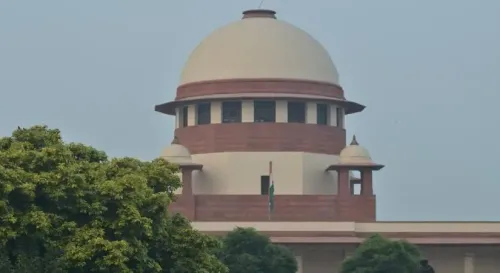
A bench comprising Chief Justice of India Surya Kant and Justices Joymalya Bagchi and V. Mohana dismissed the Centre's special leave petition (SLP) challenging the High Court's verdict. Solicitor General Tushar Mehta, appearing for the Centre, argued that the Delhi High Court had erred in quashing the tender process and contended that evaluation criteria had been applied on the basis of each bidder's individual competence. The apex court declined to accept these submissions and dismissed the plea.
SG Mehta also sought liberty to return to the Delhi High Court with additional reasons supporting the tender evaluation — a request the Supreme Court did not grant.
Interim Arrangements to Prevent Service Disruption
Recognising the risk of disruption to passport, visa and consular services at the four Indian Missions abroad, the Supreme Court modified the High Court's directions to allow interim arrangements until the fresh tender is concluded. The CJI Kant-led bench directed that the MEA may continue with existing service providers if their performance has been satisfactory, or engage any other agency — including the existing L-1 bidders — on a temporary basis.
The court explicitly clarified that such arrangements would be purely temporary, would not create any special equities in favour of any party, and would remain subject to the outcome of the fresh Request for Proposal (RFP) process. The interim arrangement would also be without prejudice to the rights and contentions of all parties.
What the Delhi High Court Had Found
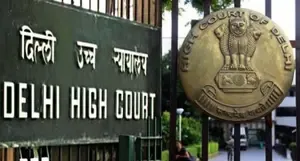
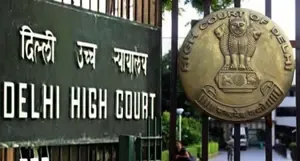
In its judgment delivered on 15 July, a Division Bench of Justices Anil Kshetrapal and Shail Jain had set aside the technical evaluation process, holding that the assessment of bidders was vitiated by 'arbitrariness, irrationality and lack of transparency' in violation of Article 14 of the Constitution. The High Court had allowed petitions filed by E Trav Tech Limited and Verasys Limited, which had challenged their disqualification at the technical bid stage in tenders floated by the MEA.
The High Court had also nullified contracts awarded to successful private bidders and directed the MEA and concerned Indian Missions to issue fresh RFPs, while permitting existing service providers to continue operations in the interim to avoid public service disruption.
Legal Principle Affirmed
The Delhi High Court had acknowledged that courts ordinarily do not sit in appeal over technical assessments by expert bodies. However, it held that judicial review was warranted in this instance because the decision-making process was found to be arbitrary, opaque, and failing to satisfy constitutional requirements of fairness, transparency, and equality — a principle the Supreme Court has now left undisturbed.
What Happens Next
The MEA is now bound to issue fresh RFPs for CPV outsourcing at the four Missions and complete the process preferably within three months. The Centre had first approached the Supreme Court against the High Court's ruling, with SG Mehta seeking an urgent hearing on 17 July, following which the matter was listed for Monday. All parties retain their legal rights pending the fresh tender outcome.
Point of View
And the apex court has endorsed that framing. For the MEA, the three-month deadline is tight for a multi-Mission RFP spanning four countries. The real accountability question is whether the fresh tender will be designed with the transparency safeguards that the original conspicuously lacked — or whether the same evaluation methodology resurfaces in different packaging.
NationPress
20 Oct 2026
Frequently Asked Questions
What did the Supreme Court rule on the passport and visa tender case?
The Supreme Court on 20 July dismissed the Centre's special leave petition and upheld the Delhi High Court's order quashing the technical evaluation process for outsourcing CPV services at Indian Missions in Abu Dhabi, Kuwait, Singapore, and Canberra. It directed the MEA to complete a fresh tender process within three months.
Why did the Delhi High Court quash the original tender?
The Delhi High Court found that the technical evaluation of bidders was vitiated by 'arbitrariness, irrationality and lack of transparency', violating Article 14 of the Constitution. It ruled that judicial review was warranted because the decision-making process failed constitutional requirements of fairness and equality.
Will passport and visa services at the four Indian Missions be disrupted?
No. The Supreme Court modified the High Court's directions to allow interim arrangements, permitting the MEA to continue with existing service providers or engage other agencies temporarily. These arrangements will remain in place until the fresh RFP process is completed.
Who were the petitioners who challenged the original tender?
E Trav Tech Limited and Verasys Limited filed petitions before the Delhi High Court after being disqualified at the technical bid stage in tenders floated by the MEA for CPV services outsourcing at the four Indian Missions.
What happens to the contracts already awarded to successful bidders?
The Delhi High Court nullified those contracts, and the Supreme Court has left that finding undisturbed. All parties retain their rights and contentions pending the outcome of the fresh RFP process, which the MEA must complete preferably within three months.