Centre moves SC against Delhi HC verdict quashing passport, visa outsourcing tender
Synopsis
The Centre has rushed to the Supreme Court after the Delhi High Court struck down the entire technical evaluation for passport and visa outsourcing at four Indian Missions, citing arbitrary and opaque scoring. With contracts nullified and fresh tenders ordered, the case puts a spotlight on how India procures sensitive consular services abroad — and whether its evaluation processes can withstand constitutional scrutiny.
Key Takeaways
The Centre moved the Supreme Court on 18 July 2025 against a Delhi High Court order quashing the CPV outsourcing tender process.
The High Court found the technical evaluation process for Indian Missions in Abu Dhabi , Kuwait , Singapore , and Canberra arbitrary and non-transparent, violating Article 14 .
E Trav Tech Limited and Verasys Limited had challenged their disqualification at the technical bid stage.
The Delhi HC nullified existing contract awards and directed the MEA to issue fresh RFPs within one month .
CJI Surya Kant assured the matter will be listed for hearing on Monday .
Existing service providers are permitted to continue operations until the fresh tender process is completed.
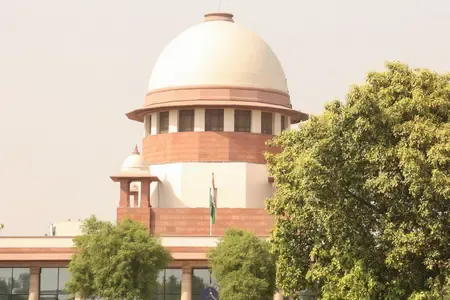
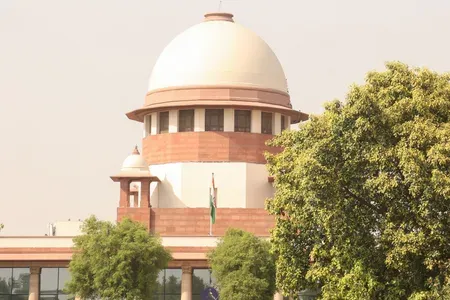
The Centre on Friday, 18 July 2025, moved the Supreme Court challenging a Delhi High Court judgment that struck down the technical evaluation process for outsourcing Consular, Passport and Visa (CPV) services at four Indian Missions — in Abu Dhabi (UAE), Kuwait, Singapore, and Canberra (Australia). Solicitor General Tushar Mehta mentioned the matter before a bench headed by Chief Justice of India (CJI) Surya Kant and sought an urgent listing, which the CJI assured would be scheduled for Monday.
What the Delhi High Court Ruled
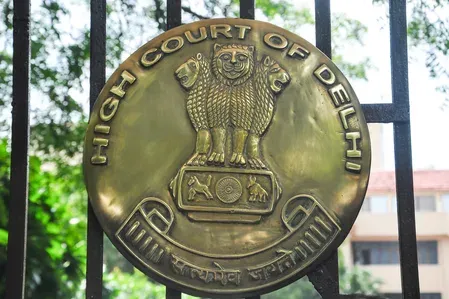
In a judgment delivered on 15 July 2025, a Division Bench of Delhi High Court comprising Justice Anil Kshetrapal and Justice Shail Jain set aside the technical bid evaluations for the CPV outsourcing tenders floated by the Ministry of External Affairs (MEA). The court found the process vitiated by 'arbitrariness, irrationality and lack of transparency', holding it in violation of Article 14 of the Constitution.
The bench allowed petitions filed by E Trav Tech Limited and Verasys Limited, two companies that had challenged their disqualification at the technical bid stage. The court noted that while judicial bodies ordinarily do not second-guess technical assessments by expert government panels, review is warranted where the decision-making process is arbitrary, opaque, and constitutionally deficient.
The Core Transparency Concern
The Delhi HC observed that although the government had furnished parameter-wise marks — following earlier directions from the Supreme Court — it failed to disclose the basis on which those marks were awarded. This left the disqualified bidders with no means to understand why their otherwise compliant proposals were deemed inferior to competing bids.
Notably, the bench found significant inconsistencies in the marking process: materially identical proposals and supporting documents had been awarded substantially different scores across different Missions, with no recorded reasons to justify the disparity.
Contracts Nullified, Fresh Tenders Ordered
Setting aside the technical evaluations, the High Court also nullified the award of contracts to the successful private bidders. The MEA and the concerned Indian Missions were directed to issue fresh Requests for Proposal (RFPs) within one month and to complete the tender process expeditiously.
To prevent disruption to public services, the court permitted existing service providers to continue operations until the fresh procurement process concludes — a practical safeguard for Indian nationals relying on consular and passport services abroad.
What Happens Next
With the Centre's challenge now before the Supreme Court, the matter is expected to be heard on Monday. The outcome will determine whether the High Court's order — and the directive for fresh RFPs — holds, or whether the original technical evaluation process is revived. The case has significant implications for how the MEA structures future outsourcing tenders for consular services across Indian Missions worldwide.
Point of View
Leaving bidders — and the court — in the dark. That is not a procedural technicality; it is a structural failure in public procurement. The Centre's decision to challenge the verdict rather than simply comply with the fresh-tender directive raises a harder question — whether it is contesting the process finding or protecting the original outcome. India's consular outsourcing tenders affect millions of citizens abroad; opacity in their award is not a minor administrative lapse. The Supreme Court's Monday hearing will signal whether the judiciary will hold the line on procurement transparency or give the executive room to reset the process on its own terms.
NationPress
16 Oct 2026
Frequently Asked Questions
Why did the Delhi High Court quash the passport and visa outsourcing tender?
The Delhi High Court struck down the technical evaluation process because it was found to be arbitrary, irrational, and lacking in transparency, violating Article 14 of the Constitution. The court noted that materially identical proposals received substantially different scores across different Missions with no recorded reasons.
Which Indian Missions were covered by the quashed tender?
The tender covered CPV services outsourcing at four Indian Missions: Abu Dhabi (UAE), Kuwait, Singapore, and Canberra (Australia). The Ministry of External Affairs had floated the tenders for these locations.
Who are E Trav Tech Limited and Verasys Limited?
E Trav Tech Limited and Verasys Limited are private companies that filed petitions in the Delhi High Court after being disqualified at the technical bid stage of the MEA's CPV outsourcing tender. The High Court allowed their petitions and set aside the evaluation process.
What has the Delhi High Court directed the MEA to do?
The Delhi HC directed the MEA and the concerned Indian Missions to issue fresh Requests for Proposal (RFPs) within one month and complete the tender process expeditiously. Existing service providers may continue operating in the interim to avoid disruption to public services.
When will the Supreme Court hear the Centre's challenge?
Chief Justice of India Surya Kant assured that the matter will be listed for hearing on Monday, following Solicitor General Tushar Mehta's request for an urgent hearing on behalf of the Union government.