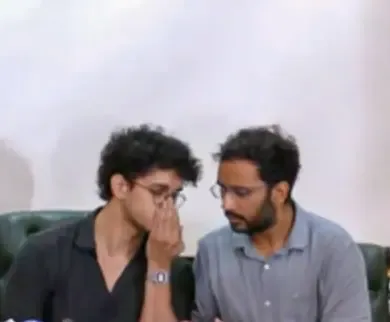
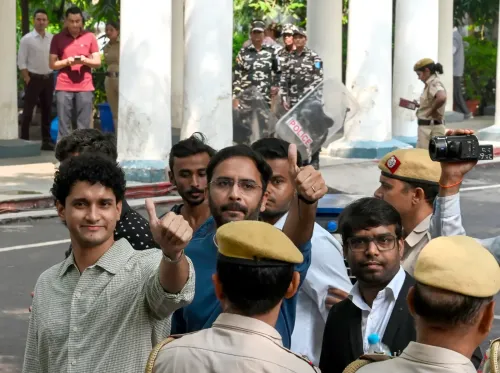
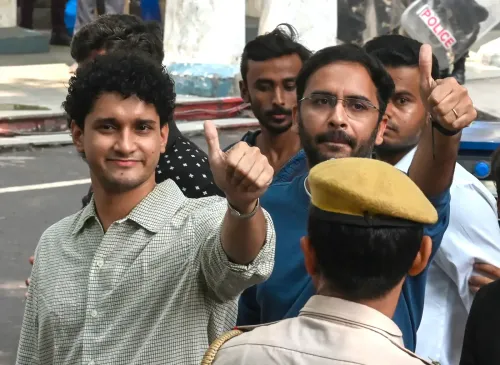
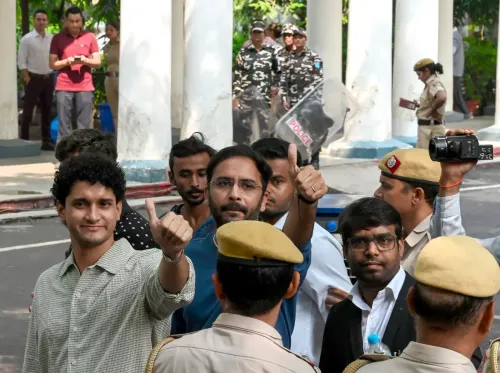
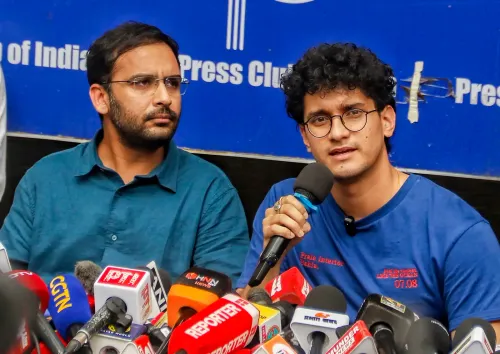
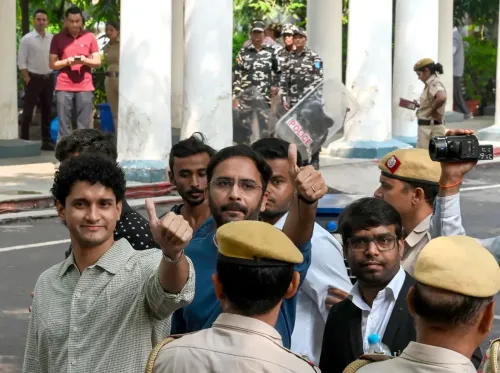
CJP leaders withdraw Delhi HC plea over custody extension in Jantar Mantar case
Synopsis
Two CJP leaders detained for the Jantar Mantar trespassing protest withdrew their Delhi High Court challenge to their custody extension on 21 October — the very day their custody was due to expire — after Justice Subramonium Prasad suggested waiting for the SEM court hearing first. The case is rooted in a protest against alleged irregularities in electoral roll revision.
Key Takeaways
Saurav Das and Ashutosh Ranka of the Cockroach Janata Party (CJP) withdrew their Delhi High Court petition on 21 October challenging their judicial custody extension.
Justice Subramonium Prasad allowed the withdrawal without expressing any opinion on the merits of the case.
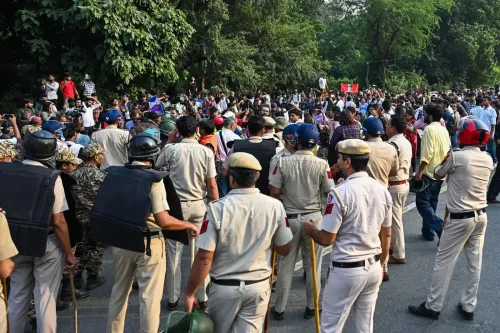
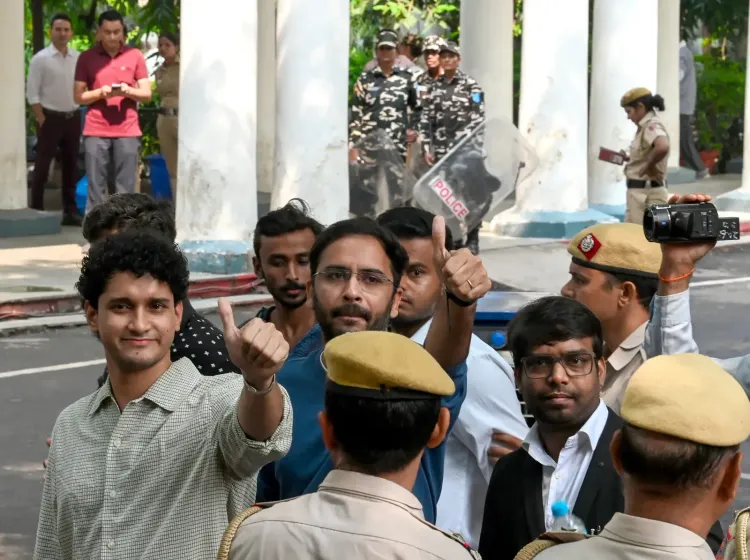
The duo was among 14 people detained on 13 October for allegedly trespassing at Jantar Mantar and obstructing police during a protest against electoral roll irregularities.
SEM Ritu Raj had extended their custody on Monday, citing their conduct showing 'no respect for law' and habitualness in calling protests at de-notified areas.
Fresh sureties were ordered after those furnished earlier were found unfit due to discrepancies in identity documents.
The legal outcome now depends on the SEM court proceedings, before which both activists are due to be produced on the same day.
Cockroach Janata Party (CJP) leaders Saurav Das and Ashutosh Ranka on Wednesday, 21 October withdrew their petition before the Delhi High Court challenging a Special Executive Magistrate (SEM) court order that had extended their judicial custody in connection with the Jantar Mantar trespassing case. A single-judge bench of Justice Subramonium Prasad permitted the withdrawal while expressly declining to record any opinion on the merits of the matter.
How the Hearing Unfolded
During the hearing, Justice Prasad advised the petitioners' counsel to consider withdrawing the plea, awaiting developments before the SEM court scheduled for 2 pm, and pursuing the appropriate legal remedy thereafter. 'Would it not be better for you to withdraw this, see what happens at 2 PM and then follow the course of law. It is for you to make a decision,' the High Court observed.
The bench further noted that if the duo obtained relief from the SEM court later in the day, the High Court proceedings would serve no purpose. 'Suppose things happen today in your favour at 4 PM, all gone,' Justice Prasad said, before taking a brief recess to allow advocate Abhik Chimni, appearing for the activists, to weigh his options. Chimni subsequently opted to withdraw the petition, and the court allowed it accordingly.
Context: The Jantar Mantar Arrest
Das and Ranka, along with CJP member Ajinkya Shinde, were among 14 people detained on 13 October after they allegedly entered Jantar Mantar through private premises and obstructed police personnel from discharging their official duties. The CJP members were protesting against alleged irregularities in the Special Intensive Revision (SIR) of electoral rolls and had raised slogans against Chief Election Commissioner (CEC) Gyanesh Kumar.
On Monday, SEM Ritu Raj had extended their custody, observing that their conduct 'shows no respect for law' and reflects their 'habitualness in calling protest at de-notified areas'. The SEM court noted that the investigating officer had placed substantial material on record, raising concerns over the likelihood of a breach of peace and disturbance of public tranquillity.
Surety Issues and Past Conduct
The SEM court also recorded that the two leaders had allegedly breached bonds furnished before the SEM, South-West District, on 11 October, and subsequently committed a breach of peace in the present case. Their assurance that they would not repeat the alleged offence did not inspire confidence, the court observed, in view of their past conduct and the material placed on record by the investigating officer.
Additionally, the sureties furnished on behalf of the two activists were found unfit following an inquiry, with the court citing discrepancies in identity documents and the sureties' inability to provide basic details about the individuals for whom they stood surety. Fresh sureties were accordingly directed.
CJP's Stand and What Comes Next
The withdrawal of the High Court plea comes on the very day the judicial custody of the two activists was due to end, with both scheduled to be produced before the SEM court. CJP's legal affairs head, Ratna Singh, had said on Tuesday that the duo had approached the High Court seeking an urgent hearing. 'Saurav and Ashutosh should not spend a single minute behind bars. Their liberty must not be curtailed because of political games. Justice must not wait,' she said in a post on X.
Delhi Police had justified continued custody, citing repeated violations of law and apprehensions that their release could lead to further violations and instigation of others. With the High Court plea now withdrawn, the legal fate of Das and Ranka will hinge entirely on the SEM court's proceedings later in the day.
Point of View
The underlying legal questions remain live: the SEM court's finding of 'habitualness' in protesting at de-notified areas sets a low bar for future custodial extensions, and the rejection of sureties on technicalities raises questions about proportionality. The case also sits at a sensitive intersection — a protest targeting the Chief Election Commissioner over electoral roll revision invites scrutiny of both law-enforcement priorities and the space available for dissent around election administration.
NationPress
21 Oct 2026
Frequently Asked Questions
Why did CJP leaders Saurav Das and Ashutosh Ranka withdraw their Delhi HC plea?
The two leaders withdrew their petition after Justice Subramonium Prasad suggested it would be more practical to await the outcome of the SEM court hearing scheduled for 2 pm on the same day before pursuing High Court relief. Their counsel, Abhik Chimni, accepted the court's advice and opted to withdraw.
What is the Jantar Mantar trespassing case?
The case relates to the detention of 14 people, including CJP members Saurav Das, Ashutosh Ranka, and Ajinkya Shinde, on 13 October after they allegedly entered Jantar Mantar through private premises and obstructed police personnel. The group was protesting alleged irregularities in the Special Intensive Revision (SIR) of electoral rolls and had raised slogans against Chief Election Commissioner Gyanesh Kumar.
Why was the judicial custody of the CJP leaders extended?
SEM Ritu Raj extended their custody on Monday, observing that their conduct 'shows no respect for law' and reflects habitualness in calling protests at de-notified areas. The SEM also cited the investigating officer's material raising concerns over breach of peace, and noted that the activists had allegedly violated bonds furnished before the SEM, South-West District, on 11 October.
What were the issues with the sureties furnished for the CJP leaders?
The SEM court found the sureties furnished on behalf of Das and Ranka unfit after an inquiry, citing discrepancies in identity documents and the sureties' inability to provide basic details about the individuals for whom they stood surety. The court directed fresh sureties to be furnished.
What happens next in the case?
With the Delhi High Court plea withdrawn, the legal outcome rests with the SEM court, before which both Das and Ranka are due to be produced on 21 October — the same day their current custody period expires. Relief or further extension will be determined at that hearing.