Can the right to higher education be restricted? Delhi HC permits student to continue MBBS
Synopsis
The Delhi High Court emphasized the importance of safeguarding the right to higher education, ruling that it cannot be curtailed without valid reasons, as it upheld a medical student's right to continue his MBBS studies after an unjust cancellation of admission.
Key Takeaways
The right to higher education is an obligation that the State must uphold.
Admission based on merit should not be revoked without valid reasons.
Legal protections are in place for students against unjust actions.
The significance of CBI's role in education-related investigations.
Judicial decisions can set important precedents for future educational rights.
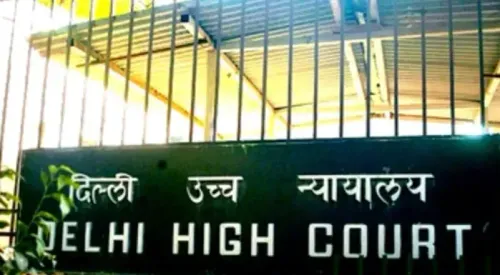
New Delhi, Jan 11 (NationPress) The Delhi High Court has stated that the right to pursue higher or professional education, although not explicitly enshrined as a fundamental right in the Constitution, creates an affirmative duty for governments and cannot be dismissed lightly.
In response to a writ petition from a medical student whose MBBS admission was revoked due to alleged irregularities associated with the NEET-UG 2024 exam, a single-judge panel led by Justice Jasmeet Singh remarked that it is the government's responsibility to safeguard a student’s right to continue their professional education unless there are valid, genuine, and compelling reasons to do otherwise.
“The pursuit of higher or professional education, despite not being explicitly articulated as a fundamental right in Part III of the Indian Constitution, establishes an affirmative obligation on the part of the State to ensure this right, and it cannot be curtailed lightly,” stated the Delhi High Court.
The petitioner had gained admission to the MBBS program at Bhima Bhoi Medical College and Hospital in Balangir, Odisha, after achieving an All India Rank of 28,106 in NEET-UG 2024. However, his admission was later annulled when the NTA retracted his result based on information provided by the Central Bureau of Investigation (CBI).
Justice Singh noted that the petitioner was admitted to the MBBS program based on merit through an open entrance examination, and the cancellation of such admission would significantly hinder his academic journey.
The ruling also acknowledged that the CBI indicated the petitioner was not named as an accused in the chargesheet related to the alleged NEET-UG 2024 irregularities, but was merely cited as a witness.
In light of these circumstances, Justice Singh concluded that there was no prima facie evidence of the petitioner’s involvement in any wrongdoing that would justify the drastic measure of terminating his admission.
Consequently, the Delhi High Court ordered the authorities to allow the petitioner to resume attending his MBBS classes as per the established curriculum.
Point of View
It is imperative that we recognize the critical nature of the Delhi High Court's ruling. The court's decision underscores the necessity for the state to uphold educational rights, ensuring that no student is deprived of their academic journey without just cause. This ruling sets a precedent for future cases and reflects the importance of a fair education system in our society.
NationPress
9 Oct 2026
Frequently Asked Questions
What did the Delhi High Court rule regarding education rights?
The Delhi High Court ruled that the right to pursue higher education is an affirmative obligation on the government and cannot be curtailed without valid reasons.
Why was the medical student's admission canceled?
The student's admission was canceled due to alleged irregularities linked to the NEET-UG 2024 examination, following information from the CBI.
What was the court's stance on the student's merit?
The court noted that the student secured admission based on merit and that canceling this admission would disrupt his academic progress.
Was the student accused of malpractice?
No, the CBI indicated that the student was not named as an accused in the chargesheet but was cited as a witness.
What did the court order regarding the student's classes?
The court directed the authorities to allow the student to continue attending his MBBS classes as per the prescribed curriculum.