Is Delhi-NCR's Air Quality Poor Amidst a Cold Wave?
Synopsis
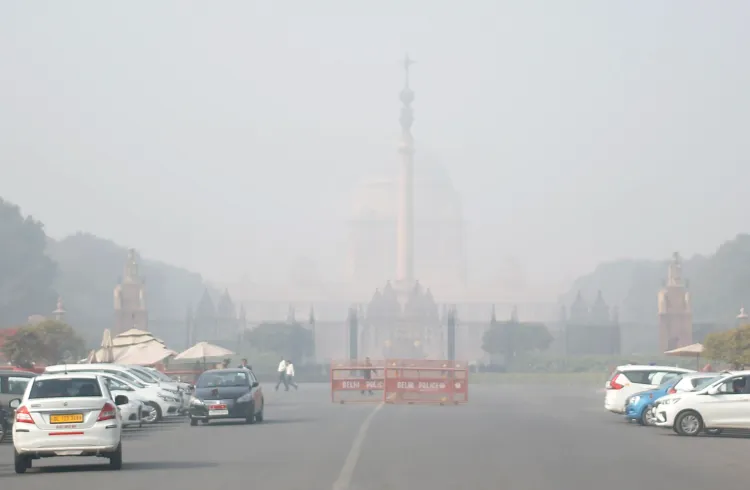
As Delhi grapples with **poor air quality** and a persistent **cold wave**, temperatures have dropped significantly. The AQI levels are alarming, raising health concerns. Dive into the details of the air quality situation and weather conditions impacting the national capital.
Key Takeaways
Delhi's air quality remains in the 'poor' category.
Minimum temperatures have dropped to 6.5 degrees Celsius.
Several areas are experiencing 'very poor' air quality levels.
Cold wave conditions are expected to last until early January.
Precautionary measures under GRAP are still in effect.
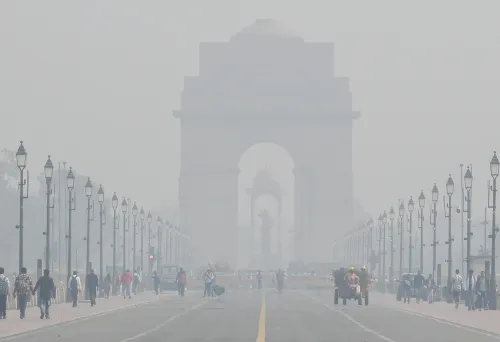
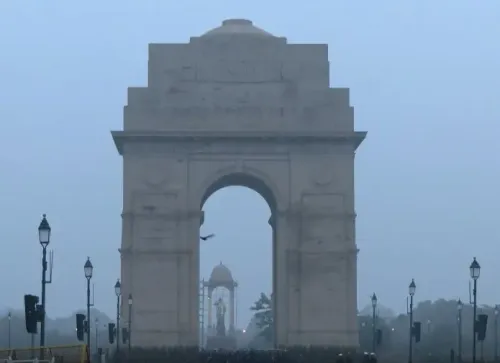
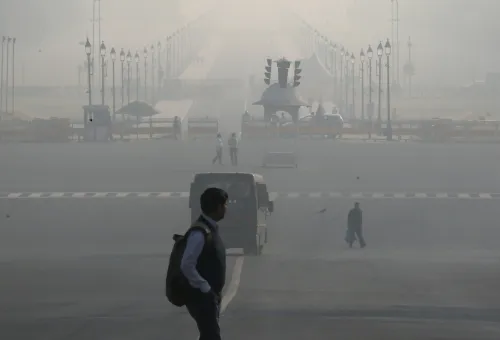
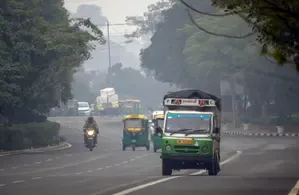
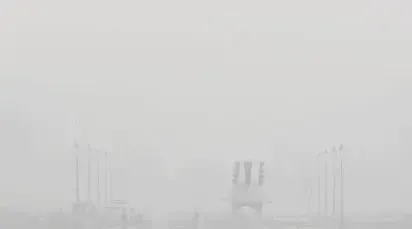
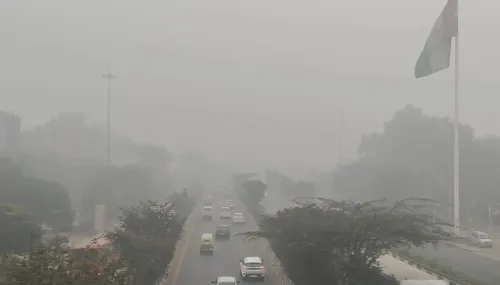
New Delhi, Jan 5 (NationPress) The air quality in Delhi remained classified as 'poor' early on Monday as the region grappled with a persistent cold wave. The lowest temperature plummeted significantly by 4.5 degrees Celsius, landing at a chilly 6.5 degrees Celsius, which is below the average for this season.
Data segmented by area showed that the Air Quality Index (AQI) consistently stayed within the poor range throughout the city. Akshardham logged an AQI of 294, while ITO recorded 256, according to figures from the Central Pollution Control Board (CPCB).
Notably, 11 monitoring stations indicated 'very poor' air quality, including Anand Vihar, Ashok Vihar, and Chandni Chowk, which are frequently among the most polluted locations in the national capital. Anand Vihar registered an AQI of 323, Ashok Vihar at 304, and Chandni Chowk peaked with a notably high AQI of 343. Other stations in the very poor category included IHBAS in Dilshad Garden (310), Jahangirpuri (326), Nehru Nagar (329), Okhla Phase II (304), Rohini (313), Sirifort (306), Vivek Vihar (321), and Wazirpur (313).
Surrounding areas also recorded a drop in air quality. Noida’s AQI fell to 242, up from 229 noted on Friday. Gurugram, which had briefly improved to the ‘moderate’ category with an AQI of 178 on Friday, reverted to the ‘poor’ category on Saturday, showing an AQI of 244.
Previously, authorities had lifted the Graded Response Action Plan (GRAP) restrictions across Delhi-NCR, attributing the lift to improved air quality from rainfall and strong winds. Nevertheless, GRAP-1 and GRAP-2 measures remain in place as a precaution.
According to official AQI classification, values between 201 and 300 are regarded as ‘poor’, between 301 and 400 as ‘very poor’, and between 401 and 500 as ‘severe’.
Meanwhile, the India Meteorological Department (IMD) has predicted that cold wave conditions will affect isolated areas in the national capital until January 6. The weather agency anticipates mostly clear skies with shallow to moderate fog in the mornings.
The maximum and minimum temperatures in Delhi are expected to range between 17 degrees Celsius and 19 degrees Celsius, and 7 degrees Celsius and 9 degrees Celsius, respectively. Minimum temperatures are projected to remain slightly above normal by 0.1 to 2.1 degrees Celsius, while maximum temperatures are likely to stay around normal.
Data from the IMD indicated significant fluctuations in nighttime temperatures across the city. Safdarjung, the main weather observatory in Delhi, recorded a minimum of 7.4 degrees Celsius. Palam had a lower minimum of 6.8 degrees Celsius, while Ayanagar noted 6.6 degrees Celsius. Lodhi Road measured 7.6 degrees Celsius, whereas the Ridge area was comparatively warmer at 8.9 degrees Celsius. High humidity levels, recorded at 92 percent at 8:30 a.m., exacerbated the cold, making early morning conditions quite uncomfortable.
The IMD also forecasts light rain or snowfall in isolated areas of the higher elevations in north and central Kashmir and Himachal Pradesh on January 5 and 6. Isolated regions in Uttarakhand are likely to receive rain or snow on January 6.
As per the Meteorological Department, Kashmir is currently experiencing a cold wave, aptly termed 'Chilla-e-Kalan', marking the harshest 40-day winter period, during which night temperatures can plummet below freezing. However, the plains of the valley have not yet received any snowfall this season.
Cold wave conditions are anticipated to persist in isolated regions of Punjab, Haryana, and Chandigarh until January 8. In West Rajasthan, these conditions are expected to last until January 9, while East Rajasthan may experience cold wave conditions until January 10.
Point of View
It's crucial to highlight the persistent challenges faced by residents in Delhi due to deteriorating air quality and severe weather conditions. These ongoing issues call for urgent attention and action to ensure public health and safety.
NationPress
2 Oct 2026
Frequently Asked Questions
What is the current air quality status in Delhi?
Delhi's air quality is currently categorized as 'poor', with several areas recording even worse 'very poor' levels according to the latest AQI data.
How has the cold wave impacted temperatures in Delhi?
The minimum temperature in Delhi has sharply dropped to 6.5 degrees Celsius, which is significantly below the seasonal average.
What measures are being taken regarding air quality?
While some restrictions under the Graded Response Action Plan have been lifted, others remain in force as a precaution against air pollution.
What weather forecasts are available for Delhi?
The IMD predicts continued cold wave conditions and mainly clear skies, with shallow to moderate fog expected during mornings.
What are the health implications of poor air quality?
Poor air quality can lead to various health issues, particularly respiratory problems, and it is crucial for residents to take necessary precautions.