Did the Most UN Security Council Members Condemn Maduro’s Capture While the US Defends It?
Synopsis
The recent capture of Venezuelan leader Nicolas Maduro has sparked intense debate within the UN Security Council. While the US defends the action as a law enforcement measure, other nations express concern over international law implications. This developing story raises questions about sovereignty, intervention, and the balance of power in international relations.
Key Takeaways
The US defends the capture of Nicolas Maduro as a law enforcement operation.
Criticism comes from both allies and adversaries at the UN Security Council .
China and Russia demand Maduro's immediate release.
Venezuela's leadership is now under Delcy Rodriguez .
Concerns over the implications for international law are widespread.
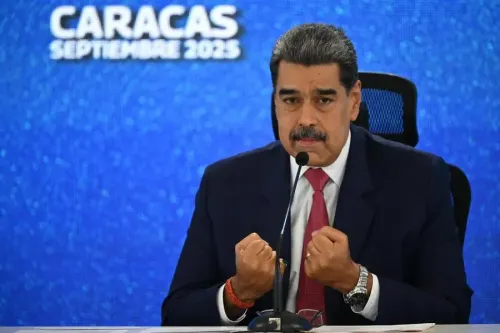
United Nations, Jan 6 (NationPress) Amidst criticism from both allies and adversaries at the Security Council over the apprehension of Venezuelan leader Nicolas Maduro, the United States has characterized the act as a “law enforcement operation” rather than a military conflict.
During the emergency meeting convened on Monday, both France and Britain—US allies with permanent seats on the Council—expressed soft criticisms of Washington's actions from an international law standpoint. Meanwhile, the other two permanent members, China and Russia, condemned the US, calling for the immediate release of Maduro.
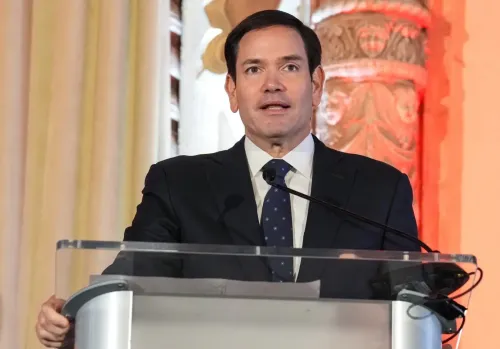
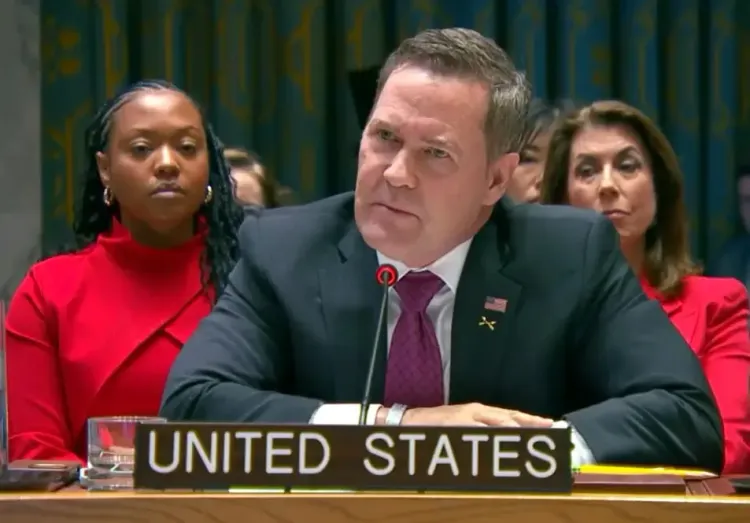
“There is no war against Venezuela or its people,” asserted US Permanent Representative Mike Walz, echoing Secretary of State Marco Rubio. “We are not occupying a country.”
In an effort to counter claims that the US was infringing upon the UN Charter and international law through an invasion, he emphasized, “This was a law enforcement operation.”
“The United States detained a narcotrafficker who will now face trial in our country as per the rule of law for his crimes over the past 15 years,” he added.
The Council meeting coincided with Maduro’s initial court appearance regarding narco-terrorism charges in a US court located in Manhattan, following his capture from a heavily fortified military base in Venezuela.
Venezuela’s Permanent Representative Samuel Reinaldo Moncada accused the US of the “kidnapping of a head of state”.
He claimed the US’s “illegitimate armed attack” violated the UN Charter, motivated by a desire to seize his country’s natural resources.
The leadership of Venezuela is now in the hands of Delcy Rodriguez, Maduro's former vice president, with US President Donald Trump having so far retained her in power, anticipating her cooperation.
France, Britain, and several other nations criticized Maduro for what they described as his fraudulent election victory and human rights abuses, while also denouncing the US intervention.
However, France’s Deputy Permanent Representative Jay Dharmadhikari stated, “The military operation that facilitated the capture of Nicolas Maduro contradicts the principles of peaceful dispute resolution and non-aggression.”
Britain’s Deputy Permanent Representative James Kariuki noted, without directly mentioning the US, that violations of the Charter by permanent members “undermine the very foundations of international order,” he added.
China’s Deputy Permanent Representative Sun Lei expressed that Beijing “is profoundly shocked by and vehemently condemns” what he termed “bullying acts” by the US.
Russia’s Permanent Representative Vassily Nebenzia maintained that Maduro is “the legitimately elected” president of Venezuela and demanded his immediate release.
He accused the US of fueling “new neocolonialism and imperialism.”
The US received unwavering support only from Trinidad and Argentina.
Providing the strongest endorsement for the US, Neil Parsan, the permanent representative of Trinidad, stated that his nation is “steadfast in its support of the United States of America's initiatives to enhance regional security.”
Accusing its neighbor Venezuela of operating “networks that facilitate transnational crime across the Americas” and undermining regional security and stability, he affirmed that Trinidad is “dedicated to collaborative efforts led by the United States to disrupt and dismantle Maduro's networks.”
Argentina’s Permanent Representative Francisco Tropepi described the US action as “decisive” in addressing the region’s drug trafficking challenges.
“Peace, freedom, and democracy in Latin America have been jeopardized” by Maduro, he stated.
Concerns regarding Maduro’s capture and Trump’s threats against others were palpable among representatives from Latin America.
He accused Colombia’s President Gustavo Petro of drug trafficking and remarked on Sunday, “He won't be doing it for long.”
In response to a reporter’s inquiry, he expressed that a military operation against Colombia “sounds favorable to me.”
Colombia’s Permanent Representative Leonor Zalabata Torres denounced the US action as one of the “worst interferences” in the region and stated, “Democracy cannot be defended or promoted through violence and coercion, nor can it be superseded by economic interests.”
Hector Enrique Vasconcelos, the permanent representative of another nation that Trump indicated he wants to address, informed the Council that there is an “obligation to act decisively and equitably” when the Charter is violated.
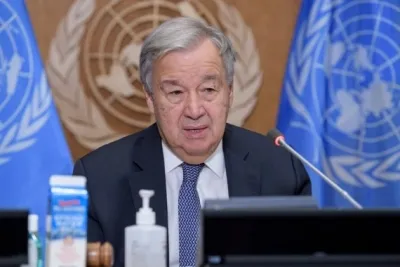
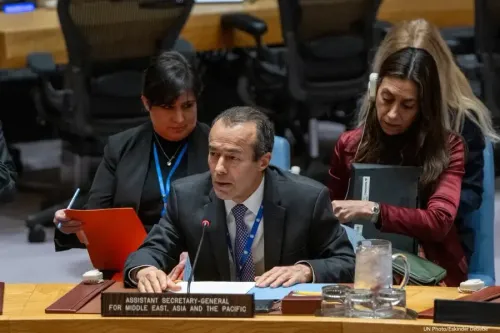
Earlier, Rosemary DiCarlo, who briefed the Council on behalf of Secretary-General Antonio Guterres, expressed her deep concern about the potential escalation of instability in the nation and its possible repercussions on the region.
She cautioned that this could set a precedent for “how relations between states are conducted.”
Point of View
We are committed to presenting an unbiased perspective on the unfolding events surrounding Maduro's capture. The situation highlights the complex dynamics of international law, sovereignty, and the responsibilities of global powers. Our reporting aims to provide clarity and foster understanding amid the ongoing tensions.
NationPress
3 Oct 2026
Frequently Asked Questions
What is the US's justification for capturing Maduro?
The US describes the capture of Maduro as a law enforcement operation aimed at detaining a narcotrafficker who will face trial for crimes linked to drug trafficking.
How have other countries reacted to Maduro's capture?
Many countries, including Russia and China, have condemned the US's action, calling it a violation of international law and demanding Maduro's release.
What are the implications of this event on international relations?
The capture raises significant questions about sovereignty, the legality of intervention, and the balance of power in international governance.