What Lies Ahead After Maduro’s Arrest?
Synopsis
The recent capture of Nicolas Maduro by US forces is a pivotal moment for Venezuela. Yet, as former officials highlight, the challenges of governance and stability loom large. Will this arrest lead to meaningful democratic transition or simply create more chaos? Dive into the complexities surrounding this significant event.
Key Takeaways
Nicolas Maduro was arrested by US forces in a significant tactical operation.
The future of governance in Venezuela remains uncertain post-Maduro.
Key regime figures still maintain control, posing risks to stability.
The legitimacy of potential new leaders is in question.
Without a clear path to democracy, the moment of change could be fleeting.
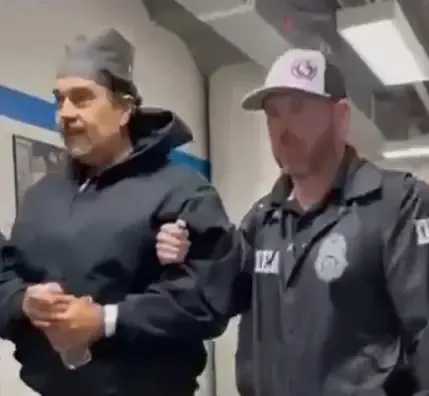
Washington, Jan 4, (NationPress) The capture of Venezuelan leader Nicolas Maduro by US forces signifies a pivotal moment in the region's history. However, former US officials and analysts caution that the more challenging and significant phase is just beginning, as critical issues surrounding governance, stability, and democratic transition in Venezuela remain unanswered.
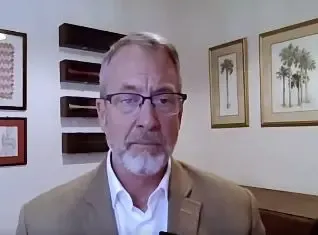
In articles published on MSNBC after Maduro's ousting, retired US Ambassador to Venezuela James Story referred to the operation as a “remarkable tactical success,” yet he warned that such a victory does not inherently guarantee strategic success.
Maduro, whom the US and numerous nations have long labeled as an illegitimate leader, was detained during a large-scale overnight operation in Caracas and will face criminal charges in New York. Story noted that his removal eliminates a key player responsible for Venezuela's economic decline, mass emigration, and global isolation.
Nonetheless, Story pointed out that crucial elements of the regime are still operational. Key figures like Interior Minister Diosdado Cabello Rondon and Defence Minister Vladimir Padrino Lopez, both closely linked to the security framework, remain in Venezuela and continue to hold sway over military and internal security.
He emphasized that their ongoing influence suggests that Maduro's arrest might represent merely the removal of “one head of a hydra,” rather than dismantling the regime that enabled his governance.
A pressing concern is internal stability. Cabello’s dominance over security forces and armed civilian groups could suppress public celebrations following Maduro’s departure, while the military's existing capabilities, including advanced weaponry, pose risks if command structures fail.
In the columns he penned in the last 24 hours, another unanswered query is governance. With Maduro absent, attention shifts to who wields authority in Caracas and the legitimacy of that power. US officials have hinted at collaborating with Delcy Rodriguez, the country's executive vice president, as a potential interim leader.
However, Story underscored a significant inconsistency: if Maduro was deemed illegitimate, his closest deputy, who has faced sanctions from the US and the EU since 2018, would encounter the same legitimacy issues.
Rodriguez has openly rejected US legitimacy, denouncing Maduro’s arrest as an “illegal and illegitimate kidnapping” and insisting that Maduro remains the president of Venezuela. This stance, Story noted, highlights the uncertainty surrounding any transition lacking broad domestic or international consensus.
The articles also question whether the arrest propels democracy forward. While opposition leaders like Maria Corina Machado and Edmundo Gonzalez claim victory in the contentious 2024 election, neither appears to have been included in post-Maduro strategies. Story warned that expecting the opposition to remain sidelined could intensify public disillusionment after years of protests, negotiations, and disputed elections.
US officials have portrayed the operation as part of a larger strategy targeting drug trafficking, regional security, and foreign influence. However, Story noted that the scale of US naval and aerial deployments hinted at ambitions extending beyond counternarcotics, raising concerns that regime change was sought without a clearly defined end goal.
President Donald Trump’s assertion that the US intends to “manage” Venezuela until a “safe, proper, and judicious transition” adds to these concerns. Without substantial security forces on the ground, Story argued, it remains uncertain how stability could be preserved in a nation plagued by armed groups and institutional decay.
Oil has also surfaced as a key issue. While reviving Venezuela’s energy sector is often cited as crucial for recovery, Story cautioned that attracting foreign investment will prove challenging if sanctions persist, the rule of law is weak, and political authority is contested.
Story raises the critical question, “What comes next?” Although Maduro's removal may have been necessary, it is not sufficient on its own. Without a credible path to democratic governance and institutional reform, this moment of change could be fleeting for a populace that has endured years of unfulfilled expectations.
Point of View
I believe this moment is crucial for Venezuela. The arrest of Maduro opens doors for potential change, but we must approach it with caution. The stability of the nation and the legitimacy of its leadership are now more critical than ever, and the path forward must prioritize democratic governance.
NationPress
23 Sept 2026
Frequently Asked Questions
What was the reason for Maduro's arrest?
Nicolas Maduro was arrested by US forces as part of an operation targeting his role in Venezuela's economic collapse and international isolation.
Who is likely to take power after Maduro?
Attention has turned to Delcy Rodriguez, Venezuela's executive vice president, but her legitimacy is also in question due to her close ties with Maduro.
What are the implications of Maduro's arrest for Venezuela's stability?
The arrest raises concerns about internal stability, especially with key regime figures like Diosdado Cabello still in power.
Will Maduro's arrest lead to a democratic transition?
There are doubts about whether the arrest will facilitate a democratic transition, as the opposition has not been included in post-Maduro plans.
What challenges does Venezuela face moving forward?
Venezuela faces significant challenges, including governance issues, potential violence, and the need for economic recovery.