How is the Trump Administration Framing Maduro's Arrest?
Synopsis
The Trump administration's recent portrayal of Venezuelan leader Nicolás Maduro's arrest is not just about detaining a controversial figure; it signals a renewed commitment to U.S. dominance in Latin America, countering adversaries like China, Russia, and Iran. With significant implications for regional stability, this move could reshape geopolitical dynamics.
Key Takeaways
U.S. dominance in the Western Hemisphere is being reasserted.
The arrest of Maduro is linked to countering China , Russia , and Iran .
The operation highlights Venezuela 's role as a hub for criminal and militant activities.
Migration and drug trafficking are recognized as interconnected threats.
The U.S. is prepared to defend its actions at the United Nations .
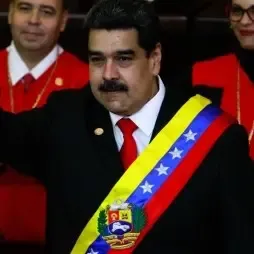
Washington, Jan 5 (NationPress) The Trump administration has portrayed the apprehension of Venezuelan leader Nicolas Maduro as a component of a wider initiative to reaffirm U.S. dominance in the Western Hemisphere while countering the rising influence of China, Russia, and Iran in Latin America.
During an interview on Fox News, U.S. Ambassador to the United Nations Mike Waltz stated that this operation serves as a definitive message to global adversaries that Washington will not accept hostile entities establishing themselves within the region.
“The Chinese are pursuing their agenda with unprecedented intensity in the Western Hemisphere,” Waltz emphasized, referring to their investments in critical infrastructure like ports, railways, energy resources, and food supply chains.
Waltz maintained that Venezuela has turned into a vital point for U.S. adversaries, enabling criminal organizations and militant factions to function with governmental support. “These aren’t your grandfather’s mafias,” he remarked on Fox News, likening Venezuelan-affiliated groups to terrorist organizations with government backing.
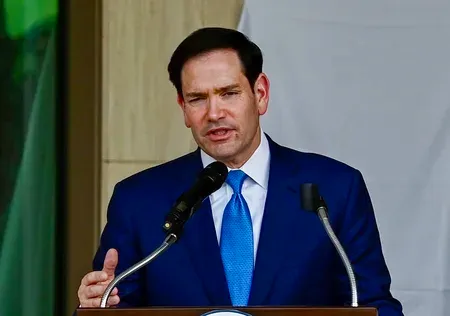
Secretary of State Marco Rubio reiterated this viewpoint during various Sunday talk shows. On ABC News’ This Week, Rubio highlighted that the United States will not permit Latin America to serve as a base for hostile forces.
“We will not allow the Western Hemisphere to become a staging ground for adversaries, competitors, and rivals of the United States,” Rubio asserted during his interview with ABC News.
He pointed out that the collapse of Venezuela's oil industry has been pivotal in the nation’s downfall and the rise of foreign influence. On NBC’s Meet the Press, he noted that oil profits have been redirected to elites and foreign allies instead of benefiting the populace.
“That wealth is being misappropriated,” Rubio stated on NBC, adding that the decline of the oil sector has contributed significantly to mass emigration.
Rubio informed NBC News that between eight to nine million Venezuelans have fled the nation since 2014, calling it one of the most extensive migration movements in contemporary history. “This has a direct effect on us,” he commented.
The administration has indicated that migration, drug trafficking, and military influences from abroad are interrelated threats. On CBS News’ Face the Nation, Rubio claimed that Venezuela has become a central point for Iran, Hezbollah, and criminal networks.
“This will not be tolerated in our hemisphere,” Rubio told CBS News.
During a segment on CNN’s GPS, analysts suggested that this operation signifies a notable shift towards unilateral U.S. actions in the region. Former government officials cautioned that rival powers may now reconsider how Washington could operate elsewhere globally.
Richard Haass, president emeritus of the Council on Foreign Relations, mentioned on CNN that this action might modify international norms. Zanny Minton Beddoes, editor-in-chief of The Economist, expressed concerns about the potential precedent and force application.
The administration rejected these apprehensions. Waltz maintained on Fox News that decisive measures reinstates deterrence and credibility.
“This is about safeguarding our backyard,” he asserted.
U.S. officials recognized that discussions are likely to arise at the United Nations, where issues of sovereignty and international law will be scrutinized. Waltz insisted that Washington is ready to justify its actions.
“This is our hemisphere,” he affirmed. “And we will no longer ignore threats within it.”
Point of View
Our perspective emphasizes the importance of U.S. actions in international affairs, particularly in relation to adversaries in Latin America. The framing of Maduro's arrest underlines a significant shift in U.S. foreign policy, focusing on deterrence and the safeguarding of national interests. Addressing the complexities of regional influence is crucial for understanding the broader implications for global stability.
NationPress
3 Oct 2026
Frequently Asked Questions
What is the significance of Maduro's arrest?
Maduro's arrest is framed as a strategic move by the Trump administration aimed at reaffirming U.S. dominance in Latin America and countering the influence of adversarial nations.
How does this affect U.S. relations with Latin America?
The arrest signals a more aggressive U.S. stance in Latin America, indicating a commitment to preventing adversarial nations from establishing a foothold in the region.
What are the broader implications of this operation?
This operation may reshape geopolitical dynamics, as it reflects a unilateral approach by the U.S. and could lead to reassessments by rival powers regarding U.S. actions globally.