How Are the US and Venezuela Confronting Each Other at the UNSC?
Synopsis
As tensions flare between the United States and Venezuela, an emergency session at the UN Security Council reveals a deepening conflict over oil sanctions and accusations of international law violations. The confrontation highlights global geopolitical stakes and the implications for regional stability, making it a critical development in international relations that cannot be overlooked.
Key Takeaways
Escalating Tensions: The US and Venezuela are in a heated confrontation over sanctions and oil seizures.
Claims of International Law Violations: Both sides accuse each other of violating international norms.
Global Reactions: Countries like China and Russia support Venezuela, while others express concern over human rights violations.
Impact on Venezuelan Citizens: The blockade worsens the humanitarian crisis in Venezuela.
Call for Mediation: The UN Secretary-General welcomes offers for peaceful resolution.
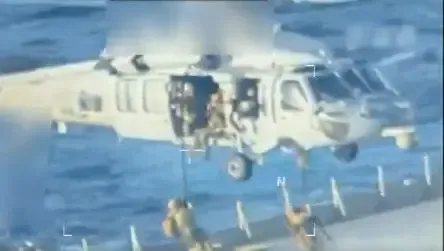
United Nations, Dec 24 (NationPress) The United States and Venezuela confronted each other with resolve during an emergency session of the Security Council, as tensions escalated following Washington's seizure of two oil-laden vessels from the Latin American country, along with attempts to intercept another tanker.
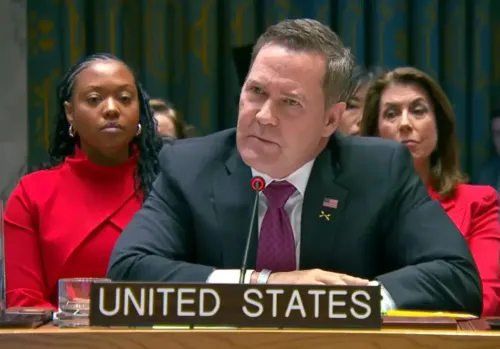
US Permanent Representative Mike Walz stated on Tuesday, "The United States will impose and enforce sanctions to the maximum extent to deprive Maduro of the resources" needed to support drug cartels and criminal organizations.
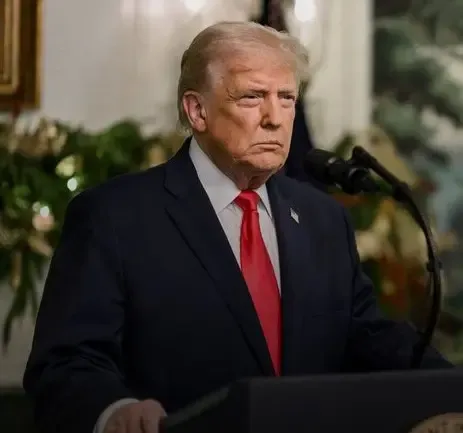
He further remarked, "The reality of the situation is that sanctioned oil tankers serve as the primary economic lifeline for Maduro and his illegitimate regime," which he used to justify the US blockade of Venezuela initiated by former President Donald Trump.
In response, Venezuela’s Permanent Representative Samuel Moncada refuted any involvement in drug trafficking or in sending criminal gangs to the US.
He declared, "A redline has been crossed," accusing the US of engaging in a "massive violation of international law" and committing "piracy".
"We will remain composed in defending the peace of our nation," he affirmed.
One of the vessels taken by the US was allegedly transporting Venezuelan oil to China, whose Deputy Permanent Representative Sun Lei stated, "The US actions severely infringe upon other countries' sovereignty, security, and legitimate rights and interests, violating the UN Charter and international law."
China and Russia stood firmly behind Venezuela, with Russia’s Permanent Representative Vasily Nebenzia criticizing the US for its "cowboy-like conduct" that contradicts key norms of international law.
While other nations voiced concerns over President Nicolas Maduro’s extensive human rights violations and the fraudulent elections that keep him in power, they also offered veiled critiques of the US.
Without directly addressing US actions, the UK’s Deputy Permanent Representative Archie Young stated, "The UN Convention on the Law of the Sea is the cornerstone of international law on ocean-related issues. The United Kingdom will always support international law and its enforcement."
France’s Deputy Permanent Representative Jay Dharmadhikari reiterated his country’s commitment to international law, emphasizing that "sovereignty and territorial integrity of states must be upheld."
On the topic of the US shooting down boats suspected of drug transport, he remarked, "Interdicting drug trafficking must be done in accordance with international law."
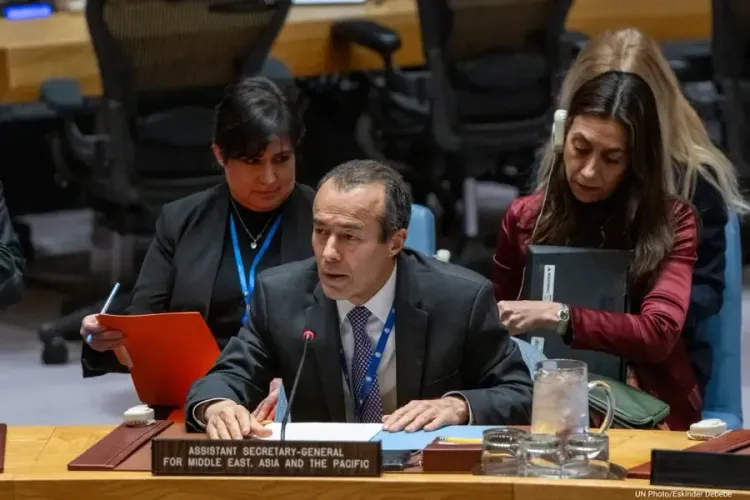
Since the launch of its Operation Southern Spear in September, the US has sunk 29 suspected drug-laden boats, leading to the deaths of 105 individuals, according to the UN’s Assistant Secretary-General Khaled Khiari.
Khiari quoted UN High Commissioner for Human Rights Volker Turk, who stated that the US airstrikes on vessels in the Caribbean and Pacific, allegedly tied to drug trafficking, violate international human rights law.
Khiari also highlighted that public life in Venezuela has become increasingly militarized, while its citizens face critical human rights issues and socioeconomic difficulties.
Regarding the blockade's consequences, he noted that in a country grappling with soaring inflation and currency instability, "millions are unable to meet basic needs," and the "recent air and maritime restrictions, alongside reduced exports, threaten to further limit the government's ability to provide essential public services."
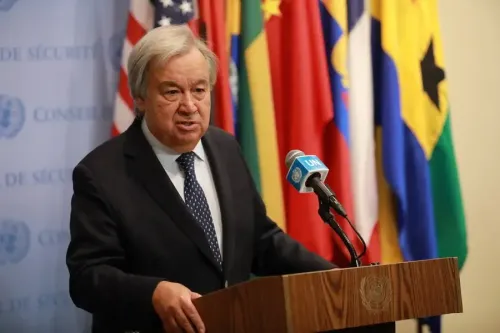
Secretary-General Guterres welcomed proposals for mediation and peaceful resolutions, as Khiari noted.
Walz, echoing sentiments similar to those of Trump, characterized Washington’s blockade and the destruction of boats as focused primarily on the war against drugs, avoiding Trump’s allegations of Venezuela expropriating US property.
He remarked, "These (drug) cartels are not like the mafia. These cartels are sophisticated, highly capable, well-financed, and are causing chaos in our region."
Walz identified the Cartel de Los Soles and the Tren de Aragua, both of which the US has labeled as foreign terrorist organizations.
He warned that these cartels pose a threat to Europe, with their drugs destined for the continent.
Most European nations in the Council acknowledged the drug threat, although they did not necessarily endorse the US's actions regarding the destruction of boats.
Point of View
It is essential to approach the unfolding situation between the U.S. and Venezuela with an unbiased lens. The confrontation at the UN Security Council not only reflects a clash of national interests but also raises significant questions about international law, sovereignty, and human rights. It is crucial to report these developments with clarity and integrity, ensuring that all perspectives are acknowledged.
NationPress
6 Oct 2026
Frequently Asked Questions
What sparked the recent tensions between the US and Venezuela?
The tensions escalated following the US's seizure of two vessels carrying oil from Venezuela and its attempts to intercept another tanker, leading to confrontations at the UN Security Council.
How has the US justified its blockade of Venezuela?
The US, represented by Mike Walz, justified the blockade by stating it aims to deprive Maduro of resources used to finance drug cartels and criminal gangs.
What was Venezuela's response to the accusations of drug trafficking?
Venezuelan representative Samuel Moncada denied any involvement in drug trafficking and accused the US of violating international law and engaging in piracy.
What have other countries said about the US actions?
Countries like China and Russia have criticized the US actions as violations of sovereignty and international law, while some European nations have expressed concerns over Venezuela's human rights record.
What is the impact of the US blockade on Venezuela?
The blockade has exacerbated Venezuela's socioeconomic challenges, leading to soaring inflation and limiting the government's ability to provide basic services to its citizens.