Delhi Town Hall in Chandni Chowk to become Global Heritage Centre under MoU
Synopsis
Delhi's iconic Town Hall in Chandni Chowk — a Grade-I heritage complex built between 1860 and 1866 that has sat largely vacant since 2010 — is set for a dramatic second life. A freshly signed MoU between the Delhi government and the MCD lays the groundwork for a Global Heritage Centre with a museum, cultural spaces, and tourism facilities, anchored by a 30-year agreement and the option of a PPP model.
Key Takeaways
The Delhi government and MCD signed an MoU on 20 September 2026 to develop the Chandni Chowk Town Hall as a Global Heritage Centre .
The Grade-I heritage complex , built between 1860 and 1866 , covers approximately 12,180 square metres and has been largely vacant since 2010 .
The proposed centre will include a museum , cultural activity spaces , and tourism facilities for domestic and international visitors.
DTTDC will conduct surveys, a structural assessment, and prepare a Detailed Project Report (DPR) before a decision on public investment or PPP model.
The MoU has an initial term of 30 years , extendable by another 30 years by mutual consent; the MCD retains ownership of the complex.
A Joint Working Group of DTTDC and MCD representatives will oversee project progress.
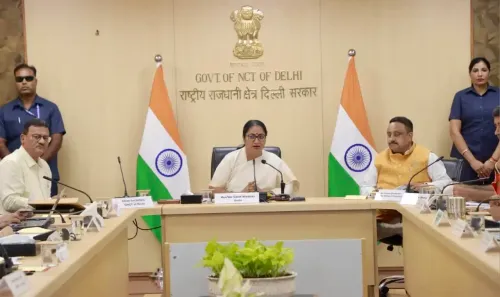
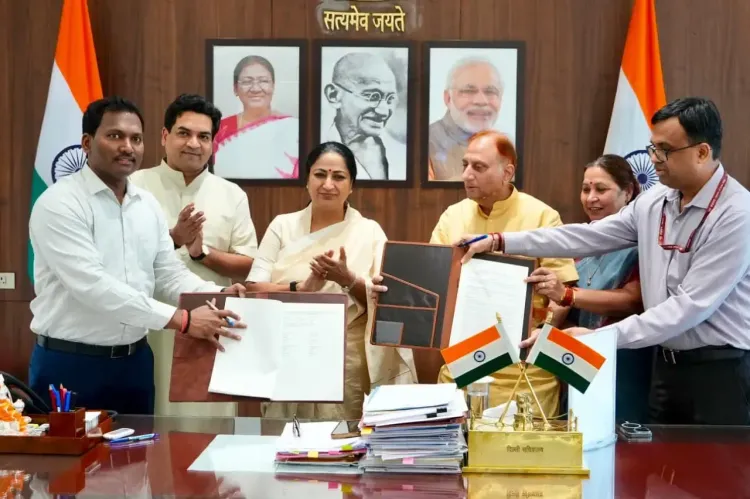
The Delhi government on 20 September 2026 signed a Memorandum of Understanding (MoU) with the Municipal Corporation of Delhi (MCD) to redevelop the historic Town Hall in Chandni Chowk as a 'Global Heritage Centre', marking a significant step in the conservation of one of Old Delhi's most storied landmarks.
What the MoU Covers
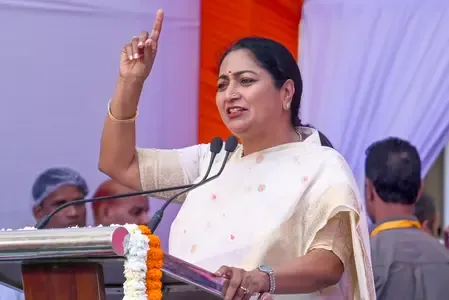
The agreement was signed by the Delhi Tourism and Transportation Development Corporation (DTTDC) — the nodal agency of the Delhi government's Tourism Department — and the MCD, in the presence of Chief Minister Rekha Gupta at the Delhi Secretariat. Tourism Minister Kapil Mishra, Delhi Mayor Pravesh Wahi, and senior officials were also present at the ceremony.
Under the agreement, the historic Town Hall, the adjoining Press Building, and the surrounding Park will be conserved and connected with expanded tourism and development opportunities. The MCD will retain ownership of the complex, which sprawls across approximately 12,180 square metres. The initial term of the MoU has been set at 30 years, with an option to extend by a further 30 years through mutual consent.
About the Historic Complex
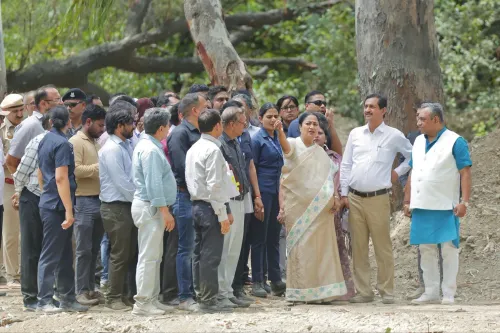
The Town Hall and its associated complex form part of the historic precincts of Chandni Chowk and Shahjahanabad. The Grade-I heritage complex was constructed between 1860 and 1866 and served as the headquarters of the Municipal Corporation for many decades before the corporation relocated to the new Dr S.P. Mukherjee Civic Centre on Minto Road in 2010. Much of the complex has remained largely vacant since then, prompting calls for its adaptive reuse.
Located near the Chandni Chowk market and the Old Delhi Railway Station — among the busiest tourist corridors in the capital — the complex is considered to have considerable untapped potential for cultural and heritage tourism.
What the Global Heritage Centre Will Offer
Chief Minister Rekha Gupta described the initiative as 'an important step toward preserving Delhi's historical heritage.' The proposed Global Heritage Centre is envisaged to house a museum, host cultural activities, and provide tourism-related facilities — creating a single-destination experience of Delhi's history and architecture for both domestic and international visitors.
Critically, the project commits to adaptive reuse: the building will be conserved in keeping with its historical and architectural character, even as it is repurposed for present-day needs. Heritage material, archival records, artefacts, and historical documents associated with the Town Hall will remain with the MCD.
Next Steps and Project Structure
The DTTDC has been tasked with conducting surveys, carrying out a structural assessment of the building, and preparing a Detailed Project Report (DPR). Once the DPR is complete, a decision will be made on whether to develop the project through public investment or the Public-Private Partnership (PPP) model.
A Joint Working Group comprising representatives of both the DTTDC and the MCD will be constituted to review the project's progress at regular intervals. This comes amid a broader push by the Delhi government to revitalise the heritage zones of Shahjahanabad, aligning with national urban heritage conservation goals. The outcome of the DPR is expected to determine the project's timeline and financial structure.
Point of View
But Delhi's heritage redevelopment record calls for measured expectations. The Town Hall has sat vacant for over 15 years — partly because heritage conservation rules make commercial use difficult and partly because the MCD-Delhi government jurisdictional tangle has historically slowed projects. The PPP route, while financially attractive, risks prioritising revenue over authenticity; adaptive reuse of Grade-I structures demands a level of curatorial rigour that commercial partners rarely prioritise. The real test will be whether the DPR, when it arrives, specifies binding conservation benchmarks — or whether 'Global Heritage Centre' becomes a branding exercise over a barely-touched shell.
NationPress
20 Sept 2026
Frequently Asked Questions
What is the Global Heritage Centre planned for Chandni Chowk's Town Hall?
It is a proposed cultural and tourism complex to be developed within the historic Town Hall in Chandni Chowk, New Delhi, following an MoU signed between the Delhi government and the MCD on 20 September 2026. The centre is envisaged to include a museum, cultural activity spaces, and tourism facilities for domestic and international visitors.
Who signed the MoU and who was present at the ceremony?
The MoU was signed by the Delhi Tourism and Transportation Development Corporation (DTTDC) and the Municipal Corporation of Delhi (MCD). Chief Minister Rekha Gupta, Tourism Minister Kapil Mishra, and Delhi Mayor Pravesh Wahi were present at the signing ceremony held at the Delhi Secretariat.
How old is the Chandni Chowk Town Hall and why has it been vacant?
The Town Hall is a Grade-I heritage complex built between 1860 and 1866. It served as the MCD headquarters for decades but has been largely vacant since 2010, when the corporation shifted to the Dr S.P. Mukherjee Civic Centre on Minto Road.
Who will own the Town Hall complex after the project?
The MCD will retain ownership of the historic complex, which spans approximately 12,180 square metres. Heritage material, archival records, artefacts, and historical documents associated with the Town Hall will also remain with the MCD.
What are the next steps for the project?
The DTTDC has been tasked with conducting surveys, a structural assessment, and preparing a Detailed Project Report (DPR). Once the DPR is ready, a decision will be made on whether to develop the project through public investment or the PPP model. A Joint Working Group of DTTDC and MCD representatives will oversee progress throughout.