CM Rekha Gupta Pledges to Make Delhi a Global Tourism Hub
Synopsis
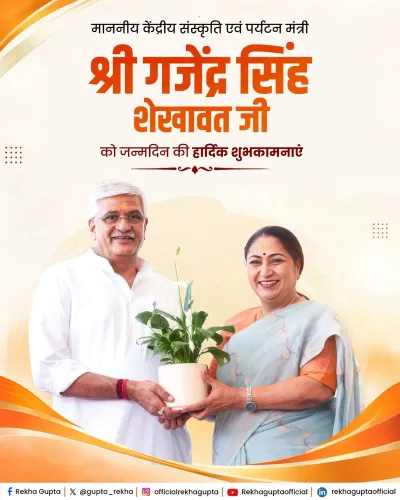
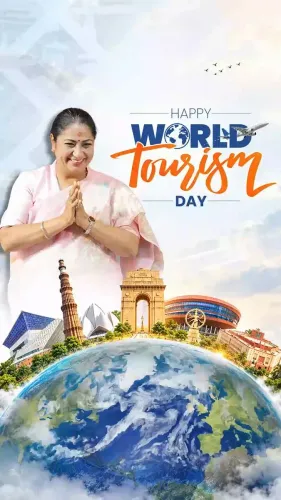
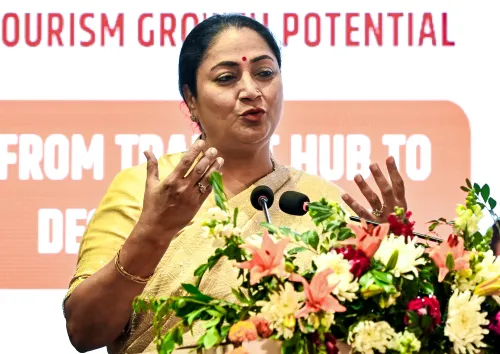
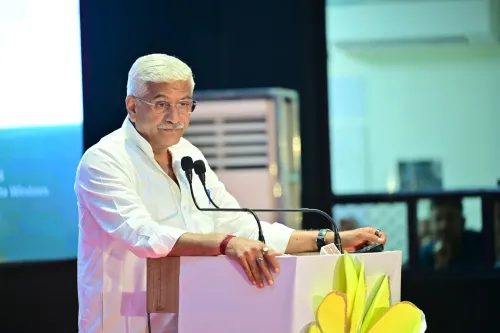
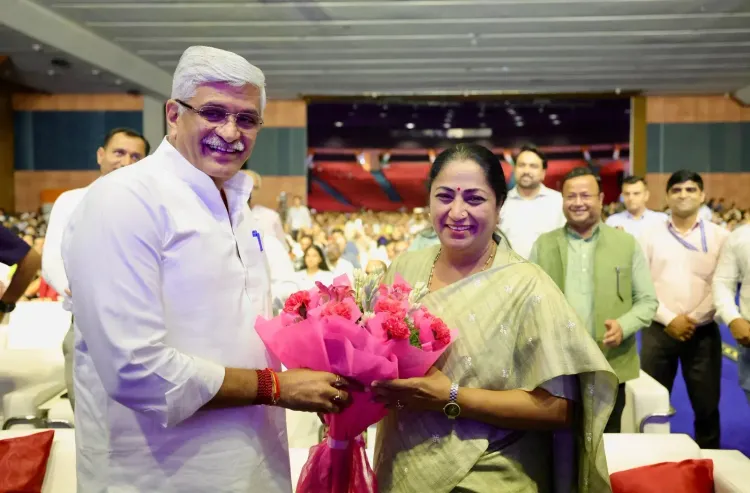
Delhi Chief Minister Rekha Gupta on 19 July 2026 reaffirmed her government's pledge to make Delhi a global tourism hub blending heritage and modernity, publicly thanking Union Culture and Tourism Minister Gajendra Singh Shekhawat for his encouragement and support.
Key Takeaways
CM Rekha Gupta publicly committed to developing Delhi as a global tourism hub on 19 July 2026 .
She thanked Union Minister Gajendra Singh Shekhawat for his good wishes and support for Delhi's tourism vision.
The stated approach is to blend cultural heritage with modernity to attract international visitors.
Delhi's tourism ambitions are backed by central schemes including Swadesh Darshan and PRASAD , both launched in 2014-15 .
The exchange signals centre-state coordination between the BJP-led Delhi government and the Union Ministry of Culture and Tourism.
Concrete project announcements and budget allocations will be the key test of whether this commitment translates into action.
Delhi Chief Minister Rekha Gupta on Sunday, 19 July 2026, reaffirmed her government's commitment to transforming Delhi into a world-class tourism destination by blending its rich cultural heritage with modern infrastructure, responding warmly to good wishes extended by Union Minister for Culture and Tourism Gajendra Singh Shekhawat.
Context
Posting on X, Chief Minister Gupta expressed gratitude to Shekhawat — referred to by his handle @gssjodhpur — writing, 'Aapki shubhkamnaon ke liye hardik aabhar' ('My heartfelt thanks for your good wishes'). She underlined that Delhi is being developed as a global tourism hub by making it a confluence of cultural heritage and modernity, and acknowledged that Shekhawat's affection and support strengthens this resolve.
The exchange signals active coordination between the Delhi state government and the Union Ministry of Culture and Tourism, a relationship that carries significant weight given Delhi's status as the national capital and one of India's most visited cities.
Policy Backdrop
Delhi's push to attract global visitors sits within a broader federal framework. The Swadesh Darshan scheme, launched in 2014-15, has supported the development of heritage-themed tourist circuits across states, with Delhi featuring as a key node. The PRASAD scheme, also initiated in 2014-15, targets integrated development of pilgrimage and heritage destinations.
These central schemes have provided a policy scaffold for state governments to layer local initiatives, particularly in cities like Delhi that house a dense concentration of UNESCO-listed monuments alongside modern commercial and civic infrastructure. Post-pandemic recovery strategies have further sharpened the focus on converting cultural assets into economic drivers.
Stakeholders and Impact
The tourism industry — spanning hospitality, transport, and the heritage conservation sector — stands to benefit most directly from any joint centre-state initiative that follows this public expression of alignment. Heritage conservation groups have long advocated for coordinated funding that balances footfall growth with monument preservation.
For ordinary Delhiites, a successful tourism strategy translates into employment generation and improved civic amenities that serve both residents and visitors. Delhi, as a city of roughly 3.3 crore residents, has an outsized stake in how its cultural landmarks are managed and marketed internationally.
What's Next
Observers will watch for concrete joint announcements — particularly potential heritage circuit expansions or dedicated funding allocations — in upcoming Union Budget sessions and state budget deliberations. The public cordiality between CM Gupta and Union Minister Shekhawat is likely to be tested by the specifics of project approvals and fund releases.
If the stated vision of positioning Delhi as a global tourism hub is to move from aspiration to policy, the next step will require formal memoranda of understanding, budgetary commitments, and measurable targets — milestones that will define whether this exchange of goodwill translates into ground-level transformation.
Point of View
But anchoring it in a direct centre-state dialogue gives it political momentum ahead of potential budget cycles. The invocation of heritage-meets-modernity is a recurring frame in India's tourism branding, and Gupta's adoption of it suggests Delhi's strategy will track the national template closely. Whether the rhetoric translates into funded, time-bound projects will determine if this marks a genuine policy inflection or remains a goodwill exchange.
NationPress
18 Oct 2026
Frequently Asked Questions
What did Delhi CM Rekha Gupta say about Delhi's tourism plans?
CM Rekha Gupta stated on 19 July 2026 that Delhi will be developed as a global tourism hub by combining cultural heritage with modernity, while thanking Union Minister Gajendra Singh Shekhawat for his support.
Who is Gajendra Singh Shekhawat and what is his role in Delhi's tourism?
Gajendra Singh Shekhawat is India's Union Minister for Culture and Tourism, responsible for national heritage conservation and tourism promotion policies that states like Delhi align with.
What central government schemes support Delhi's tourism development?
The Swadesh Darshan scheme and the PRASAD scheme, both launched in 2014-15, provide the central policy and funding framework for heritage-themed tourism development in cities including Delhi.
What does 'global tourism hub' mean for Delhi's development strategy?
It refers to positioning Delhi as an internationally competitive destination by upgrading heritage sites, improving infrastructure, and marketing the city's blend of ancient monuments and modern amenities to foreign and domestic visitors.
What should we watch for next regarding Delhi's tourism policy?
Key signals to watch include formal joint project announcements between the Delhi government and the Union Ministry, heritage circuit expansions under existing schemes, and dedicated tourism allocations in upcoming budget sessions.