DeSantis calls midterm losses 'extinction-level event', faults GOP on H-1B visas
Synopsis
Ron DeSantis didn't just call the midterms a disaster — he named H-1B visa inaction as one of the reasons Republican voters stayed home. With Indians holding 70% of H-1B approvals and DeSantis eyeing 2028, his escalating attacks on the programme are more than post-election venting: they are a preview of the immigration battleground that could define the next Republican primary.
Key Takeaways
Florida Governor Ron DeSantis described Republican midterm losses on 5 November as 'close to an extinction-level event' for the party in many parts of the country.
DeSantis faulted Senate Republicans for failing to 'shut off H-1B visas' and codify immigration executive orders.
Republicans lost control of both the House and the Senate ; Texas — including its Senate seat, governorship, and attorney general — reportedly flipped away from Republicans.
According to USCIS data, 70% of the roughly 4,06,000 H-1B petitions approved in fiscal year 2025 were for India-born beneficiaries; Indians accounted for 78% of continuing employment approvals.
Ending H-1B would require Congressional legislation — now controlled by Democrats from January , making immediate action unlikely.
DeSantis, leaving office in January , has not ruled out a 2028 presidential run and has previously called for eliminating H-1B visas entirely.
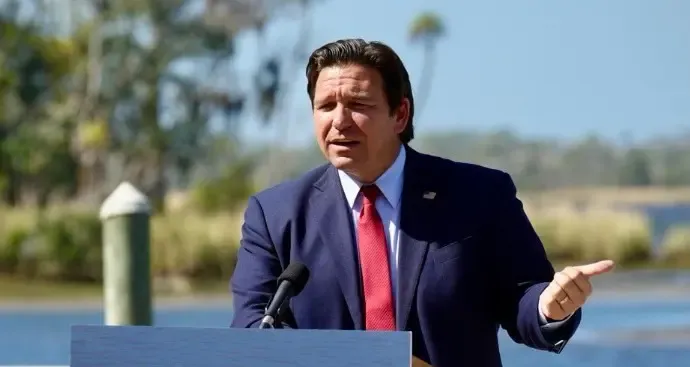
Florida Governor Ron DeSantis on Wednesday, 5 November described the Republican Party's midterm election losses as 'close to an extinction-level event' and squarely blamed Senate Republicans for failing to deliver conservative policy outcomes — including, explicitly, failing to 'shut off H-1B visas', the primary pathway through which Indian technology professionals work in the United States.
DeSantis's Charge Against Senate Republicans
Speaking at a news conference in Florida on Wednesday, DeSantis said Tuesday's results were 'probably the worst we have seen in the last 100 years' for Republicans in many parts of the country. He was unsparing in his assessment of the party's congressional wing, arguing that Republican voters stayed home out of frustration with their own legislators.
'This was not a positive view of the Democrats. This was a rejection of Republicans in Washington and Democrats just happened to be the beneficiary,' he said.
In a separate interview with Fox News host Laura Ingraham, DeSantis said he 'saw no indication that the current group of Republican senators were interested in doing that type of conservative change' when asked about the Senate filibuster. He went further, listing specific failures: 'Why haven't we done immigration, shut off H-1B visas? Why haven't we codified Trump's immigration executive orders?' He also questioned why Republicans had not 'stripped jurisdiction from the federal courts over deportation cases.'
'There's so many things that could have been done, they didn't even attempt it,' DeSantis said.
What the Midterm Results Mean for the GOP
Republicans lost control of both the House and the Senate on Tuesday. DeSantis characterised the loss as a two-sided failure: a Democratic voter turnout on one hand, and Republican voter abstention driven by disillusionment on the other.
'It's really both sides of Pennsylvania Avenue. It's not just one,' he said, referring to the White House and Congress jointly.
He singled out Texas — long described as 'the crown jewel of Republican politics' — as a particularly alarming flashpoint, noting that Republicans had lost 'a very highly publicised US Senate race' as well as the governorship, attorney general, and other statewide offices. 'If the Republican Party doesn't have Texas as an anchor, then we're not gonna be viable nationally going forward,' he warned. Republican Byron Donalds won the race to succeed DeSantis as Florida Governor, according to Fox News.
H-1B Visas: What Is at Stake for Indian Professionals
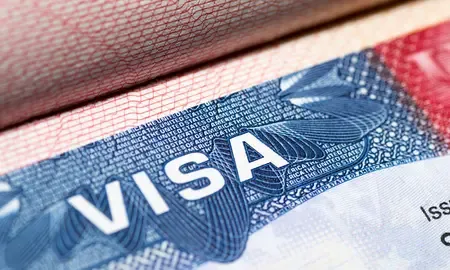
DeSantis's remarks about H-1B visas carry significant implications for Indian technology workers, who are by far the programme's largest beneficiaries. According to the latest annual report to US Congress by US Citizenship and Immigration Services (USCIS), released in April, 70% of the roughly 4,06,000 H-1B petitions approved in fiscal year 2025 were for beneficiaries born in India. China was a distant second at approximately 12%. Indians made up about 78% of approvals for continuing employment.
The H-1B programme allows US employers to hire foreign nationals in speciality occupations, primarily in the technology sector. It is capped at 65,000 new visas annually, with an additional 20,000 reserved for holders of US advanced degrees. Eliminating the programme would require an act of Congress — which Democrats are set to control from January, making near-term legislative action against H-1B effectively impossible.
DeSantis's 2028 Ambitions in the Background
DeSantis, who leaves office in January and has not ruled out a 2028 presidential run, has made H-1B a recurring talking point. At an event near Lakeland on 14 September, he had said: 'I think we should eliminate H-1B visas in the United States, to be quite frank.' His renewed focus on the issue following the midterm rout signals it could feature prominently in any future campaign messaging.
Notably, this comes amid broader Republican soul-searching over how to appeal to working-class voters who reportedly feel displaced by high-skilled immigration in the technology sector. How the party reconciles that impulse with the interests of American tech companies — heavy users of the H-1B programme — remains an unresolved internal tension as the 2028 primary cycle approaches.
Point of View
Given Big Tech lobbying. DeSantis is positioning himself to the right of that accommodation for 2028. With Democrats now controlling Congress, actual H-1B legislation is off the table for at least two years — but the rhetorical escalation will keep the community on edge, and that anxiety is itself politically useful to him.
NationPress
5 Nov 2026
Frequently Asked Questions
What did Ron DeSantis say about H-1B visas after the midterm results?
DeSantis said Senate Republicans had failed to 'shut off H-1B visas' and criticised the party for not codifying immigration executive orders. He listed these failures as evidence that Republican legislators had not attempted meaningful conservative policy change, contributing to voter frustration and the midterm losses.
How significant is the H-1B programme for Indians?
Indians are by far the largest beneficiaries of the H-1B programme. According to USCIS data released in April, 70% of roughly 4,06,000 H-1B petitions approved in fiscal year 2025 were for India-born beneficiaries, with Indians also making up 78% of approvals for continuing employment.
Could Congress actually eliminate the H-1B visa programme?
Eliminating H-1B would require an act of Congress. Democrats are set to control both chambers from January 2027, making any anti-H-1B legislation highly unlikely in the near term. The programme is capped at 65,000 new visas per year plus 20,000 for holders of US advanced degrees.
How bad were the Republican midterm losses according to DeSantis?
DeSantis called the results 'close to an extinction-level event for Republicans in many parts of the country, as we have seen probably in the last 100 years.' Republicans lost control of both the House and Senate; DeSantis specifically flagged Texas, where the party reportedly lost the Senate seat, governorship, and attorney general race.
Is DeSantis running for president in 2028?
DeSantis has not ruled out a 2028 presidential run. He leaves office as Florida Governor in January 2027 and has repeatedly targeted H-1B visas as a campaign-ready issue, saying as recently as September that he would 'eliminate H-1B visas in the United States, to be quite frank.'