Is Florida Really Banning H-1B Visas at State Universities?
Synopsis
In a bold move, Florida Governor Ron DeSantis has ordered the cessation of H-1B visa use in state universities, asserting that local residents should take precedence for job openings. This controversial decision aims to prioritize Florida citizens for employment opportunities, raising questions about the need for specialized skills from abroad.
Key Takeaways
Florida Governor Ron DeSantis announced a ban on H-1B visas in state universities.
The decision aims to prioritize local residents for job opportunities.
H-1B visa holders occupy various roles within state institutions.
New guidelines exempt certain workers from the $100,000 application fee.
The White House supports prioritizing American workers.
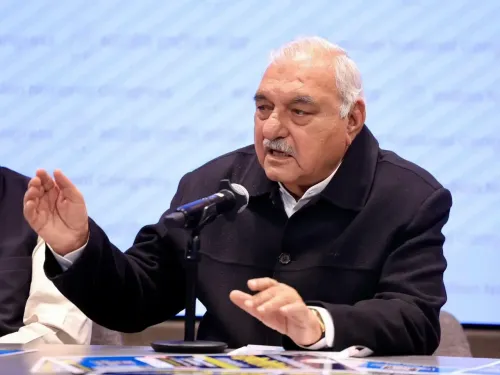
Washington, Oct 29 (NationPress) Florida Governor Ron DeSantis declared on Wednesday that he is instructing the state’s Board of Governors to terminate the usage of H-1B visas within state universities, asserting that positions currently occupied by visa holders should be filled by Florida residents.
During a press conference at the University of South Florida in Tampa, DeSantis emphasized that this move is intended to guarantee that Florida citizens are “first in line for job opportunities.”
He stated that state universities should prioritize hiring local candidates instead of international workers who are brought in through the H-1B visa program, which permits U.S. institutions to employ foreign nationals in specialized roles.
DeSantis noted that the state’s review uncovered university employees on H-1B visas in various positions, including assistant professors, coordinators, analysts, and staff involved in athletics and communications.
He questioned whether these roles necessitated specialized skills that are unavailable within the state workforce.
“Why are we bringing individuals in to evaluate our accreditation on an H-1B visa? Can’t our own people handle that?” asserted DeSantis, adding that this practice amounts to “cheap labor” and urging university leaders to reassess their hiring methodologies.
The governor revealed that the state’s analysis identified H-1B employees from multiple countries, including China, Spain, Poland, the United Kingdom, Canada, and Albania.
He highlighted examples such as a bio-analytical core director, a psychologist, a communications manager, and a coastal research specialist as professionals hired through the program.
These changes come shortly after the US Department of Homeland Security released new guidelines concerning the H-1B $100,000 application fee, offering a series of exemptions.
Under the new rules, workers transitioning to H-1B visa status from other categories, like F-1 student status, will not have to pay the $100,000 application fee.
Furthermore, H-1B workers applying for amendments, changes in status, or extensions within the United States will be exempt from this hefty fee. Current H-1B visa holders will also not face restrictions on entering or leaving the United States.
Last week, the White House reiterated that President Donald Trump’s focus in reforming the H-1B visa program is to prioritize “American workers” and has vowed to combat lawsuits against the administration’s strict measures.
The administration’s H-1B visa policies have faced legal challenges, including two major lawsuits, one filed by the US Chamber of Commerce, the largest business organization in the country.
Point of View
The decision by Florida Governor Ron DeSantis to ban H-1B visas at state universities raises crucial questions about workforce development and the balance between local job seekers and skilled international professionals. While the emphasis on prioritizing Florida residents resonates with many, it also challenges the state's ability to attract diverse talent essential for progress.
NationPress
1 Oct 2026
Frequently Asked Questions
Why is Florida banning H-1B visas at state universities?
Florida Governor Ron DeSantis aims to prioritize local residents for job opportunities, claiming that positions currently held by H-1B visa holders should be filled by Florida citizens.
What roles are affected by the H-1B visa ban?
Positions held by H-1B visa holders include assistant professors, coordinators, analysts, and staff in athletics and communications.
What are the new guidelines regarding H-1B visa fees?
The new guidelines state that workers transitioning to H-1B status from other visa categories will not need to pay the $100,000 application fee.
What is the stance of the White House on this matter?
The White House has reiterated that President Trump's priority in reforming the H-1B visa program is to put 'American workers first.'
Are there any legal challenges to the H-1B visa policy?
Yes, the administration's H-1B visa policy has faced legal challenges, including lawsuits from the US Chamber of Commerce.