Is Tarique Rahman Above the Law?
Synopsis
The return of Tarique Rahman to Bangladesh has ignited a firestorm of debate regarding his alleged privileges under the interim government. The Awami League's accusations of legal violations raise pressing questions about the integrity of the law in Bangladesh. Is Rahman truly above the law, or are there deeper issues at play?
Key Takeaways
Tarique Rahman returned to Bangladesh after 17 years in exile.
The Awami League claims he is receiving special privileges under the interim government.
Concerns have been raised about legal compliance regarding his voter registration.
The situation reflects broader questions about the equality of the law in Bangladesh.
Public trust in the legal system is at risk without transparency.
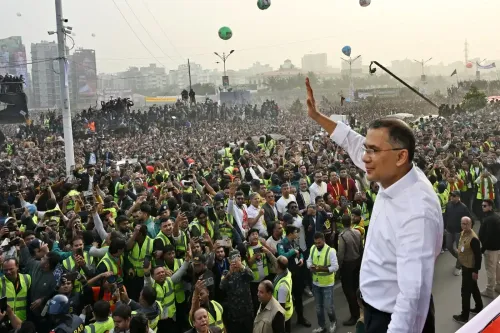
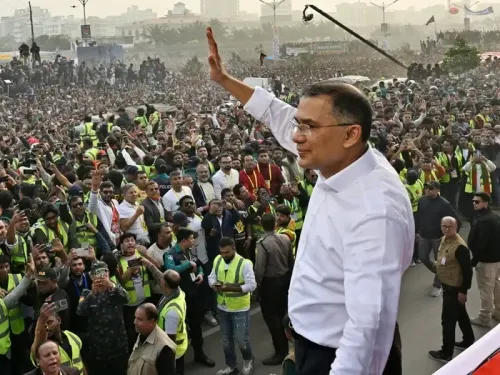
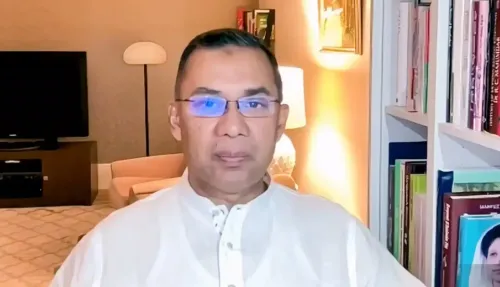
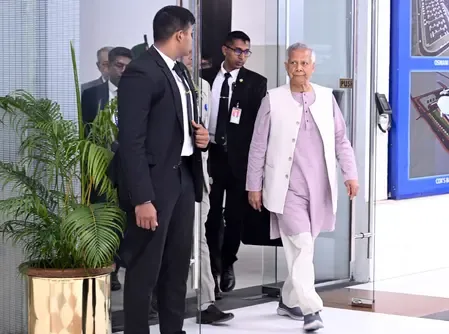
Dhaka, Dec 27 (NationPress) Following the return of Bangladesh National Party's (BNP) acting chairman Tarique Rahman to the tumultuous nation after a 17-year self-imposed exile, the Awami League expressed its dismay on Saturday over what it termed as "ongoing privileges" granted to him by the Muhammad Yunus-led interim government, labeling these actions as "legal violations".
Rahman's arrival on Thursday coincides with the Election Commission's announcement on December 11 of the upcoming 13th national parliamentary elections and a referendum regarding the July Charter, scheduled for February 12 next year.
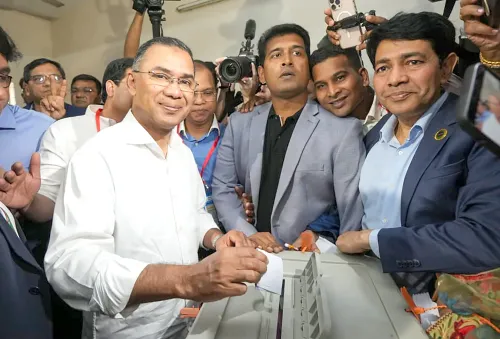
The BNP leader is also anticipated to finalize his voter registration in Bangladesh on Saturday.
The Awami League raised questions about Rahman's status, stating, "Once a convicted individual, Tarique Rahman is now receiving privilege after privilege, leading to serious doubts among the public. Is the law, which is stringent and uncompromising for ordinary citizens, somehow lax in his case? Or does he exist above the law?"
They noted that the moment Rahman entered Bangladesh, several irregularities became apparent. For instance, he neglected to pay tolls at designated locations—a violation that would typically attract punishment for regular citizens—yet it went unnoticed.
The party pointed out that under Bangladeshi legislation, new voter registration is prohibited once the election schedule is announced, raising concerns about Rahman's registration while the schedule was ongoing.
Furthermore, they questioned the legitimacy of voter registration processes conducted on a Saturday, which is a government holiday, and sought clarity on how the law was upheld and under whose authority it was executed.
The Awami League emphasized that these incidents are not isolated but rather part of a broader trend, raising concerns about whether Rahman is subject to different legal standards. If this is the case, they asked, what happened to the constitutional principle stating that "the law is equal for all"?
"Crime is crime, regardless of its scale. If minor offenses are permitted through the exertion of power, it is inevitable that more serious crimes will follow. This special treatment undermines not just one individual but the entire integrity of the state system," the party remarked.
Reiterating that the public is questioning the equality of the law in Bangladesh, the Awami League warned that without clear resolutions, public faith in the rule of law may further deteriorate.
Point of View
This situation underlines the complexities within Bangladesh's political landscape. The assertions made by the Awami League regarding Tarique Rahman's privileges raise significant questions about the application of law and governance in the country. It is crucial to approach this matter with impartiality, ensuring transparency and accountability in our political systems.
NationPress
20 Oct 2026
Frequently Asked Questions
What privileges are being referred to regarding Tarique Rahman?
The Awami League alleges that Tarique Rahman has been granted several privileges that violate legal standards, particularly concerning his voter registration and other legal proceedings.
Why is the timing of Rahman's return significant?
His return coincides with the announcement of upcoming national elections in February, raising questions about the political motivations behind his privileges.
What does the law say about voter registration during elections?
Bangladeshi law prohibits new voter registration once an election schedule is announced, casting doubt on Rahman's registration process.