Will the Verdict in Dileep's Case Spark Political Turmoil Ahead of Local Body Elections?

Synopsis
As Kerala approaches its local body elections, the imminent verdict in the Dileep actress abduction case raises questions about its timing and potential political fallout. With implications for the ruling party and the opposition, this case's outcome could shape the political landscape. Will the court's decision come before the polls, or is a delay expected?
Key Takeaways
Dileep is the eighth accused in a high-profile actress abduction case.
The verdict timing coincides with local body elections in Kerala.
A conviction could benefit the ruling CPI(M)-led Left Front politically.
An acquittal may empower the opposition Congress-led UDF to challenge the government's law enforcement credibility.
The court's decision could sway public opinion in a politically charged environment.
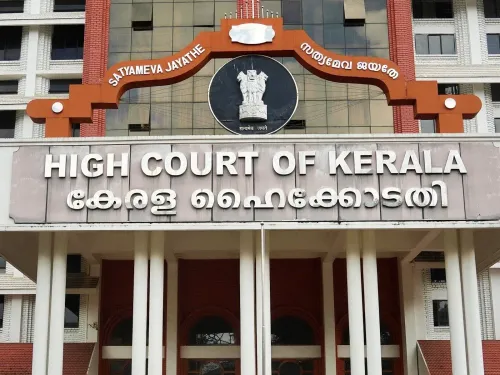
Kochi, December 6 (NationPress) The spotlight is on the Kochi trial court, which is set to announce its ruling on the highly publicized 2017 actress abduction case, where renowned Malayalam actor Dileep is identified as the eighth accused.
With local body elections in Kerala approaching, scheduled for December 9 and 11, a pivotal question arises: will the verdict be delivered as planned, or will it be postponed until after the elections?
Dileep, one of the most prominent figures in the Malayalam film industry, spent nearly three months in custody back in 2017 before being granted bail.
The case has undergone extensive legal examination, sparked public discussions, revealed divisions within the film community, and raised accusations of undue influence and interference.
Fast forward to eight years later, the impending verdict—whenever it is announced—carries significant political ramifications.
If the judgment is unfavorable to Dileep and he faces conviction, the ruling CPI(M)-led Left Front may immediately assert that this outcome underscores the government's dedication to upholding the rule of law.
The Left has consistently maintained that even a high-profile accused is not above the law, asserting that only under its administration could such an investigation proceed without bias.
This narrative, surfacing just days before the elections, could provide a political advantage for the current government.
Conversely, if Dileep is acquitted, the Opposition Congress-led UDF is poised to capitalize on this outcome.
For nearly a decade, the UDF has argued that law enforcement in the state is inconsistent and politically motivated.
An acquittal could be framed as evidence that the government's public stance on women's safety and impartial law enforcement does not align with courtroom realities, particularly in a case that has profoundly impacted both the film industry and public sentiment.
Given the political sensitivity, the timing of the verdict is crucial.
While courts are not obligated to consider political timelines, there are instances where delivering a significant ruling during an active election period could unintentionally sway voter opinions.
With high stakes for the government, the Opposition, and Dileep himself, the anticipation surrounding Monday's court listing has ignited fervent speculation.
For now, the critical question lingers: will the court issue its judgment as scheduled, or will the verdict be held until after the polls?
Regardless, all eyes will be on Kerala.
Point of View
I recognize the complexities surrounding the Dileep case and its intersection with the upcoming local body elections. The potential repercussions of the verdict are profound, reflecting broader societal issues of governance, justice, and public trust. It's crucial for us to approach this story with impartiality, ensuring that we deliver accurate and insightful coverage as events unfold.
NationPress
30 Sept 2026
Frequently Asked Questions
What is the Dileep actress abduction case?
The Dileep actress abduction case involves the abduction and assault of a prominent actress in Kerala in 2017, where Dileep is an accused in the case.
When will the verdict be announced?
The verdict is scheduled to be announced on December 6, 2023, but there is speculation about possible delays due to the upcoming elections.
What are the political implications of the verdict?
The verdict could significantly impact the political landscape in Kerala, influencing voter sentiment and the narratives of both the ruling party and the opposition.