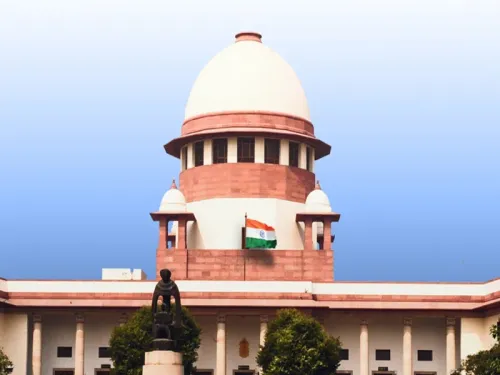
Should Doctors Be Exempt from the Consumer Protection Act?

Synopsis
The Supreme Court is set to explore a PIL proposing that medical professionals be excluded from the Consumer Protection Act. This could reshape the legal landscape for healthcare providers and restore the sanctity of the patient-doctor relationship. How will this decision impact medical practice in India?
Key Takeaways
The Supreme Court is reviewing a PIL regarding the Consumer Protection Act's applicability to doctors.
The petition claims that the Act harms the patient-doctor trust.
It cites the need for re-evaluating previous Supreme Court rulings.
Personal accounts highlight the emotional toll of legal challenges on healthcare professionals.
The outcome could reshape medical practice in India.
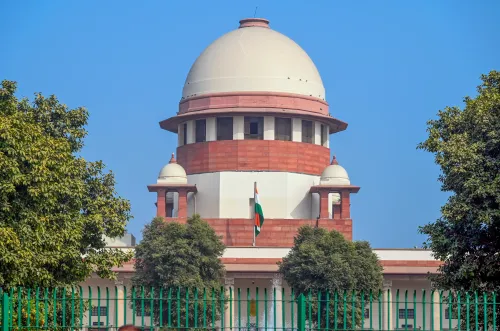
New Delhi, Feb 10 (NationPress) The Supreme Court has agreed to review a public interest litigation (PIL) that argues medical professionals should be exempt from the Consumer Protection Act. A Bench led by Chief Justice of India (CJI) Surya Kant, alongside Justices Joymalya Bagchi and N.V. Anjaria, has issued notice to the Union Ministries of Health and Family Welfare and Consumer Affairs, as well as the National Medical Commission, regarding this matter.
This PIL, submitted by the Association of Healthcare Providers (India) and Dr. Alexander Thomas under Article 32 of the Constitution, seeks a writ of mandamus to exclude medical professionals with MBBS or higher qualifications from being classified as “service” under Section 2(42) of the Consumer Protection Act (CPA), 2019.
It argues that placing medical professionals under consumer law has harmed the patient-doctor relationship and has led to defensive medical practices.
The petition heavily references the Supreme Court’s ruling in the Bar of Indian Lawyers vs. D.K. Gandhi (2024) case. In that decision, the apex court indicated that the legislature did not intend for professionals to be included under consumer protection laws, which were designed to shield consumers from unfair trade practices and unethical business conduct.
Highlighting the Supreme Court's previous judgment, the plea notes that the recent ruling suggests the earlier 1995 decision in Indian Medical Association v. V.P. Shantha, which included medical services under consumer law, “merits reconsideration by a larger Bench.”
It points out that while advocates have been exempted from the CPA, doctors remain bound by the 1995 ruling, despite the evolving legal context.
The petition includes the personal account of Dr. Thomas, a senior medical professional who faced a consumer forum case in the mid-1990s regarding the treatment of a road accident victim. Although the complaint was dismissed, the lengthy litigation had a “deeply demoralizing” effect, almost driving him away from his profession.
Arguing that the Consumer Protection Act fails to provide timely justice for patients, the petition states that “the significant and ongoing backlog of cases and prolonged delays, often lasting years,” undermines the purpose of the legislation.
“The patient-doctor relationship holds a unique and sacred place in society, marked by mutual trust, empathy, and compassion. However, since the medical profession's inclusion under the Consumer Protection Act, this relationship has unfortunately become transactional,” the PIL asserts.
It further argues that the fear of litigation has led to “defensive medical practices,” forcing doctors to conduct unnecessary tests and procedures primarily for legal protection, resulting in higher healthcare costs without added benefits for patients.
“Keeping doctors under the Consumer Protection Act contradicts the unique and sensitive nature of the patient-doctor relationship and does not serve the interests of patients or society,” the petition claims.
Senior advocate Malvika Trivedi, along with advocates Sanyam Khetarpal, Vijay Kasana, Nitesh Goyal, and Lisa Sankrit, represented the petitioners before the Supreme Court.
Point of View
It's crucial to acknowledge the delicate balance between patient rights and the professional integrity of healthcare providers. This PIL raises significant questions about consumer protection and the implications for medical professionals. Our coverage will aim to provide an unbiased perspective that reflects the complexities of this issue while aligning with the public interest.
NationPress
12 Oct 2026
Frequently Asked Questions
What is the main argument of the PIL?
The PIL argues that medical professionals should be exempt from the Consumer Protection Act, claiming that its inclusion undermines the patient-doctor relationship and leads to defensive medical practices.
What does the petition suggest about the impact of the CPA on doctors?
The petition suggests that the CPA has created a transactional nature in the patient-doctor relationship and has led to unnecessary tests and procedures due to the fear of litigation.
What does the Supreme Court's previous ruling indicate?
The previous ruling noted that the legislature did not intend to include professionals under consumer protection laws, suggesting that the 1995 decision may need to be re-evaluated.
What are the potential consequences of this case?
If the Supreme Court rules in favor of the PIL, it could significantly change the legal framework governing healthcare providers and restore trust in the patient-doctor relationship.