IMF Confirms US Dollar's Safe-Haven Status Amid Global Uncertainty
Synopsis
The IMF reinforces the US dollar's status as a global safe-haven currency, highlighting its recent recovery amidst rising tensions in the Middle East. Central banks are urged to remain vigilant in managing inflation risks while navigating complex economic challenges.
Key Takeaways
The US dollar continues to be a safe-haven asset during global uncertainties.
Central banks are on high alert due to inflation risks linked to the Middle East conflict.
Recent market trends show a return to traditional patterns.
Concerns about the dollar's dominance have eased, according to the IMF.
Central banks must tread carefully to avoid entrenched inflation.
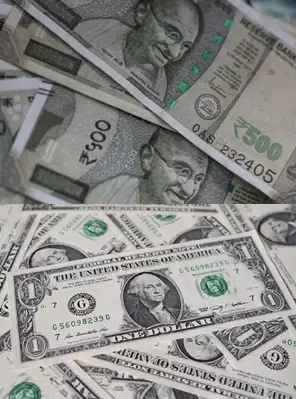
Washington, April 14 (NationPress) The US dollar has successfully maintained its position as a global safe-haven currency despite recent fluctuations, as indicated by the International Monetary Fund (IMF). This comes at a time when central banks around the world are on high alert to manage inflation risks prompted by the ongoing Middle East conflict.
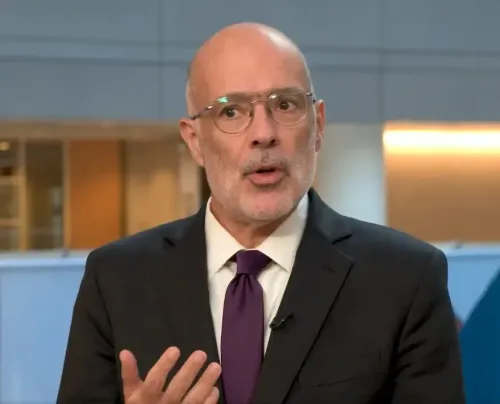
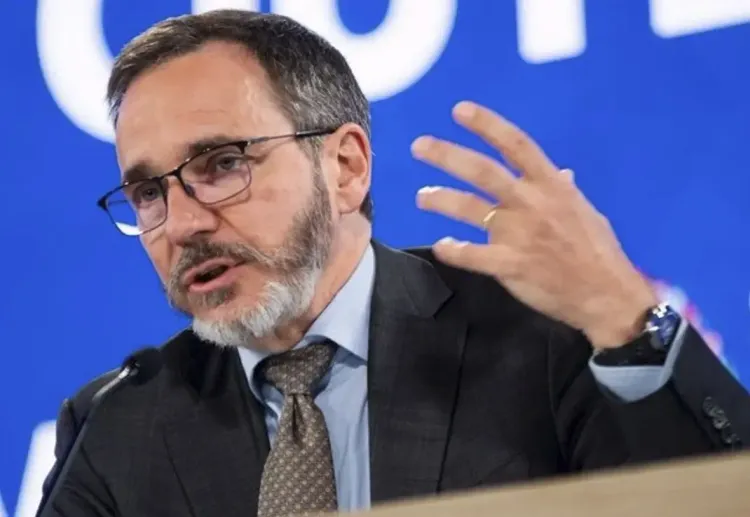
During a press briefing with reporters from India, Japan, the UAE, the Netherlands, and Chile, IMF Chief Economist Pierre-Olivier Gourinchas noted that recent market trends are reflecting a return to more conventional patterns following a period of uncertainty.
"In this significant shock… we’ve observed movements that align more with the traditional role of the dollar as a safe asset," he remarked.
Last year, the dollar's performance raised eyebrows as it weakened amidst growing global uncertainty and escalating trade tensions.
"We noticed the dollar depreciating… which is not what you would typically expect," Gourinchas explained, highlighting that investors had not flocked to US treasuries as usually happens during times of crisis.
However, the latest events associated with the Middle East situation have reversed this trend.
"Since the onset of hostilities… the dollar has strengthened," he stated, adding that capital has been exiting emerging markets.
He pointed out that many emerging market currencies are under significant strain. "We’ve witnessed currencies… depreciating substantially," he noted.
While U.S. Treasury yields have seen an uptick, Gourinchas mentioned that this rise has been relatively moderate compared to other major economies. "They’ve increased less than the yields in other countries," he stated.
Overall, he expressed that concerns regarding the dollar's declining dominance have subsided. "I don’t believe there are serious doubts about the… position of the dollar in the international monetary framework," he added.
Simultaneously, central banks are confronted with a complicated policy landscape as they tackle the inflationary impact of surging energy prices.
Gourinchas described the current scenario as a "negative supply shock" that is simultaneously driving up inflation while hindering economic growth.
In such circumstances, he emphasized that central banks need to proceed with caution. "If we are anticipating a short-lived shock… you can afford to hold off and not take drastic measures," he mentioned.
Nonetheless, there is a risk that inflation could become entrenched through rising wages and widespread price hikes.
"The concern… is that… it evolves into a broader inflation issue, where all prices and wages begin to rise," he warned.
If inflation expectations begin to shift, central banks may need to take decisive action. "They must communicate very clearly… we’re going to apply the brakes… this will be challenging," he cautioned.
Gourinchas stressed that monetary policy cannot directly influence energy price shocks. "Increasing your policy rate won’t alter the price of oil," he noted.
Instead, central banks should concentrate on averting second-round effects, particularly the danger of a wage-price spiral.
"They need to be extremely vigilant… monitoring for warning signs," he stated.
The IMF’s analysis comes amid increased volatility in global financial markets following heightened tensions in the Middle East, which have disrupted energy supplies and escalated commodity prices.
Point of View
I see the IMF's recent statements as a reaffirmation of the US dollar's critical role in the global economy. In light of ongoing geopolitical tensions, it's essential for central banks to navigate these challenges carefully to maintain stability in financial markets.
NationPress
26 Sept 2026
Frequently Asked Questions
What is the significance of the dollar's safe-haven status?
The dollar's safe-haven status indicates that it remains a reliable asset during times of economic uncertainty, attracting investors seeking stability.
How have recent Middle East tensions affected the dollar?
Recent tensions in the Middle East have led to an appreciation of the dollar as capital flows out of emerging markets, reinforcing its status as a safe asset.
What are the risks of inflation becoming entrenched?
If inflation expectations shift, it could lead to a wage-price spiral, making it difficult for central banks to control rising prices.
How should central banks respond to rising energy prices?
Central banks need to remain vigilant and focus on preventing second-round inflation effects while carefully managing their monetary policies.
What did the IMF report about emerging market currencies?
The IMF noted that many emerging market currencies are under pressure, with significant depreciation observed in some cases.