Is the Estimation of Riverine Dolphins Starting in UP's Bijnor?
Synopsis
On January 17, 2023, the Union Ministry of Environment launched the second rangewide dolphin estimation under Project Dolphin in Bijnor, Uttar Pradesh. This initiative aims to enhance dolphin conservation through scientific data collection and habitat assessment.
Key Takeaways
The second rangewide dolphin estimation has commenced in Bijnor, Uttar Pradesh.
Project Dolphin aims to conserve riverine and estuarine dolphins.
Collaboration with multiple organizations enhances conservation efforts.
The survey will cover major rivers and assess the status of various dolphin species.
Data collected will inform future conservation strategies.
New Delhi, Jan 17 (NationPress) In a significant move towards dolphin conservation, the Union Ministry of Environment, Forest and Climate Change has initiated the second rangewide estimation of both riverine and estuarine dolphins under Project Dolphin, starting from Bijnor in Uttar Pradesh, as confirmed by an official on Saturday.
This dolphin population data release coincides with the anticipated results from the first round of population estimation presented by Prime Minister Narendra Modi during the National Board for Wildlife (NBWL) meeting at Gir in March of the previous year, the official noted.
Union Environment Minister Bhupendra Yadav officially launched the second phase of this nationwide dolphin population estimation and its protocols in Dehradun during last wildlife week.
This initiative is coordinated by the Wildlife Institute of India (WII) in Dehradun, collaborating with State Forest Departments and partner conservation organizations such as WWF India, Aaranyak, and Wildlife Trust of India.
A regional training workshop was conducted for forest staff from 13 districts of Uttar Pradesh on Friday in Bijnor, with further training sessions planned for every 10–15 districts to maintain standardized field capabilities as the survey progresses.
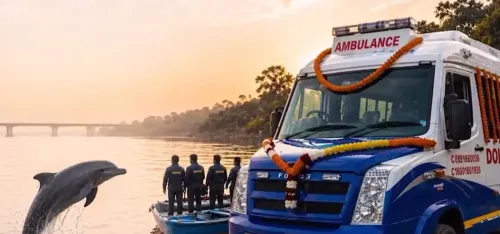
The survey has commenced with a team of 26 researchers operating three boats, collecting ecological and habitat parameters while utilizing advanced technologies like hydrophones for underwater acoustic monitoring, according to a statement.
The first phase of the survey will span the main stem of the Ganga from Bijnor to Ganga Sagar, as well as the Indus River.
The second phase will extend to the Brahmaputra, the tributaries of the Ganga, the Sundarbans, and Odisha.
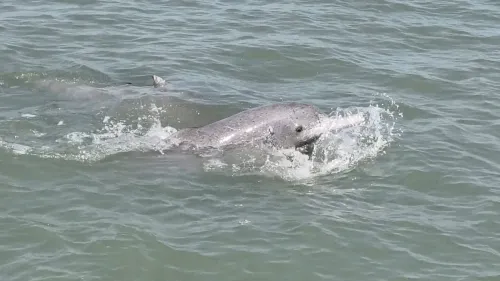
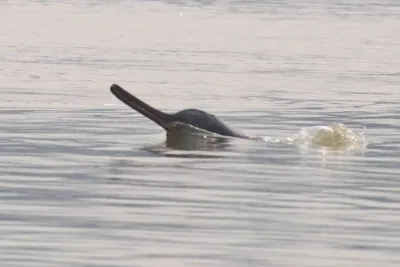
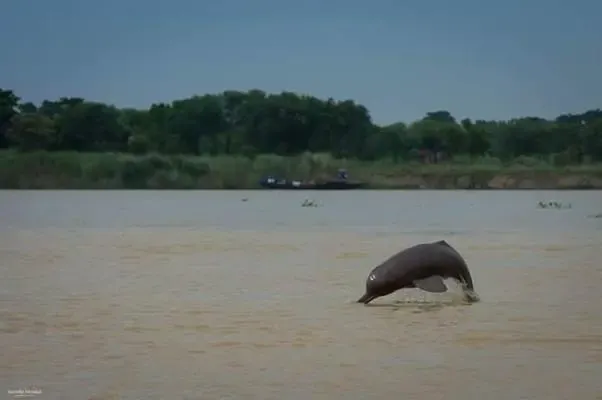
Besides the Ganges River Dolphin, the survey will evaluate the status of the Indus River Dolphin and Irrawaddy Dolphins, along with their habitat conditions, threats, and conservation-priority fauna, as stated.
This initiative aims to produce robust scientific data to aid in evidence-based conservation planning and policy actions for India's river ecosystems.
The previous nationwide survey (2021–23) estimated around 6,327 riverine dolphins across India, including Ganges River Dolphins in the Ganga, Yamuna, Chambal, Gandak, Ghaghara, Kosi, Mahananda, and Brahmaputra systems, along with a small population of Indus River Dolphins in the Beas, the statement highlighted.
Uttar Pradesh and Bihar reported the highest numbers of dolphins, followed by West Bengal and Assam, underscoring the critical significance of the Gangetic basin for the long-term conservation of dolphins.
The ongoing survey adopts the same standardized methodology as the prior exercise, but it will also encompass new areas and operational zones to include the estimation of the new species, Irrawaddy dolphin, in the Sundarbans and Odisha.
This expanded coverage will facilitate updated population estimates, assess threats and habitat conditions, and support better conservation strategies under Project Dolphin, the statement concluded.
Point of View
This initiative reflects the government's commitment to environmental conservation and biodiversity. The systematic approach to dolphin estimation signifies a proactive step towards protecting these aquatic mammals. The collaboration with various organizations underscores the importance of a united effort in safeguarding our natural heritage.
NationPress
1 Oct 2026
Frequently Asked Questions
What is Project Dolphin?
Project Dolphin is an initiative by the Union Ministry of Environment aimed at conserving dolphin populations in India through systematic estimation and habitat assessment.
Where is the dolphin estimation taking place?
The dolphin estimation is currently taking place in Bijnor, Uttar Pradesh, and will extend to various rivers across India.
What dolphins are being studied?
The survey focuses on the Ganges River Dolphin, Indus River Dolphin, and Irrawaddy Dolphins, among others.
Who is coordinating this initiative?
The initiative is coordinated by the Wildlife Institute of India in collaboration with State Forest Departments and conservation partners like WWF India.
What is the expected outcome of this survey?
The survey aims to generate scientific data that will support effective conservation planning and policy decisions for India's river ecosystems.