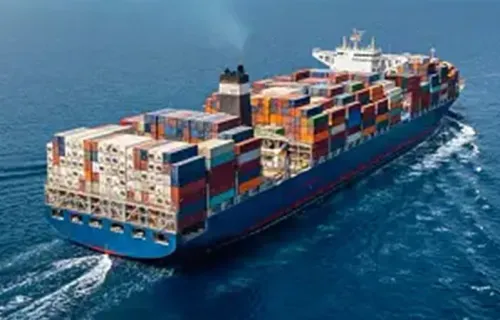
EU CBAM reshapes trade: India must build carbon markets, support MSMEs

Synopsis
The EU's Carbon Border Adjustment Mechanism is no longer a distant policy concern for India — it is already squeezing steel and aluminium exports. With the Indian Carbon Market set to go live by October 2026 and MSMEs largely unprepared, the PHDCCI event made clear that India's window to build credible carbon infrastructure is short, and the cost of inaction is measured in lost market access.
Key Takeaways
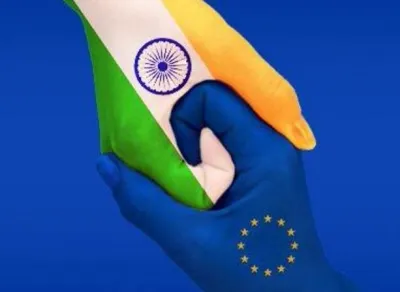
The EU's CBAM now makes carbon competitiveness a permanent condition for accessing the EU market, India's third-largest trading partner with bilateral trade of nearly €118 billion .
Sectors most at risk include iron and steel , aluminium , cement , and fertilisers ; steel and aluminium exports to Europe are already under pressure.
India is negotiating with the EU and UK to secure recognition of its Carbon Credit Trading Scheme (CCTS) and Indian carbon verification agencies.
Trading under the Indian Carbon Market is expected to begin by October 2026 , with draft steel-sector compliance targets released for public consultation.
MSMEs need targeted support through affordable financing, simplified reporting, and cleaner energy access to meet CBAM compliance costs.
Experts called for strengthening Measurement, Reporting and Verification (MRV) infrastructure to ensure India's long-term global trade competitiveness.
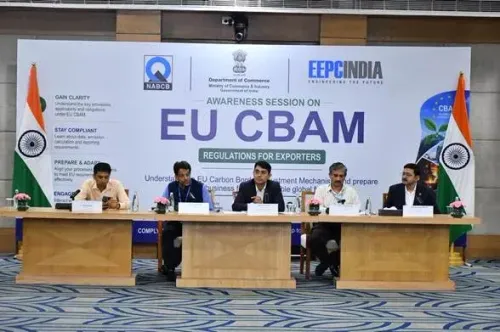
India must urgently strengthen its domestic carbon markets, scale green finance, and help micro, small and medium enterprises (MSMEs) absorb compliance costs as the European Union's Carbon Border Adjustment Mechanism (CBAM) fundamentally reshapes the country's export competitiveness, industry experts said on Friday, 3 July. The warning came at a high-level event organised by the PHD Chamber of Commerce and Industry (PHDCCI) in New Delhi, which brought together senior government officials, industry leaders, and policy experts to assess CBAM readiness and chart a course for industrial decarbonisation.
Why CBAM Is a Structural Threat to Indian Exports
Dr Jatinder Singh, Deputy Secretary General of PHDCCI, underscored that the EU's CBAM has effectively made carbon competitiveness a permanent condition of global market access — not a transitional hurdle. He pointed out that the European Union is India's third-largest trading partner, with bilateral goods trade valued at nearly €118 billion. Sectors most exposed include iron and steel, aluminium, cement, and fertilisers — all of which face carbon-linked tariffs under the mechanism. India's steel and aluminium exports to Europe have already come under pressure, signalling that the window for preparation is narrowing.
Government's Diplomatic and Regulatory Push
Experts at the event noted that the Indian government is actively engaging with both the European Union and the United Kingdom to secure formal recognition of India's Carbon Credit Trading Scheme (CCTS). The diplomatic effort also seeks acceptance of Indian-accredited carbon verification agencies for CBAM compliance purposes, and the exploration of comparative benchmarking mechanisms that better reflect India's distinct energy profile. This multilateral engagement signals that New Delhi views CBAM not merely as a trade irritant but as a long-term structural issue requiring institutional solutions.
Indian Carbon Market Set to Launch by October 2026
Saurabh Diddi, Director at the Bureau of Energy Efficiency (BEE) under the Ministry of Power, announced that draft compliance targets for the steel sector under the CCTS have been released for public consultation. Trading under the Indian Carbon Market is expected to commence by October 2026, creating a domestic pricing ecosystem designed to support industrial decarbonisation and reduce the compliance burden on exporters. This timeline is significant — it gives Indian industry roughly a year to align internal systems before carbon pricing becomes a live market reality.
MSMEs Face the Steepest Climb
Satyaki Rastogi, Chief General Manager at SIDBI, stressed the need for coordinated policy interventions, including common testing and certification facilities, awareness and capacity-building programmes, and affordable financing solutions to ease the green transition for smaller firms. Dr Singh echoed this concern, calling for simplified reporting mechanisms, cleaner energy access, and affordable verification infrastructure specifically tailored for MSMEs. Without targeted support, critics argue, smaller exporters risk being priced out of European markets entirely as CBAM tariffs scale up.
The Road Ahead: MRV, Pricing, and Institutional Capacity
Experts collectively called for accelerating India's carbon pricing framework, building robust institutional capacity for Measurement, Reporting and Verification (MRV), and aligning industrial decarbonisation timelines with CBAM's phased rollout. This comes amid a broader global shift where carbon border measures are increasingly being adopted — the EU's mechanism is widely seen as a template that other major economies may follow. India's ability to build credible, internationally recognised carbon infrastructure in the next 12 to 18 months will be decisive for its long-term trade competitiveness.
Point of View
But the pace of domestic preparation has not matched the urgency of the external pressure. The Indian Carbon Market's October 2026 launch is encouraging, but a trading platform without deep MSME integration or internationally recognised MRV infrastructure is only half a solution. What is conspicuously absent from the current discourse is a hard-nosed sectoral transition plan — one that maps specific decarbonisation timelines to specific export volumes at risk. The EU is not waiting, and neither are India's competitors in Southeast Asia who are moving faster on green credentialling. India risks building a carbon market that is technically live but commercially irrelevant to CBAM compliance if institutional capacity does not scale in parallel.
NationPress
2 Oct 2026
Frequently Asked Questions
What is the EU Carbon Border Adjustment Mechanism (CBAM) and how does it affect India?
The EU CBAM is a carbon tariff applied to imports from countries without equivalent carbon pricing, targeting sectors like steel, aluminium, cement, and fertilisers. It directly affects India because the EU is India's third-largest trading partner with bilateral goods trade of nearly €118 billion, and Indian exporters in these sectors now face additional carbon-linked costs.
When will India's Carbon Market begin trading?
Trading under the Indian Carbon Market is expected to commence by October 2026, according to Saurabh Diddi, Director at the Bureau of Energy Efficiency. Draft compliance targets for the steel sector under the Carbon Credit Trading Scheme have already been released for public consultation.
Why are MSMEs particularly vulnerable to CBAM compliance requirements?
MSMEs typically lack the financial resources, technical capacity, and institutional support needed to monitor emissions, obtain carbon verification, and meet reporting standards demanded by CBAM. Experts at the PHDCCI event called for affordable financing, common testing facilities, and simplified reporting mechanisms specifically designed for smaller firms.
What is India doing diplomatically to address CBAM?
India is actively engaging with the European Union and the United Kingdom to secure recognition of its Carbon Credit Trading Scheme (CCTS), gain acceptance of Indian-accredited carbon verification agencies for CBAM compliance, and explore benchmarking mechanisms that reflect India's energy profile.
Which Indian export sectors face the greatest risk from CBAM?
Iron and steel, aluminium, cement, and fertilisers are the sectors most exposed to EU CBAM tariffs. Experts noted that India's steel and aluminium exports to Europe have already come under pressure, underscoring the urgency of building domestic carbon compliance infrastructure.