Can Evening LL.B. Graduates of 1999-2000 or Earlier Still Practice Law?
Synopsis
In a significant announcement, Minister of State for Law and Justice Arjun Ram Meghwal clarifies the eligibility of evening law graduates to practice law. Discover the implications of the Bar Council of India's longstanding rules regarding LL.B. degrees and the government's initiatives to promote alternative dispute resolution mechanisms.
Key Takeaways
Eligibility for law practice is limited to evening graduates from 1999-2000 or earlier.
Evening law programs were recognized until 2000.
The BCI's rules emphasize full-time legal education.
Government initiatives aim to enhance Alternative Dispute Resolution .
The India International Arbitration Centre was established for institutional arbitration.
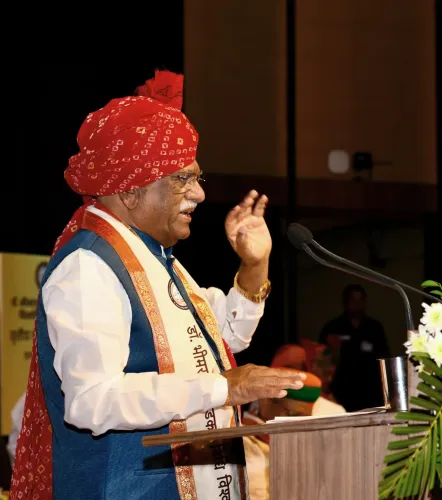
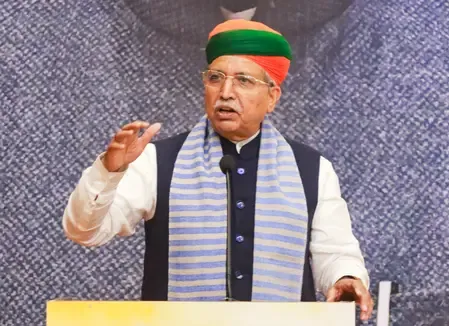
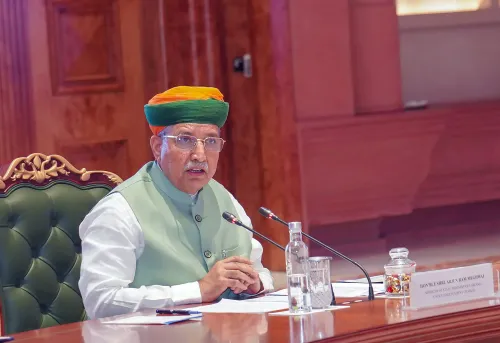
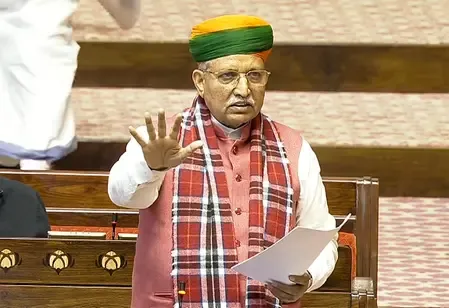
New Delhi, Feb 5 (NationPress) Minister of State for Law and Justice Arjun Ram Meghwal announced on Thursday that only those evening law college graduates who completed their LL.B. degree in the academic year 1999-2000 or earlier are qualified to register as advocates in accordance with the rules set forth by the Bar Council of India (BCI).
In a written response to a query in the Rajya Sabha, Meghwal clarified that LL.B. degree holders who did not finish their law education through evening classes by the academic year 1999-2000 are ineligible to practice law.
He emphasized that there has been no state-specific acknowledgment of evening, night-school, part-time, weekend, holiday, online, or distance LL.B. programs since 2000–2001, a stance consistently supported by the Bar Council of India through various statutory rules and circulars.
Meghwal stated that under the prior Rules of Legal Education, established in 1989, the Council had authorized and recognized evening LL.B. courses offered by certain universities and law colleges, including those in Delhi and several other states, provided they adhered to the prevailing standards at that time.
However, starting from the academic year 2000–2001, the Bar Council of India, via the Rules of Legal Education introduced in 1999, commonly referred to as Standards of Legal Education and Recognition of Degrees in Law (Rules), ceased the acknowledgment of evening law degree courses across all states.
The BCI has maintained this policy under its Rules of Legal Education instituted in 2008, which stipulate that an LL.B. is a regular, full-time professional program requiring designated daily and weekly classroom hours, minimum attendance, and a defined academic teaching window from 8 a.m. to 7 p.m.
In response to another inquiry, the Minister of State mentioned that the Government of India has implemented various initiatives to enhance and promote Alternative Dispute Resolution mechanisms, including institutional arbitration.
To encourage preference for institutional arbitration, the India International Arbitration Centre Act, 2019 was enacted, resulting in the formation of the India International Arbitration Centre, which serves as an independent and autonomous entity to facilitate institutional arbitration, according to Meghwal.
Since its inception, the Centre has organized workshops, conferences, and seminars related to both domestic and international arbitration for awareness and training, with participation from CPSEs and PSUs.
Point of View
I believe that the clarity provided by Minister Meghwal regarding the eligibility of evening law graduates is essential for maintaining the integrity of legal practice in India. It underscores the importance of adhering to established standards in legal education while also highlighting the government's commitment to enhancing alternative dispute resolution mechanisms.
NationPress
24 Sept 2026
Frequently Asked Questions
Who can practice law according to the recent announcement?
Only evening law college graduates who completed their LL.B. in the academic year 1999-2000 or earlier can practice law as per the Bar Council of India rules.
What changes were made to evening law degree recognition?
The Bar Council of India discontinued the recognition of evening law degrees across all states starting from the academic year 2000-2001.
What initiatives has the government taken regarding dispute resolution?
The Government of India has launched initiatives to strengthen alternative dispute resolution mechanisms, including the establishment of the India International Arbitration Centre.
What are the requirements for an LL.B. program?
An LL.B. program must be a regular, full-time course with prescribed classroom hours, minimum attendance, and an academic schedule from 8 a.m. to 7 p.m.
How does the BCI support legal education?
The BCI maintains standards for legal education and recognizes degrees that meet specified criteria, ensuring the quality of legal practitioners.