SIR row: Ex-CEC O.P. Rawat calls Election Commission rift 'very serious'
Synopsis
A former Chief Election Commissioner has gone on record calling the reported internal split at the Election Commission 'very serious' — a rare and pointed intervention that raises urgent questions about whether key decisions on voter rolls and Form 6 were taken lawfully, just as the SIR process rolls out across multiple states.
Key Takeaways
Rawat on 23 September 2026 termed the reported rift inside the Election Commission 'very serious' and 'unfortunate'.
Election Commissioners Sukhbir Singh Sandhu and Vivek Joshi reportedly recorded formal objections on at least 14 occasions over 10 months over voter additions/deletions, Form 6 changes, and centralisation of electoral-roll data.
Rawat warned that any change to Form 6 without proper authorisation would be 'absolutely wrong and illegal', and that ECI decisions require consensus or a majority vote.
The SIR process , which began in Bihar , has faced errors including the reported mass restoration of excluded voters in West Bengal .
Opposition leader Umang Singhar alleged 'collusion' between CEC Gyanesh Kumar and the BJP government.
The Election Commission has maintained that all SIR-related decisions were unanimous and approved by all three commissioners.
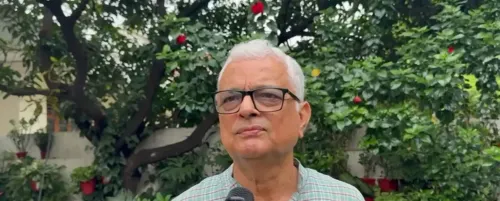
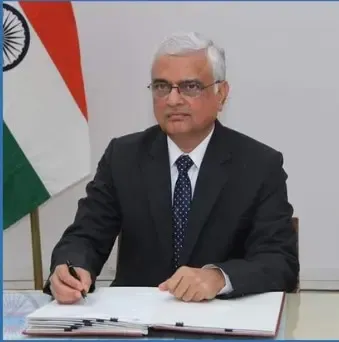
Former Chief Election Commissioner (CEC) O.P. Rawat on Wednesday, 23 September described the reported internal differences within the Election Commission of India (ECI) over electoral-roll revision as 'very serious' and 'unfortunate', warning that any modification to statutory voter-registration Form 6 without proper authorisation would be 'absolutely wrong and illegal'. His remarks follow a media report alleging that two sitting Election Commissioners had formally objected to decisions taken without their knowledge.
The Reported Internal Rift
According to reports, Election Commissioners Sukhbir Singh Sandhu and Vivek Joshi had formally recorded objections on at least 14 occasions over 10 months on issues spanning the addition and deletion of voters, changes to Form 6, and the centralisation of control over electoral-roll data. The two commissioners allegedly raised these concerns over decisions and orders issued in the name of the poll panel without their knowledge or concurrence.
Rawat, who served as CEC from January to December 2018, stated that the Election Commission, as a multi-member body, is legally required to arrive at decisions either unanimously or by majority vote. 'A decision by the Election Commission can only be taken either by consensus or by a majority vote, and not otherwise,' he said. He urged all three commissioners to jointly address the media and clarify the matter, adding that dissent on the panel would effectively invalidate a decision: 'If there was dissent, then a decision could not have been taken.'
Concerns Over the SIR Process
Rawat also expressed broader concern about the Special Intensive Revision (SIR) process itself, which began in Bihar before being extended to other states. He said the exercise had been flawed from the outset and required a thorough review. 'There have been several mistakes in the SIR process from the beginning, starting with Bihar. Gradually, the Election Commission improved the process and tried to make it smoother,' he noted.
Referring specifically to the West Bengal SIR process, Rawat pointed to the reported restoration of a large number of previously excluded voters as evidence of the consequences of errors in electoral-roll revision. He stressed that the Commission must safeguard eligible voters from losing their franchise due to administrative mistakes in the revision process.
Political Response
Madhya Pradesh Leader of Opposition Umang Singhar seized on the controversy to mount a political attack on the Bharatiya Janata Party (BJP)-led state government. He alleged that the objections raised by the two commissioners had exposed 'collusion' between Chief Election Commissioner Gyanesh Kumar and the BJP government, claiming the country was 'moving towards autocracy.' Singhar demanded that both the Election Commission and the Union government explain who had authorised the disputed decisions and why internal objections were repeatedly overridden.
'The issue is not merely about procedure; it directly concerns the voter's right to vote,' Singhar said. These remarks represent the sharpest direct political intervention in the controversy so far from an opposition leader.
Election Commission's Stand
The Election Commission of India has, however, denied any internal discord, stating that all its decisions — including those related to SIR — were taken unanimously and had the approval of all three Election Commissioners. The Commission's rebuttal stands in sharp contrast to the account presented in the media report that triggered the controversy, leaving the disputed version of events unresolved.
With a former CEC publicly characterising the reported differences as 'very serious,' pressure is likely to mount on the poll panel to provide a more detailed and transparent account of its internal decision-making processes ahead of forthcoming state elections.
Point of View
' it is not routine commentary — it is a credibility alarm. The core legal issue Rawat has surfaced is significant: if decisions were issued in the Commission's name without the concurrence of a majority of its members, their legal validity is open to challenge. The Election Commission's blanket denial of any discord, issued without specifics, does little to settle that question. What makes this especially consequential is the SIR's direct bearing on who gets to vote — errors in Bihar and West Bengal are not abstract procedural failures, they are disenfranchisement events. The opposition's framing as a 'BJP-ECI collusion' story may be politically convenient, but the institutional question Rawat has raised — how a three-member body can function if two members are being bypassed — demands a transparent answer regardless of partisan framing.
NationPress
23 Sept 2026
Frequently Asked Questions
What is the SIR row and why is it controversial?
The Special Intensive Revision (SIR) row refers to reported internal disagreements within the Election Commission of India over electoral-roll revision processes, including changes to voter-registration Form 6 and the centralisation of electoral-roll data. Two Election Commissioners reportedly raised formal objections at least 14 times over 10 months, alleging that decisions were issued in the Commission's name without their knowledge — a claim the Commission has denied.
What did former CEC O.P. Rawat say about the controversy?
Rawat described the reported differences as 'very serious' and 'unfortunate', stating that any change to Form 6 without proper authorisation would be 'absolutely wrong and illegal'. He also stressed that ECI decisions can only be made by consensus or majority vote, and called on all three commissioners to jointly clarify the matter at a press conference.
What objections did Election Commissioners Sandhu and Joshi reportedly raise?
According to reports, Election Commissioners Sukhbir Singh Sandhu and Vivek Joshi recorded formal objections on at least 14 occasions over 10 months. Their concerns reportedly covered voter additions and deletions, modifications to Form 6, and the centralisation of control over electoral-roll data — all carried out, they alleged, without their knowledge or approval.
What has the Election Commission said in response?
The Election Commission of India has maintained that all its decisions, including those related to the SIR process, were taken unanimously and had the approval of all three Election Commissioners. The Commission has not addressed the specific instances cited in the media report.
What problems have emerged in the SIR process so far?
Former CEC Rawat noted that the SIR process had faced errors from its inception in Bihar before being extended to other states. In West Bengal, the reported restoration of a large number of previously excluded voters highlighted the real-world consequences of mistakes in electoral-roll revision, raising concerns about eligible voters losing their right to vote.