What Did MoS Kirti Vardhan Singh Report About Farm Fires in Punjab?

Synopsis
The alarming report from MoS Kirti Vardhan Singh highlights significant progress in reducing farm fires in Punjab. With a remarkable decrease in incidents compared to previous years, the government is taking serious steps to combat air pollution and improve air quality in Delhi. Stay informed about these impactful environmental efforts!
Key Takeaways
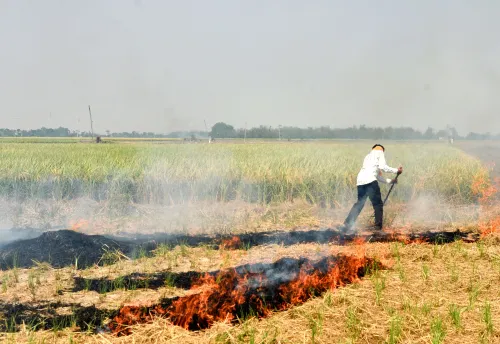
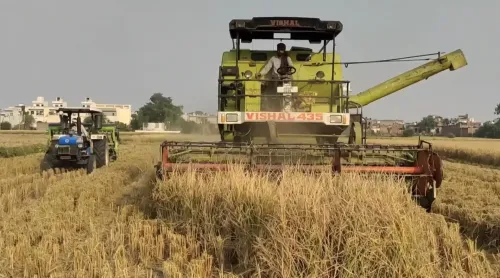
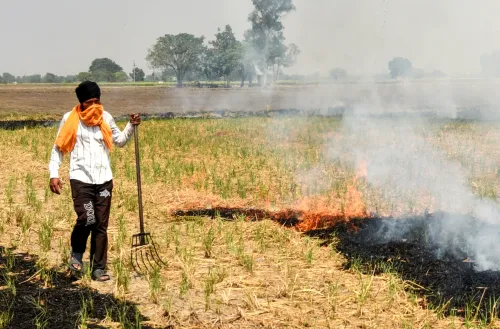
5,114 incidents of paddy residue burning reported in Punjab.
90% reduction in fire incidents compared to 2022.
Improved air quality in Delhi with 200 good air quality days in 2025.
Government initiatives include the Crop Residue Management scheme .
Monitoring efforts by Flying Squads from the CPCB.
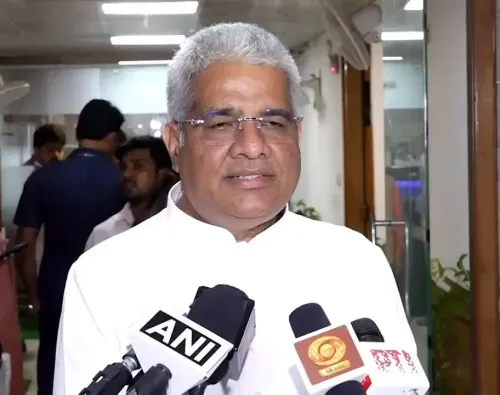
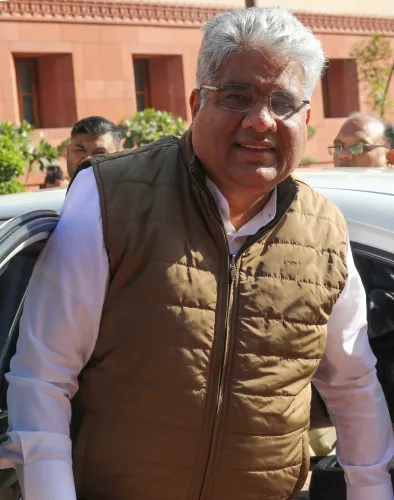
New Delhi, Dec 8 (NationPress) The Minister of State for Environment, Forest and Climate Change, Kirti Vardhan Singh, announced on Monday that a total of 5,114 incidents of paddy residue burning have been documented in Punjab from September 15 to November 30, 2025.
According to the MoS, “Both Punjab and Haryana have achieved approximately 90 percent reduction in fire incidents during the paddy harvesting season of 2025 compared to the same timeframe in 2022, as reported by CAQM,” in response to queries raised in Lok Sabha by Harsimrat Kaur Badal.
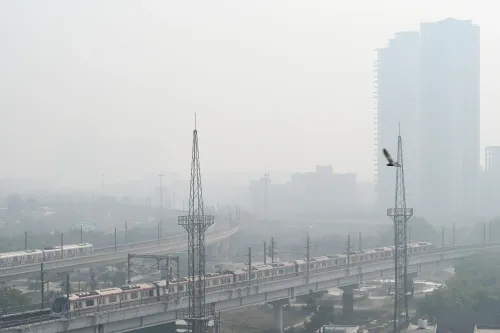
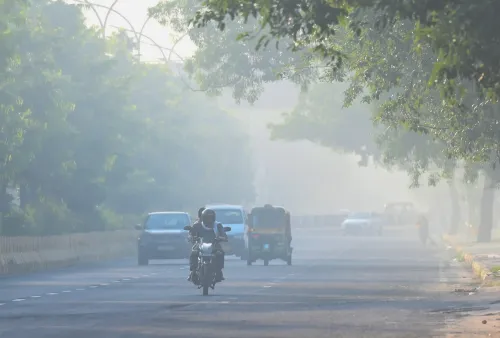
Addressing the air pollution crisis in Delhi, Kirti Vardhan Singh stated, “Through collaborative actions, the number of days with good air quality (AQI<200) has surged to 200 days in 2025, up from 110 days in 2016.”
He noted that while there has been a general enhancement in the AQI this year, very poor days (AQI: 301-400) and severe days (AQI over 401) have declined from 71 days in 2024 to 50 days in 2025.
“This marks the lowest average AQI recorded in Delhi over the past eight years—spanning from 2018 to 2025 (excluding the year 2020 during the Covid lockdown),” remarked the MoS.
He further elaborated on the directives issued by the Commission for Air Quality Management in the National Capital Region and surrounding areas, along with measures undertaken by the government to mitigate stubble burning.
The MoS stated, “To bolster the initiatives of the Governments of Punjab, Haryana, Uttar Pradesh, and the NCT of Delhi in tackling air pollution stemming from paddy stubble burning and to subsidize the machinery necessary for crop residue management, a Central Sector Scheme on Crop Residue Management has been operational since 2018-19.
Additionally, on June 3, 2025, the CAQM instructed the State Governments of Punjab and Haryana to enforce the use of paddy straw-based biomass pellets/briquettes in all brick kilns situated in districts outside NCR, as a strategy to eliminate the practice of open paddy stubble burning.
The CAQM also mandated that all coal-based Thermal Power Plants within a 300 km radius of Delhi co-fire biomass-based pellets and torrefied pellets/briquettes (up to 5-10 percent) with coal to encourage biomass utilization, he explained.
The MoS revealed that 31 Flying Squads from the Central Pollution Control Board (CPCB) have been dispatched from October 1 to November 30 in identified hotspot districts in Punjab and Haryana to monitor actions closely and coordinate with district-level authorities and officers from the Pollution Control Boards/CAQM cell.
These teams are tasked with providing daily updates, photographic documentation, and compliance status,” he added.
Point of View
Such as the Crop Residue Management scheme, showcase a proactive approach to environmental sustainability. It's crucial that these efforts continue to evolve and adapt to ensure long-term benefits for both the environment and public health.
NationPress
1 Oct 2026
Frequently Asked Questions
What is the total number of farm fires reported in Punjab?
A total of 5,114 farm fires have been reported in Punjab from September 15 to November 30, 2025.
How much has the number of fire incidents reduced in Punjab and Haryana?
Punjab and Haryana have collectively recorded about a 90 percent reduction in fire incidents during paddy harvesting in 2025 compared to 2022.
What measures are being taken to tackle air pollution in Delhi?
The government is implementing various measures, including promoting the use of biomass in thermal plants and a Crop Residue Management scheme to support states in reducing stubble burning.
What is the air quality trend in Delhi?
Delhi has seen an increase in good air quality days to 200 in 2025, while very poor and severe days have decreased significantly.
How are authorities monitoring stubble burning in Punjab and Haryana?
The Central Pollution Control Board has deployed 31 Flying Squads to monitor hotspot districts and ensure compliance with regulations regarding stubble burning.