What Happened in Rajasthan's Hanumangarh Amid Farmers' Protests?
Synopsis
Rajasthan's Hanumangarh witnessed intense clashes between farmers and police as protests erupted over an ethanol factory's construction. The situation escalated with farmers using tractors to demolish the factory's wall, leading to injuries and destruction. This incident raises questions about farmers' rights and governmental responses to such protests.
Key Takeaways
Intense clashes occurred between farmers and police in Hanumangarh.
Protesters used tractors to breach the factory's wall.
Police employed tear-gas and cane-charge to control the crowd.
Internet services were suspended in response to the unrest.
Several vehicles were set on fire during the protests.
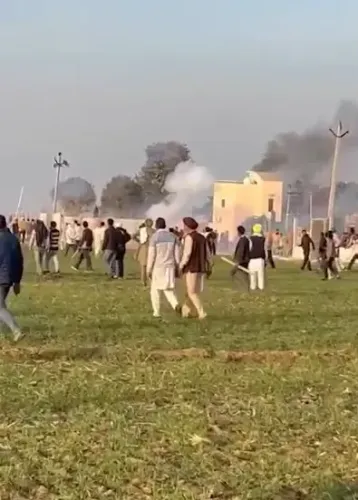
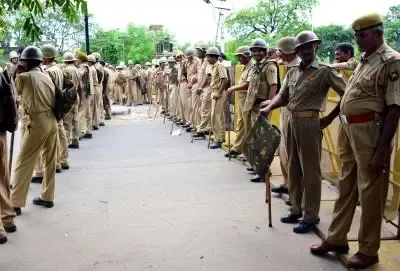
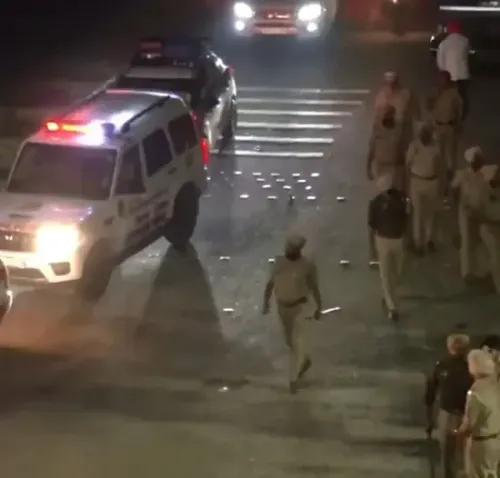
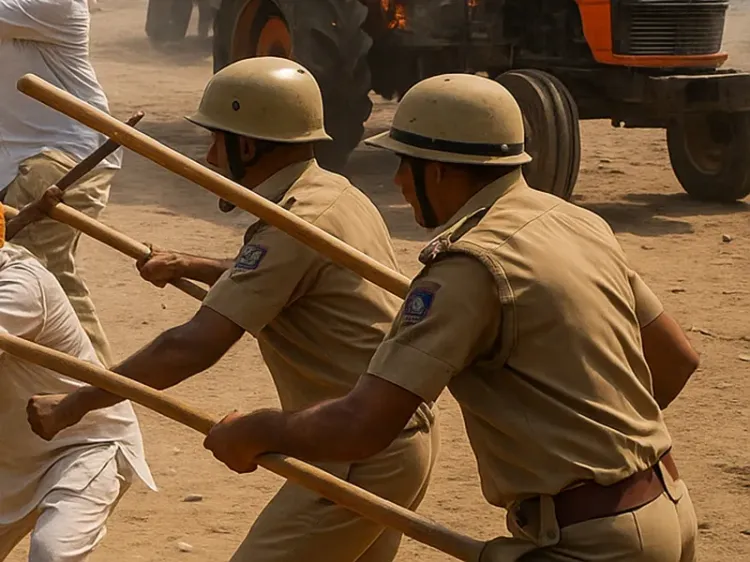
Jaipur, Dec 10 (NationPress) In a chaotic turn of events in Rajasthan's Hanumangarh, the police were compelled to employ cane-charge and fire tear-gas shells on Wednesday as farmers protested against the establishment of an ethanol factory in Tibbi town. The protests escalated into violence when demonstrators utilized tractors to demolish the boundary wall of the under-construction ethanol production facility.
The police's attempts to control the situation included the use of cane-charge and tear-gas to disperse the agitated crowd. In retaliation, the infuriated farmers vandalized numerous vehicles, setting at least 10 vehicles ablaze. The clashes resulted in injuries to several individuals, including members of the police force.
Congress MLA Abhimanyu Poonia, who arrived to lend support to the farmers, was injured during the lathi-charge and subsequently admitted to Hanumangarh District Hospital. Due to the unrest, local authorities imposed an internet shutdown in Tibbi and surrounding villages, and schools as well as shops were ordered to close.
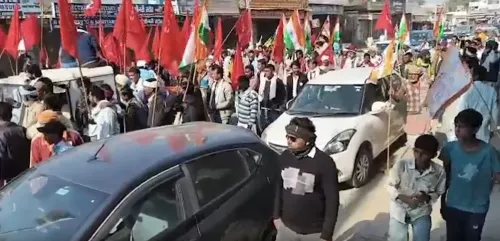
The conflict began earlier when farmers congregated outside the SDM office, demanding an immediate cessation of construction at the ethanol plant. After unsuccessful negotiations with the administration — primarily due to the authorities' unwillingness to provide a written assurance to halt the project — the protesters advanced toward Rathi Kheda village around 4 p.m. This led to a rapid escalation of chaos at the factory site.
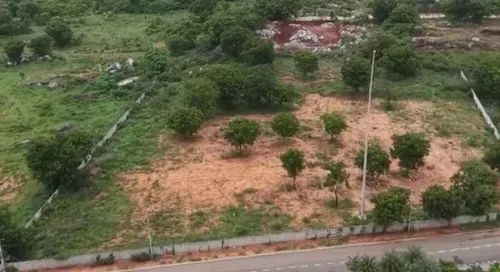
Farmers breached the factory's perimeter with their tractors, prompting stone-throwing, arson, and a vigorous police response. Dune Ethanol Private Limited, which is based in Chandigarh and was established in 2020, aims to construct a 40-MW grain-based ethanol plant in Hanumangarh.
This initiative is part of India's Ethanol Blended Petrol (EBP) program. The company's directors include Jatinder Arora and Robin Jindal. Protesters ignited fires on one JCB, seven cars, and two motorcycles, including a government police vehicle and several privately owned vehicles, some belonging to officers.
The police have yet to issue an official statement. A five-member farmer committee, comprising Shabnam Godara, Nitin Dhaka, Sukhjit Chattha, Jagjit Jaggi, and Indrajit, engaged in discussions with DSP Meenakshi in the evening.
The committee's demand for a written order to stop construction was declined by the administration.
Farmers reconvened at Gurudwara Sahib to strategize their next steps. Congress leader Shabnam Godara, CPI-M leader Jagjit Jaggi, and others continued their protest at the factory gate, insisting on a written assurance to halt construction.
Earlier in the day, farmer leaders had summoned the District Collector by 2 p.m. for a written guarantee to stop the construction, and the refusal from the administration incited the march toward the factory.
Members of the Ethanol Factory Hatao Sangharsh Samiti used tractors to dismantle the factory wall. When police intervened, protesters retaliated by throwing stones, injuring nearly a dozen policemen. The injured were transported to the Tibbi Community Health Centre. Farmers breached the factory's boundary and entered the premises. In response, police deployed tear-gas shells, and several police vehicles were also set on fire.
Several opposition figures, including MP Kuldeep Indora, MLA Abhimanyu Poonia, former MLA Balwan Poonia, CPI(M)’s Mangej Chaudhary, along with farmer leaders from Haryana and Punjab, attended the protest. Congress leaders, including former CM Ashok Gehlot, Deputy CM Sachin Pilot, and LoP Tika Ram Jully, condemned the police's lathi-charge against farmers. “Why does the BJP government harbor such animosity toward farmers?” questioned Gehlot.
Point of View
I stand with the farmers advocating for their rights and the need for a transparent dialogue with the administration. The clash in Hanumangarh highlights a crucial issue in our agricultural policy and the importance of listening to the voices of those directly affected by such projects.
NationPress
24 Sept 2026
Frequently Asked Questions
What prompted the protests in Hanumangarh?
Farmers protested against the construction of an ethanol factory in Tibbi town, demanding a halt to the project due to concerns over its impact.
What actions did the police take during the protests?
The police resorted to cane-charge and fired tear-gas shells to disperse crowds after the situation escalated.
Were there any injuries reported during the clashes?
Yes, several individuals, including police officers, sustained injuries during the clashes.
What was the government's response to the protests?
The government shut down internet services in the area and refused to provide a written assurance to halt the construction.
Who were some prominent figures involved in the protests?
Congress MLA Abhimanyu Poonia and other opposition leaders were present, condemning the police's actions against the farmers.