Historic Milestone Reached: First Border Pillar Marks End of Assam-Arunachal Dispute, Says CM Sarma
Synopsis
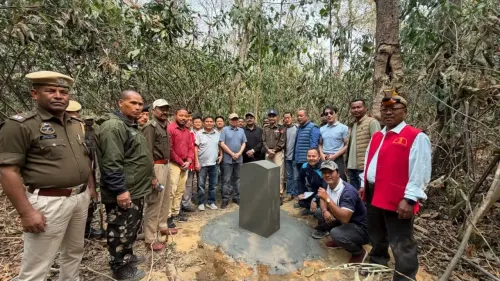
On February 23, Chief Minister Himanta Biswa Sarma announced the erection of the first border pillar between Assam and Arunachal Pradesh, calling it a landmark achievement that ends decades of uncertainty regarding the inter-state boundary.
Key Takeaways
The first border pillar signifies a historic resolution of the Assam-Arunachal Pradesh boundary dispute.
The Namsai Declaration establishes a framework for mutual understanding and community welfare.
This initiative aims to enhance administrative clarity and development in border areas.
Cooperation among northeastern states is being strengthened under the leadership of Prime Minister Modi.
Clear boundaries are expected to improve law and order as well as service delivery.
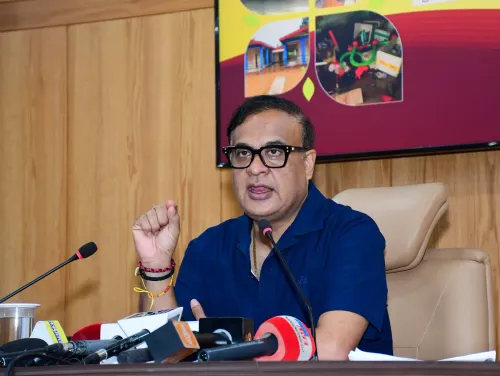
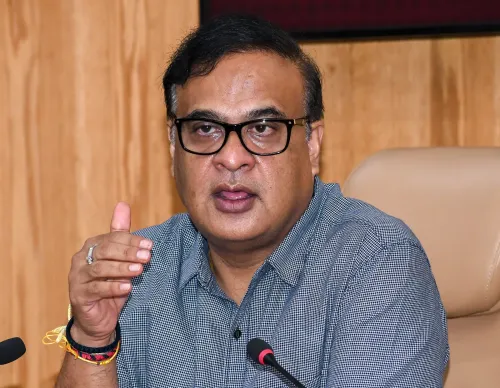
Guwahati, Feb 23 (NationPress) Assam's Chief Minister, Himanta Biswa Sarma, heralded the establishment of the inaugural border pillar between Assam and Arunachal Pradesh as a significant achievement, signaling the resolution of a long-standing dispute concerning the inter-state boundary.
In a message shared on X, CM Sarma noted that the border pillar was erected in the Pakke Kesang district of Arunachal Pradesh, following the signing of the Namsai Declaration.
He characterized this development as “truly historic,” emphasizing that it demonstrates a mutual commitment from both states to address lingering issues through collaboration and dialogue.
“The establishment of the border pillar embodies clarity, partnership, and trust between Assam and Arunachal Pradesh,” remarked CM Sarma. He further added that this initiative would foster enduring peace and administrative stability for border communities that have been impacted by ambiguity for many years.
The Chief Minister pointed out that the Assam-Arunachal Pradesh boundary dispute spanned multiple areas across various districts, often creating confusion regarding jurisdiction, which hindered development initiatives and service delivery in border regions.
The Namsai Declaration, which was previously signed with the involvement of the Union Home Ministry, sets forth a framework for a mutually agreed-upon and community-focused resolution.
CM Sarma stated that the agreement emphasizes historical documentation, ground realities, and the well-being of local populations, ensuring that the resolution is both sustainable and acceptable to those residing near the border.
He credited Prime Minister Narendra Modi for promoting cooperative federalism and enhancing unity among northeastern states. “Under the guidance of Adarniya Narendra Modi ji, the Ashtalakshmi region is progressing as a unified entity,” the Chief Minister remarked.
CM Sarma also expressed appreciation for the support of Union Home Minister Amit Shah in facilitating this process and thanked Arunachal Pradesh Chief Minister Pema Khandu for his collaboration.
He stated that well-defined boundaries will facilitate accelerated development, enhanced law enforcement, and improved coordination between the two states. He reiterated Assam's commitment to amicably resolving all inter-state matters, exemplifying a dialogue-driven governance model in the Northeast.
Importantly, the Namsai Declaration, reached after extensive discussions between Assam and Arunachal Pradesh, signifies a pivotal advancement in resolving one of the oldest inter-state boundary conflicts in the Northeast.
This agreement outlines mutually agreed principles for demarcation, relying on historical records, administrative boundaries, and ground realities, while prioritizing the interests of border residents.
By providing a structured and consensus-based strategy for resolving disputed areas, the declaration aims to achieve lasting peace, administrative transparency, and uninterrupted development in border regions that have long endured uncertainty.
Point of View
The installation of the first border pillar between Assam and Arunachal Pradesh represents a crucial step towards resolving inter-state disputes in India. It highlights the importance of dialogue and cooperation in governance, and sets a precedent for other states facing similar challenges.
NationPress
19 Sept 2026
Frequently Asked Questions
What is the significance of the first border pillar?
The first border pillar symbolizes the resolution of a long-standing boundary dispute between Assam and Arunachal Pradesh, promoting clarity and cooperation.
What is the Namsai Declaration?
The Namsai Declaration is an agreement signed by Assam and Arunachal Pradesh, establishing a framework for resolving boundary disputes through mutual understanding and community welfare.
How does this development affect local communities?
The installation of the border pillar aims to bring administrative clarity, peace, and improved development opportunities for border villages.
Who were instrumental in this resolution?
Key figures include Prime Minister Narendra Modi, Union Home Minister Amit Shah, and the Chief Ministers of Assam and Arunachal Pradesh.
What are the future implications of this agreement?
The agreement sets a precedent for resolving other inter-state issues amicably, fostering a cooperative governance model in the Northeast.