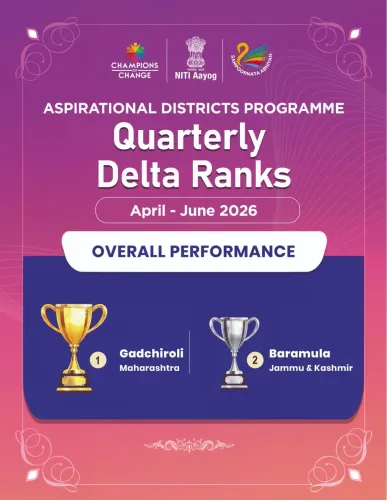
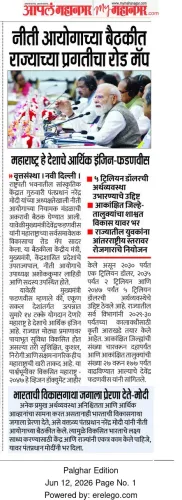
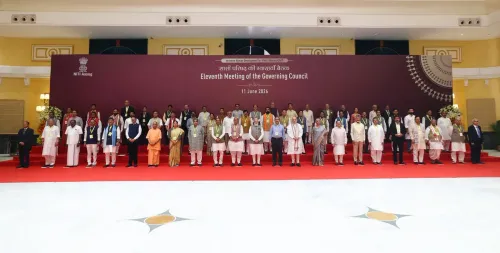
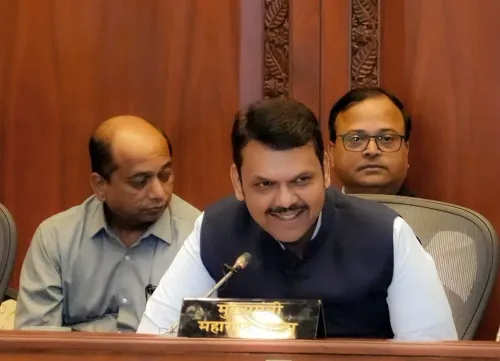
Gadchiroli tops NITI Aayog Delta Ranking Q1 2026, CM Fadnavis hails green-steel vision

Synopsis
A district once defined by Maoist insurgency just topped NITI Aayog's national Delta Ranking — and Maharashtra is betting it becomes India's green-steel capital. Gadchiroli's Q1 2026 ranking win, driven by water conservation, female education, and tribal healthcare, is the human-development layer beneath a far bigger play: 50 MTPA of eco-friendly steel capacity targeted for Vidarbha.
Key Takeaways
Gadchiroli ranked 1st nationally in NITI Aayog's Delta Ranking for April–June 2026 under the Aspirational Districts Programme.
Baramulla (Jammu and Kashmir) finished second; Maharashtra CM Devendra Fadnavis praised administrators, corporates, and citizens in a post on X.
Over 6,000 water storage structures were built under Jalyukt Shivar Abhiyan and PMKSY, recharging aquifers and boosting agricultural yield.
Corporate partners Mahindra , Lloyds , and Tata Trusts supported ITI vocational upgrades; PHC infrastructure and maternal nutrition programmes were also expanded.
Fadnavis is positioning Gadchiroli as India's Green Steel Hub , targeting up to 50 MTPA steel capacity in Vidarbha using low-emission technologies.
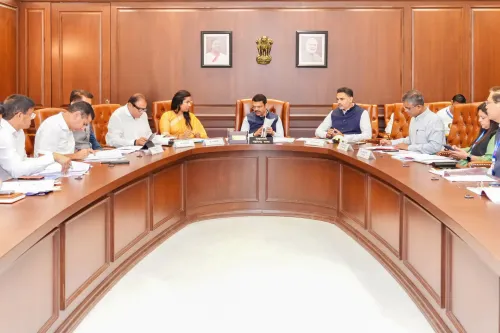
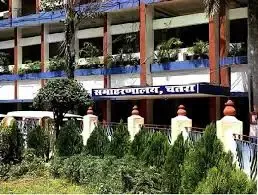
Gadchiroli district in Maharashtra has claimed the top national rank in NITI Aayog's quarterly Delta Ranking for April–June 2026, under the flagship Aspirational Districts Programme (ADP). Maharashtra Chief Minister Devendra Fadnavis on 7 October 2026 congratulated the district's administration, social partners, and residents, calling the achievement a historic milestone for a region long associated with Maoist insurgency and underdevelopment. Baramulla district in Jammu and Kashmir finished second nationally.
What drove Gadchiroli's top ranking
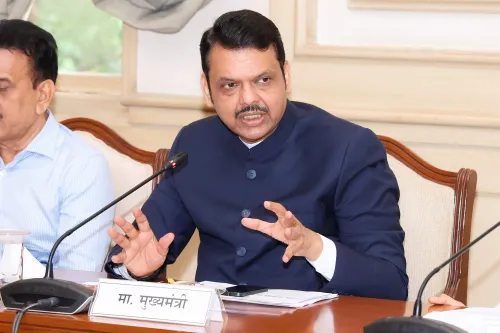
Chief Minister Fadnavis, in a detailed post on X, attributed the district's surge to multi-sectoral breakthroughs across water conservation, healthcare, female education, and industrial skill development. He pointed to the revived Jalyukt Shivar Abhiyan and the Pradhan Mantri Krishi Sinchayee Yojana (PMKSY), under which over 6,000 water storage structures were constructed across Gadchiroli, significantly recharging local aquifers and bolstering agricultural productivity and rural water security.
On the education front, dedicated toilet facilities for female students were expanded across primary and secondary schools in remote tribal areas to curb dropout rates and improve institutional hygiene — a targeted intervention in a district where tribal communities make up a substantial share of the population. Additionally, a large-scale push in Aadhaar-linked bank account authentications streamlined Direct Benefit Transfers (DBTs), strengthening rural financial inclusion at the ground level.
Healthcare, nutrition, and skilling upgrades
Industrial Training Institutes (ITIs) across Gadchiroli introduced advanced vocational courses, backed operationally and logistically by major corporate partners including Mahindra, Lloyds, and Tata Trusts. Targeted infrastructure upgrades were carried out at Primary Health Centres (PHCs), and structured supplementary nutrition programmes were launched specifically for expectant mothers, addressing two of the district's historically acute vulnerabilities.
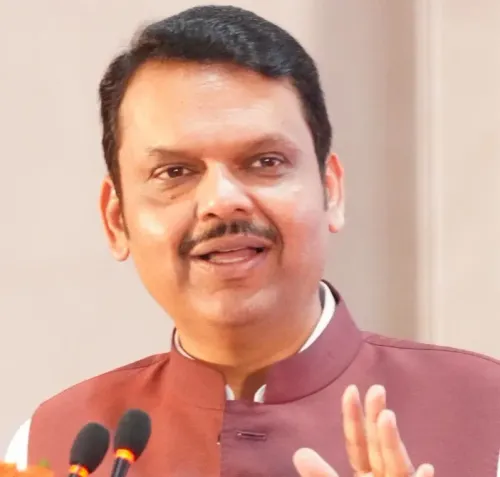
Fadnavis credited the result to coordinated efforts among district administrators, frontline healthcare workers, social organisations, private sector partners, and citizens. 'This remarkable milestone is a testament to what dedicated governance, corporate partnership, and public participation can achieve together,' he said. 'Gadchiroli's surge to the top position in NITI Aayog's Delta Ranking proves that with steady resolve, even historically challenging regions can lead the nation in sustainable development.'
The green-steel ambition behind the ranking
Gadchiroli's rise in the ADP rankings coincides with a larger industrial vision outlined by Fadnavis — positioning the district as India's premier Green Steel Hub. The region's abundant mineral resources, including high-grade iron ore, manganese, and limestone, form the foundation of this plan. The state government is steering large-scale industrialisation toward Vidarbha, targeting up to 50 MTPA (million tonnes per annum) of steel manufacturing capacity centred in Gadchiroli, aligned with low-emission, eco-friendly technologies.
This dual track — human development gains and industrial capacity building — marks a deliberate strategy to convert NITI Aayog's aspirational district designation into an economic launching pad rather than a perpetual welfare category. Notably, Gadchiroli was once among the most conflict-affected districts in the country; its current trajectory represents a significant reversal.
What the NITI Aayog Delta Ranking measures
The Aspirational Districts Programme, launched in 2018, tracks 112 historically underdeveloped districts across India on quarterly progress in health, nutrition, education, agriculture, financial inclusion, and infrastructure. The Delta Ranking specifically measures incremental improvement rather than absolute standing, rewarding districts that show the sharpest positive movement in a given quarter — making Gadchiroli's top position an indicator of sustained reform momentum rather than a one-time statistical artefact.
The state administration has reaffirmed its commitment to sustaining this momentum, with Fadnavis signalling continued investment in Gadchiroli's social, educational, and economic infrastructure in the quarters ahead.
Point of View
Not starting position — which makes gaming the metric harder than it looks. The more consequential story, however, is whether the green-steel industrial push can survive the tension between large-scale mining and the ecological sensitivities of one of India's most forested districts. A 50 MTPA steel target in a biodiversity-rich, tribal-majority region will face scrutiny on forest clearances and community consent that the current narrative has not yet addressed. The ranking is a genuine data point; the industrial vision is still a projection.
NationPress
7 Oct 2026
Frequently Asked Questions
What is NITI Aayog's Delta Ranking and why did Gadchiroli top it?
NITI Aayog's Delta Ranking, part of the Aspirational Districts Programme, measures the sharpest quarterly improvement in human development indicators — not absolute levels — across 112 historically underdeveloped districts. Gadchiroli topped the April–June 2026 ranking due to notable gains in water conservation, female school enrolment, healthcare infrastructure, and skill development, driven by coordinated government and corporate interventions.
What specific reforms helped Gadchiroli reach the top rank?
Key interventions included the construction of over 6,000 water storage structures under Jalyukt Shivar Abhiyan and PMKSY, expansion of girl-friendly sanitation facilities in tribal schools, Aadhaar-linked DBT rollout for financial inclusion, ITI vocational upgrades backed by Mahindra, Lloyds, and Tata Trusts, and targeted nutrition programmes for expectant mothers at Primary Health Centres.
What is the green-steel hub plan for Gadchiroli?
Chief Minister Devendra Fadnavis has outlined a vision to make Gadchiroli India's premier Green Steel Hub, leveraging the district's reserves of high-grade iron ore, manganese, and limestone. The state is targeting up to 50 MTPA of steel manufacturing capacity in Vidarbha, aligned with low-emission, sustainable technologies — a significant industrial pivot for a district historically associated with Maoist insurgency.
Which district finished second in the NITI Aayog Delta Ranking for April–June 2026?
Baramulla district in Jammu and Kashmir finished second nationally in NITI Aayog's Delta Ranking for the April–June 2026 quarter, closely behind Gadchiroli.
What did CM Devendra Fadnavis say about Gadchiroli's achievement?
Fadnavis called it a historic milestone and said, 'Gadchiroli's surge to the top position in NITI Aayog's Delta Ranking proves that with steady resolve, even historically challenging regions can lead the nation in sustainable development.' He attributed the achievement to district administrators, frontline healthcare workers, corporate partners, and citizens working in coordination.